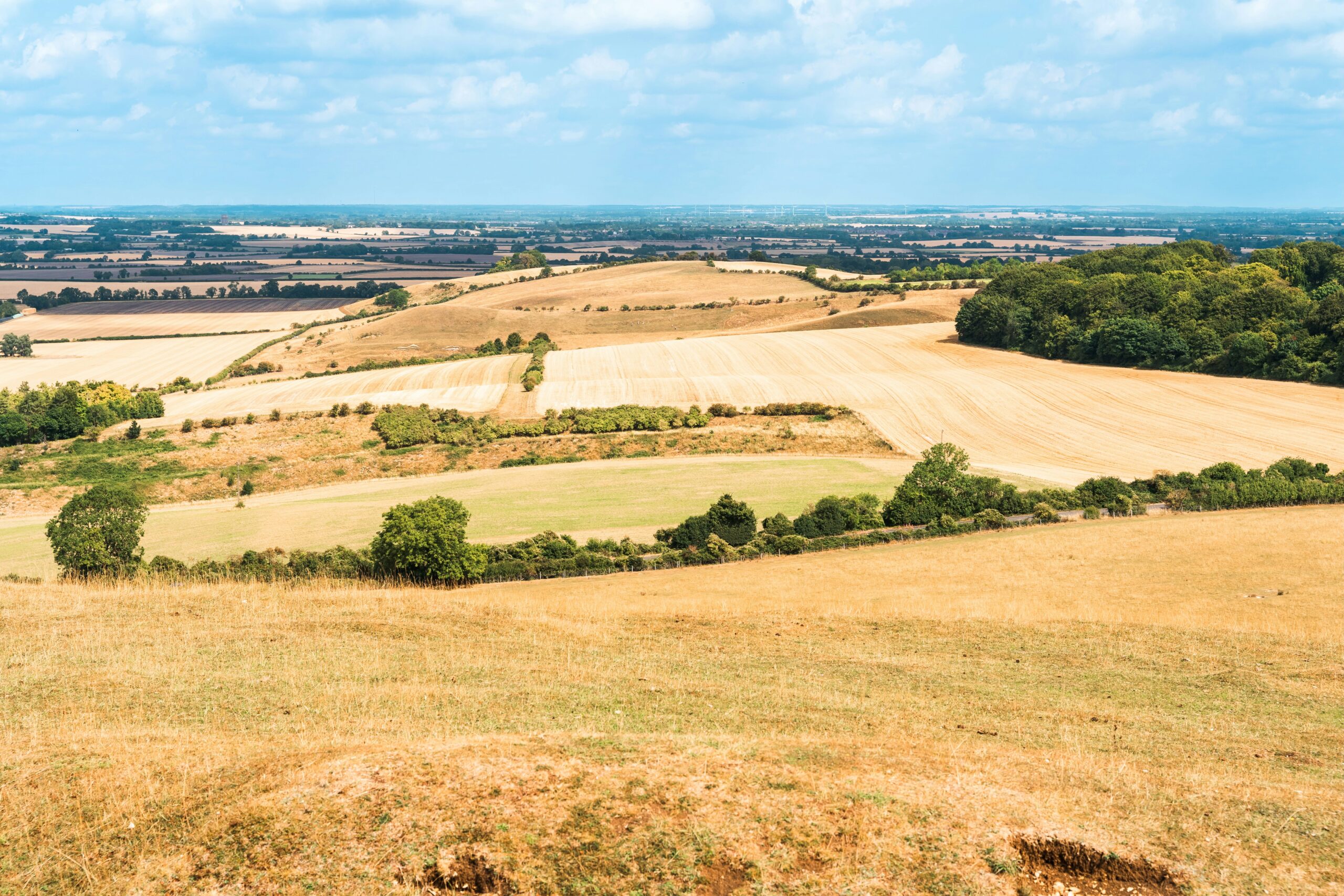
Wildlife in England and Wales will be affected by the current drought for years to come, the government has said.
The warnings come following the latest meeting of the National Drought Group of ministers, officials, water companies, farming leaders, anglers and conservation experts, meeting regularly after an extremely dry summer and successive heatwaves in the hottest summer on record for the UK.
This summer saw large parts of England and all of Wales plunged into widespread drought, with both recording their driest Julys since records began in 1836. The lack of rainfall combined with successive heatwaves and new temperature records have placed a significant strain on water supplies, with demand for water increasing by as much as 30% on the hottest days.
Rainfall welcome – but must be significant and sustained for drought to end
While rainfall in September has been “welcome”, the drought group has said it will take months of significant and sustained rainfall for the drought to end. The Environment Agency recently said 120% of average rainfall was needed over the coming seven months for the entire country to be out of drought by next spring. Experts are also warning that the current, exceptionally strong, El Nino phenomenon in the Pacific, which temporarily pushes up temperatures on top of global warming and affects weather patterns worldwide, is set to put the UK at greater risk of a wet, stormy autumn.
September has so far seen 56 per cent of its average monthly rainfall to date in England and river flows have decreased, although the majority of sites are classed as normal for the time year.
The National Drought Group said groundwater storage and reservoir levels were continuing to decline, with England’s reservoir storage now 19.7% below average for the time of year and most reservoirs classed as notably or exceptionally low. But reservoir storage is well below average for the time of year, and 10 water companies have imposed hosepipe bans impacting 30 million customers.
Environmental impacts of drought to “last for years to come”
Tony Grayling, the chair of the drought group and the strategic lead for drought at the Environment Agency, also warned “Environmental impacts continue to increase… the short-term impacts of drought have been visible over the summer, but we know the effects on wildlife populations and ecosystems will last for years to come” adding “The speed of drought recovery depends both on rainfall and demand for water.”
Officials revealed there have been 349 environmental incidents such as fish deaths, algal blooms, water quality problems and low flows in 2026, exceeding the 321 recorded in 2025.
Government agency Natural England said ponds, rivers, dykes and wetlands have dried to exceptionally low levels, and in some upland areas, wildlife-rich environments have dried out completely. Breeding waders and specialist wetland invertebrates have struggled significantly and fish deaths have occurred when oxygen levels in the water have dropped. Natural England is developing a research and monitoring programme specifically focused on the effects of drought and wildfire, as many of the most serious consequences may not become fully apparent until future growing seasons.
Oliver Harmar, the chief strategy officer at Natural England, said the country must use nature-based solutions to adapt landscapes to cope with the growing threat from drought.
“Restoring the natural hydrology of our landscapes, particularly our wetlands and peatlands, helps them hold on to water for longer, recover more quickly from drought, and reduce the risk of fire taking hold in dried-out ground,” he said. “It also has real benefits for the water that ends up in our taps and rivers, and for the wildlife that depends on these habitats to survive.”
‘Planetary boundaries’ necessary for flourishing of life have been massively breached
In a broader global picture, of the nine “planetary boundaries” that help determine whether life can flourish on Earth, seven are being breached at their highest ever levels of transgression, according to the latest planetary health check, a process that was established in 2009.
The seven key indicators in the danger zone include climate change, change in biosphere integrity, land system change, modification of biogeochemical flows, introduction of novel entities, freshwater change, and, for the first time last year, ocean acidification.
The freshwater change boundary has been assessed as transgressed. This boundary covers changes to both freshwater flows in rivers, lakes, reservoirs, and groundwater, and water stored in soils and available to plants. Human-induced disturbances to both measures are beyond safe levels, increasing droughts, floods, ecosystem stress, groundwater depletion, crop losses, and pressure on drinking water and energy systems. Further disruption could weaken carbon storage, increase fire and flood risks, and contribute to large-scale ecosystem decline, as well as threatening drinking water availability and food production.
The coalition of 60 scientists who conducted the analysis of the key guardrails for human life under the auspices of the Potsdam Institute for Climate Impact Research warned that the consequences of breaching these planetary boundaries is “becoming increasingly clear all around us”.
While there is little time to reverse this parlous situation, humanity does still possess the knowledge and capacity to do so, according to Johan Rockström, a climate scientist and report co-author. “Accelerating action to return to the safe operating space across all planetary boundaries is essential to protect lives and livelihoods, and to deliver on the promise of shared future prosperity,” he said.