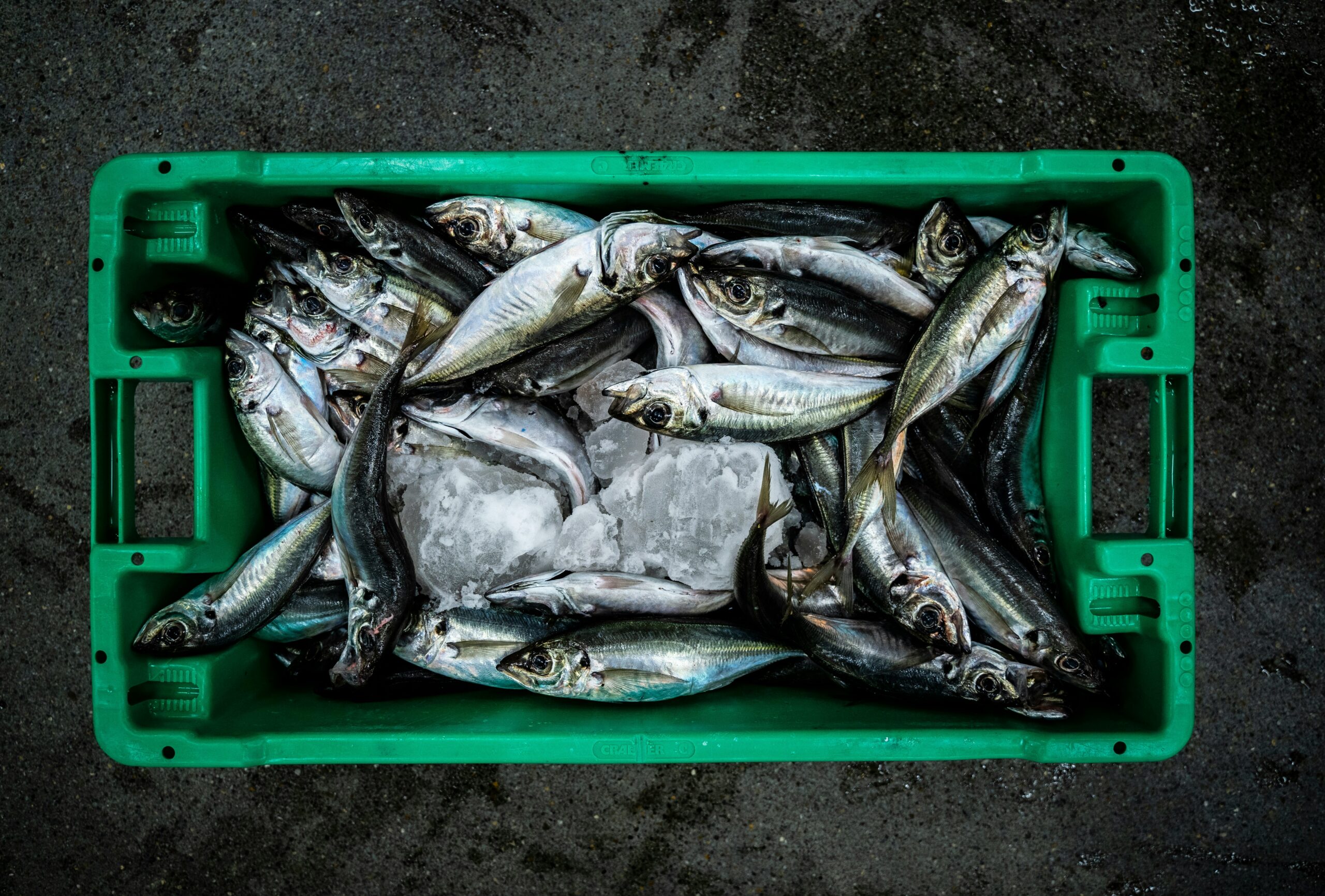
Photo by Paul Einerhand
Global fisheries and aquaculture production hit a record high in 2024, even as the share of the world’s fish stocks classed as biologically sustainable fell for the second report running, according to The State of World Fisheries and Aquaculture 2026 (SOFIA 2026), the Food and Agriculture Organization’s flagship biennial assessment. The report was launched on 16 June at the eleventh Our Ocean Conference in Mombasa, Kenya, at an event co-organised with the Marine Stewardship Council (MSC).
Record production, record trade
FAO reports that combined fisheries and aquaculture production reached 235 million tonnes in 2024, with aquaculture output of aquatic animals topping 100 million tonnes for the first time. Capture fisheries have plateaued at around 92 million tonnes, broadly unchanged since the late 1980s, while aquaculture has grown at an average of 3.2% a year since the 1950s. Trade in aquatic animal products is now worth $184 billion, a figure FAO says rivals the value of the global terrestrial meat trade, with aquatic animal foods supplying at least a fifth of the animal protein consumed by 3.1 billion people worldwide. FAO projects total production will reach 214 million tonnes by 2034.
Overfishing edges up again
The headline sustainability figure, though, points the other way. The proportion of assessed stocks classed as biologically sustainable fell to 62.4%, down from 64.5% in the previous SOFIA report two years ago, a decline the MSC notes partly reflects FAO’s updated methodology and the inclusion of a wider range of assessed stocks.
The global figure conceals very large regional differences. In the Antarctic areas, all 15 monitored stocks are classed as biologically sustainable, while the Mediterranean and Black Sea recorded the lowest proportion in the report, with just 58 of 127 assessed stocks, or 45.7%, meeting the threshold. A more encouraging picture emerges when landings are weighted by volume: 72.6% of 2023 landings from assessed stocks came from sustainably fished populations, since larger, more commercially significant stocks tend to be better managed.
Rupert Howes, Chief Executive of the MSC, said: “Encouragingly, despite the rise in overfished stocks, almost three-quarters of global fish landings already come from well-managed, sustainable stocks, a powerful demonstration of what responsible fisheries management can achieve at scale.” Michael Melnychuk, the MSC’s Principal Scientist for Data Science, added that the regional variation was “consistent with longstanding conclusions in fisheries science that effective fisheries management tends to result in favourable stock status levels, or recovery of stocks towards more favourable levels.”
A bright spot: tuna
One species group stands out as a sustainability success story. Just over 91% of assessed tuna stocks were classed as biologically sustainable, an improvement on the previous report, with more than 99% of combined tuna landings coming from sustainable stocks. Bill Holden, the MSC’s Senior Tuna Fisheries Outreach Manager, said the improvement reflected the work of tuna Regional Fisheries Management Organisations (RFMOs): “This effective management is leading to improved stock status resulting in sustainable global catches from healthy stocks. The main commercial tuna stocks have been prioritised by these RFMOs for developing Management Procedures, but we are also seeing management measures being developed for other species such as billfish and sharks.” The report cautions, however, that many smaller tuna stocks “remain severely data-limited,” presenting ongoing challenges for assessment.
Manuel Barange, FAO’s Assistant Director-General, said the priority now was extending that model elsewhere: “Extending this level of performance to smaller fisheries, where management costs can be proportionally higher and economic returns much lower, requires innovative and less costly approaches, including co-management solutions.” With improved management, FAO believes global capture fisheries production could rise modestly, from around 92 to 95 million tonnes.
Climate pressures ahead
Climate change is treated as a central uncertainty in this edition of the report. Barange said: “Climate change is already having an impact on marine ecosystems, shifting species distributions and introducing uncertainties in stock dynamics.” FAO warns that under high-emissions scenarios, exploitable fish biomass could decline by more than 10% by 2050 in several regions, though the report notes that rebuilding overfished stocks now could partly offset future biomass losses, particularly under lower-emissions pathways.
Industry reaction
Michael Marriott, MSC programme director for Africa, the Middle East and South Asia, said the report carried both reassurance and warning: “When fisheries are well managed, they have healthier stocks, but when management is lacking, stocks suffer. The data shows us that sustainable management works but is not being universally applied.” Speaking separately to The Fishing Daily, Marriott called for science-based management, robust catch limits, independent verification and an end to illegal, unreported and unregulated fishing to be extended faster to “the fisheries and regions that need them most,” adding that “governments, fisheries, scientists, NGOs, retailers and consumers must all work together.”
FAO’s response: Blue Transformation
FAO frames its response around the Blue Transformation Roadmap 2022-2030, which supports stronger fisheries governance, better data and monitoring, and regional cooperation through fishery bodies to tackle illegal, unreported and unregulated fishing. In the report’s foreword, FAO Director-General Qu Dongyu wrote: “The report illustrates that, more than ever before, a healthy planet requires a healthy ocean and healthy inland waters.” He added: “We need to ensure that all necessary efforts are made to reverse the decline in sustainability and secure the long-term potential of the sector, for generations to come.”