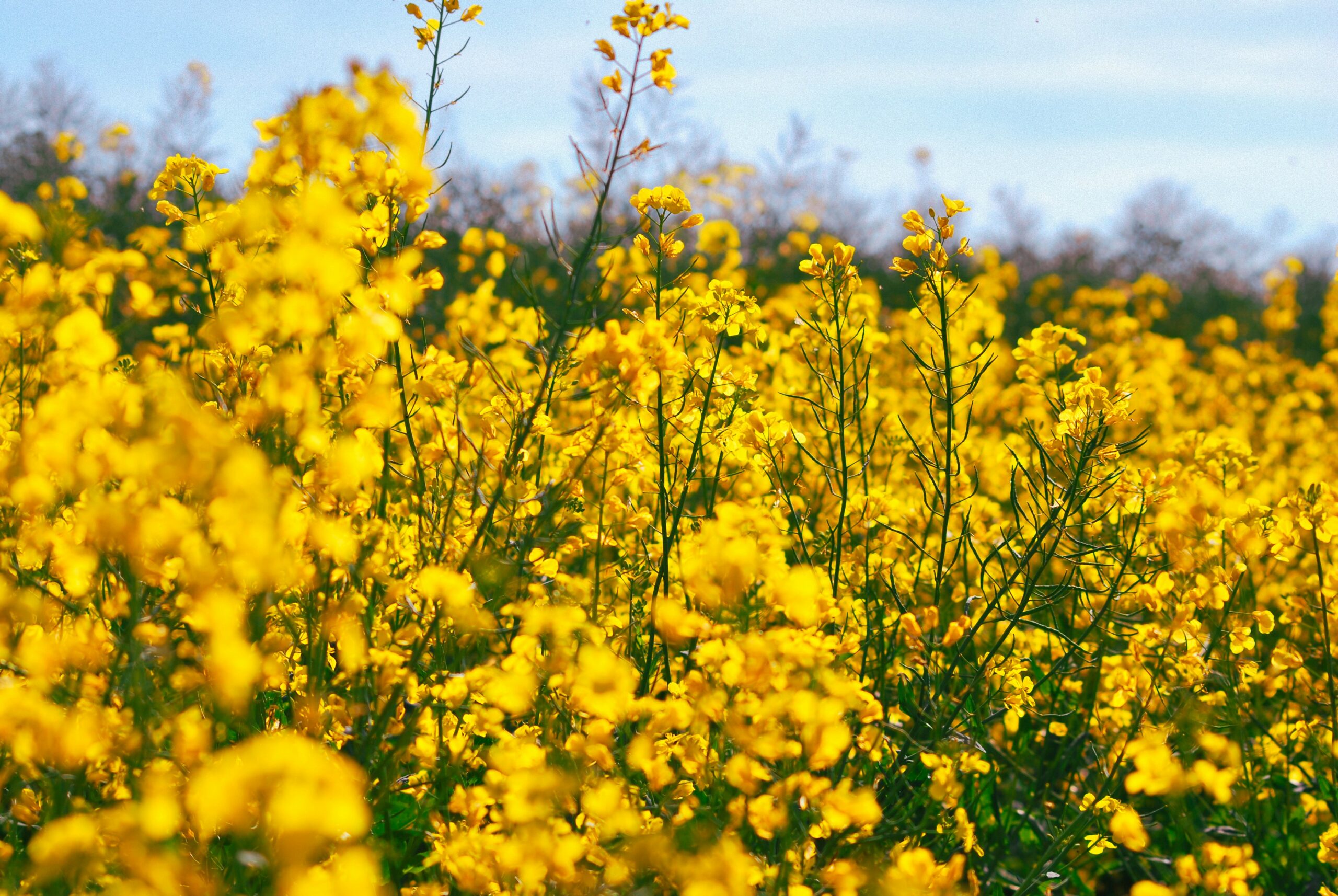
 Photo description: Rape seed in full bloom. Photo by Humans Made This on Unsplash
New analysis by nature-focused investment fund Rebalance Earth, reported by The Guardian, shows just how closely England’s food production overlaps with areas at risk of drought. Rebalance Earth has found that 81% of England’s fresh produce is grown in parts of the country already experiencing water stress, with three-quarters of wheat, barley and oilseed rape concentrated in areas rated at moderate to very high drought risk. Around a quarter of staple crops are grown in areas facing acute drought risk, including 30% of wheat and barley, 28% of oilseed rape and 21% of potatoes. Some of England’s most historically productive agricultural areas, including East Anglia and Kent, are among those under the greatest pressure, with both regions experiencing prolonged dry periods in recent years. The Agriculture and Horticulture Development Board’s final 2026 harvest report described this year’s cereal yields as disappointing, with volumes of wheat, spring barley and oats below historical averages across the UK.
Water access is fundamental to farm viability
The real-world impact of drought on food production is illustrated by conditions at the Elveden estate in Suffolk, which is one of England’s largest commercial farms, covering 9,000 hectares of Breckland’s sandy soil and producing 100,000 tonnes of food annually including wheat, barley, onions and potatoes. Farm manager Andrew Blenkiron told the Guardian that three out of the last five years had been drought years, and described water access as fundamental to the farm’s viability. Blenkiron also made a wider argument about the strategic importance of domestic food production: without adequate water resources to support farming in areas well-suited to it, the UK would simply import more food and displace the environmental burden onto other countries’ natural resources.
Drought’s hidden economic reach
Rebalance Earth’s chief operating and financial officer Kirsty Wilman argues that drought deserved far greater attention than it typically receives. Unlike flooding, which creates immediate visible disruption, drought builds slowly. However, its consequences run through the entire economy via lower yields, strained supply chains and higher food prices. The analysis makes the case that water stress is not only an environmental issue but a food security and economic resilience issue, with direct implications for the cost of living and the stability of domestic supply chains.
What this means for the water sector
Rebalance Earth’s analysis reinforces the strategic importance of water resource planning in agricultural regions, particularly in the east and South-East of England, where demand is highest and natural replenishment lowest. The findings add weight to calls for greater investment in water storage, transfer infrastructure and demand management, and highlight the growing tension between agricultural abstraction, environmental flows and public water supply in water-stressed catchments. As drought becomes a more frequent feature of the English climate, the water sector’s role in supporting food security, and the trade-offs this involves, will become an increasingly prominent part of the policy conversation.
Read more
The Guardian: Full coverage of the Rebalance Earth analysis