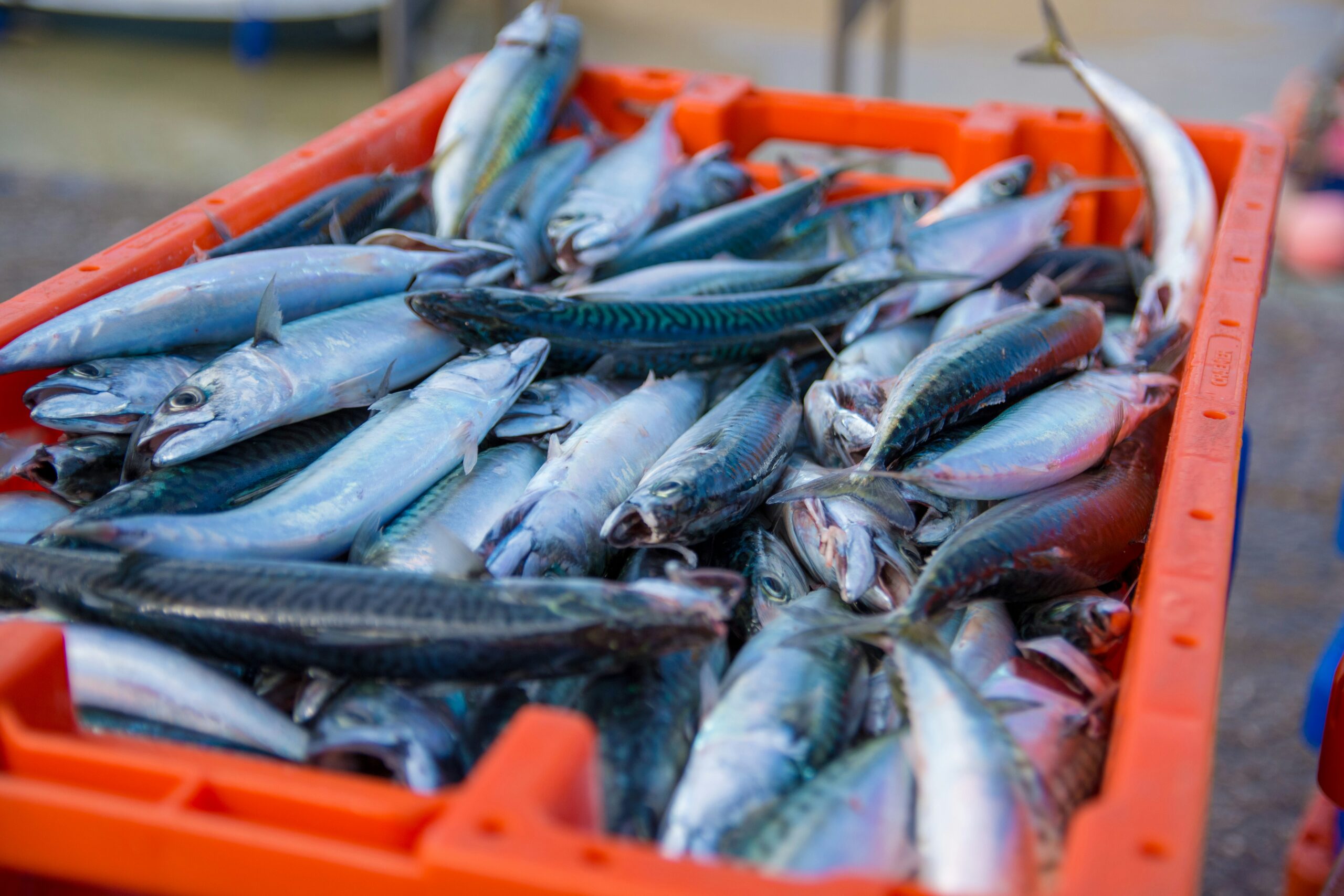
Photo by Richard Bell
Waitrose has become the first UK supermarket to suspend the sourcing and sale of north-east Atlantic mackerel, the Guardian reports, citing scientific advice that current catch levels are insufficient to rebuild the stock to sustainable levels.
Fresh, chilled and frozen mackerel will be removed from sale by 29 April 2026, with tinned products to follow once existing stock has sold through. All mackerel stocked by Waitrose is sourced from Scottish waters.
The decision follows advice from the International Council for the Exploration of the Sea (ICES), which found that in recent years mackerel has been overfished due to a lack of international quota agreements, resulting in a breeding rate too low to replace the volume being caught. In September 2025, ICES recommended a 70% reduction in catches — equivalent to a 77% cut on the 755,143 tonnes scientists estimated would be caught in 2025. In December, four coastal states, the UK, Norway, the Faroe Islands and Iceland, agreed to cut catches by 48%, a step forward but one that fell well short of the scientific advice. From May 2026, north-east Atlantic mackerel will no longer meet Waitrose’s responsible sourcing requirements under the Sustainable Seafood Coalition’s codes of conduct.
Jake Pickering, head of agriculture, aquaculture and fisheries at Waitrose, said: “By suspending sourcing of mackerel at Waitrose, we are reinforcing our ethical and sustainable business commitments, acting to tackle overfishing and protect the long-term health of our oceans and this crucial fish. Our customers trust us to source responsibly, and we are closely monitoring the fishery. We look forward to bringing mackerel back to our shelves once it meets our high sourcing standards.”
Marija Rompani, director of ethics and sustainability at the John Lewis Partnership, added: “Sustainable food production must balance climate action; nature protection and responsible fish sourcing is fundamental to protecting our oceans.”
A Defra spokesperson said: “We are working with other countries to reduce pressure on north-east Atlantic mackerel stocks while also protecting jobs in our fishing communities. Safeguarding the future of this crucial stock is a priority, which is why the UK is actively tackling overfishing to protect the long-term sustainability of our waters.”
Conservation groups welcome the move
Conservation and sustainability groups welcomed the announcement and called for other supermarkets to follow suit. The Marine Conservation Society, which downgraded mackerel from a three to a four on its five-point Good Fish Guide sustainability scale last year, described Waitrose’s decision as “leading and decisive.” Kerry Lyne, its Good Fish Guide manager, said: “To keep favourites like mackerel on the menu, we need support right across the supply chain with fishing kept within sustainable limits.”
Charles Clover, co-founder of Blue Marine Foundation, noted that mackerel, one of the largest remaining commercial fish stocks in the north-east Atlantic, had declined 75% in the last ten years because fishing nations, including the UK, had overfished it. “They have put too little effort into the task of reaching agreement on a sharing arrangement – and some countries have been awarding themselves more quota than is justified by science,” he said. “This crisis has been ignored for too long. We hope that this action by Waitrose sends it to the top of the political agenda. We call on other retailers to follow Waitrose’s example.” He warned that the plight of mackerel was “part of a wider failure to take scientific advice,” noting that last year more than half of UK catch limits were set above sustainable levels, contributing to the collapse of cod, whiting, herring, pollock and haddock in the Celtic Sea in recent years.
Hugo Tagholm, executive director of Oceana UK, described the ICES findings as “a clear warning that we are risking the total collapse of this population and endangering countless other wildlife species in the process,” and called for government action: “The responsibility cannot lie entirely with retailers or shoppers. It is the government that sets catch limits, and the government that has failed, year after year, to devise a cogent strategy to end overfishing once and for all. Now, with staple fish like cod and mackerel on the brink of disaster, it must act immediately.”
The WWF had previously warned that the north-east Atlantic mackerel population was facing collapse, with catches exceeding recommended levels by an average of 39% since 2010.
Industry raises concerns
Scotland’s pelagic industry responded with dismay. Ian Gatt of the Scottish Pelagic Fishermen’s Association criticised the timing of the announcement, saying progress was being made in quota-sharing negotiations between countries. The Scottish Pelagic Sustainability Group said the UK had been at the forefront of international efforts: “The UK, with support from mackerel fishermen and processors, is pressing hard to seek a solution, but the problem lies with other countries failing to show willingness to reach an agreement.”
Robert Duthie, chair of the Scottish Pelagic Processors Association, said: “Mackerel is the UK’s most important fishery in terms of volume landed and value, and the Scottish mackerel fishery is particularly important to onshore employment in our coastal communities in the north-east of Scotland and Shetland. This decision by Waitrose fails to recognise the significant work and leadership the UK Government has demonstrated in making genuine progress to resolve the complex issues among the coastal states staking a claim to the fishery.”
Alternatives introduced
To replace mackerel in its range, Waitrose will introduce MSC-certified Scottish hot smoked herring and peppered herring from April, alongside a hot smoked sweetcure seabass and MSC-certified frozen sardines launching in May. The retailer also announced it will become the first UK supermarket to sell 100% MSC-certified tinned sardines across seven product lines.
Mackerel is the most-caught fish in UK waters, with UK vessels landing more than 230,000 tonnes in 2024. The stock lost its MSC certification in 2019 following the breakdown of international quota-sharing arrangements.