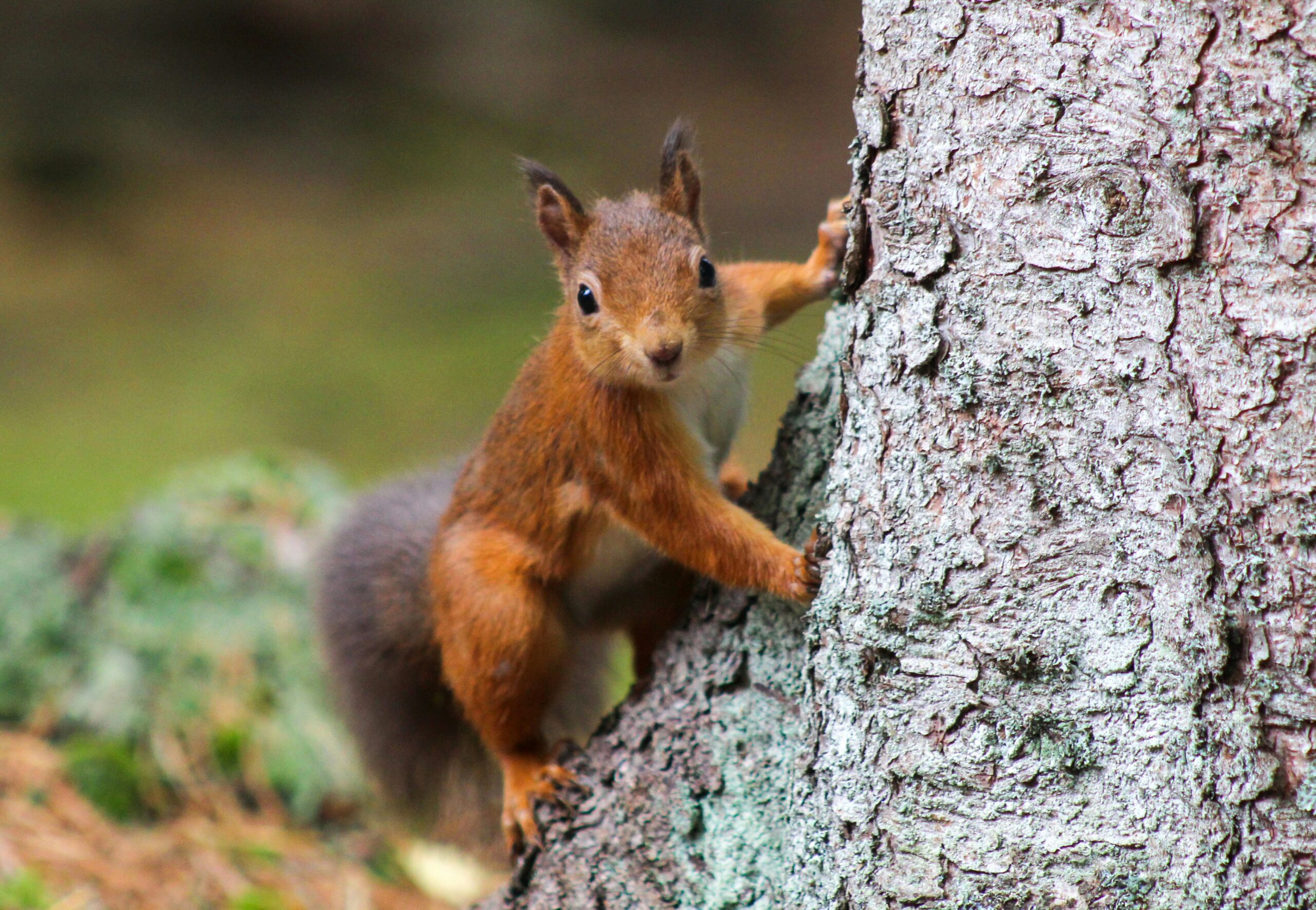
Image description: A red squirrel clinging on to a tree trunk. Image by Pearse O’Halloran on Unsplash
A report from the Office for Environmental Protection (OEP) has concluded the government is not on track to meet its targets to save wildlife in England and is failing on almost all environmental measures.
The OEP found that of the ten targets set in the Environment Act 2021, seven have little likelihood of being met by the 2030 deadline set in law. The most concerning finding relates to the biodiversity target aimed at halting declines in British species including red squirrels, hedgehogs, water voles and turtle doves. The OEP states this target will “almost certainly not be met,” noting that “important species continue to decline.”
The remaining targets: clean air, reducing the harmful impact of environmental hazards, and improving the beauty of nature, are considered only partially attainable.
The environmental watchdog’s fourth statutory assessment of England’s Environmental Improvement Plan found that of the 59 environmental trends, covering issues such as clean water, air pollution and species abundance, just 24 were improving, while 11 were static, 16 were deteriorating and eight were not assessed owing to a lack of data availability – figures marginally worse than in 2023 and 2024.
People at greater risk of floods and wildfires
The report warns that without immediate action, crucial 2030 deadlines including halting biodiversity decline and ensuring 30% of land and sea is protected for nature will be missed “on this government’s watch.” The watchdog warned that failure to meet nature targets could also threaten progress towards net zero and weaken the country’s ability to adapt to climate impacts.
The report also found that people in England were at a greater risk than before of environmental hazards such as floods and wildfires. It said: “The estimated number of properties at risk of surface water flooding has increased along with a decrease in the condition of flood or coastal risk management assets. Wildfire incidents continue to increase.”
The goal of achieving “clean and plentiful water” also remains largely off track. The watchdog identified a significant gap in English environmental law: the lack of a long-term target for overall water quality beyond 2027, with legally-binding commitments for 2027 and 2030 now just three and six years away.
Recent State of Nature data underscores the scale of the challenge. In England, Scotland and Wales, 1,500 species face extinction risk, while 281 species in Northern Ireland could be lost without action. Only 14% of the UK’s important wildlife habitats are in good condition, with just 7% of woodlands and 25% of peatlands meeting standards.
UK falling behind EU standards
Following the UK’s exit from the EU, the OEP was created to hold the government to account under the Environment Act 2021, which was passed to replace EU law. While the EU can place sanctions on member states if they fall behind on environmental standards, post-Brexit this was considered the only way to hold ministers to account.
The legal targets were set up after Brexit by the previous Conservative government, so as not to fall behind the EU on environmental regulation. However, research by the Guardian has instead found the UK weakening protections on several environmental measures and bringing forward legislation that could negatively affect the environment. Conservation groups have expressed alarm that the planning and infrastructure bill could allow developers to build on currently protected nature sites, raising concerns that wildlife protections are being viewed as obstacles to housing and development rather than economic enablers.
Glenys Stacey, chair of the OEP, emphasised the role of nature as the backbone of the economy: “Our report comes at a time when government is focused on economic growth. Nature has a role to play here, an important role. It is not a blocker to growth, but it enables, drives and protects economic growth.” She warned that recent Cabinet Office analyses of chronic risks facing the country highlight how “accelerating climate change, biodiversity loss and pollution have cascading, compounding impacts which will amplify threats to national and international security, the economy and communities.”
Will the government change course?
Some positive areas in the report where the Labour government has taken action are on clean air and action on the climate crisis. PM2.5 levels and those of other pollutants are falling, and Labour has put world-leading climate policies in place such as not allowing any new oil or gas licences in the North Sea.
Mary Creagh, the nature minister, said: “We are taking urgent action to restore our natural environment and have set out a clear path to achieving the country’s legally binding environmental targets in our new environmental improvement plan.
“We will carefully consider the OEP’s assessment and respond in due course.”