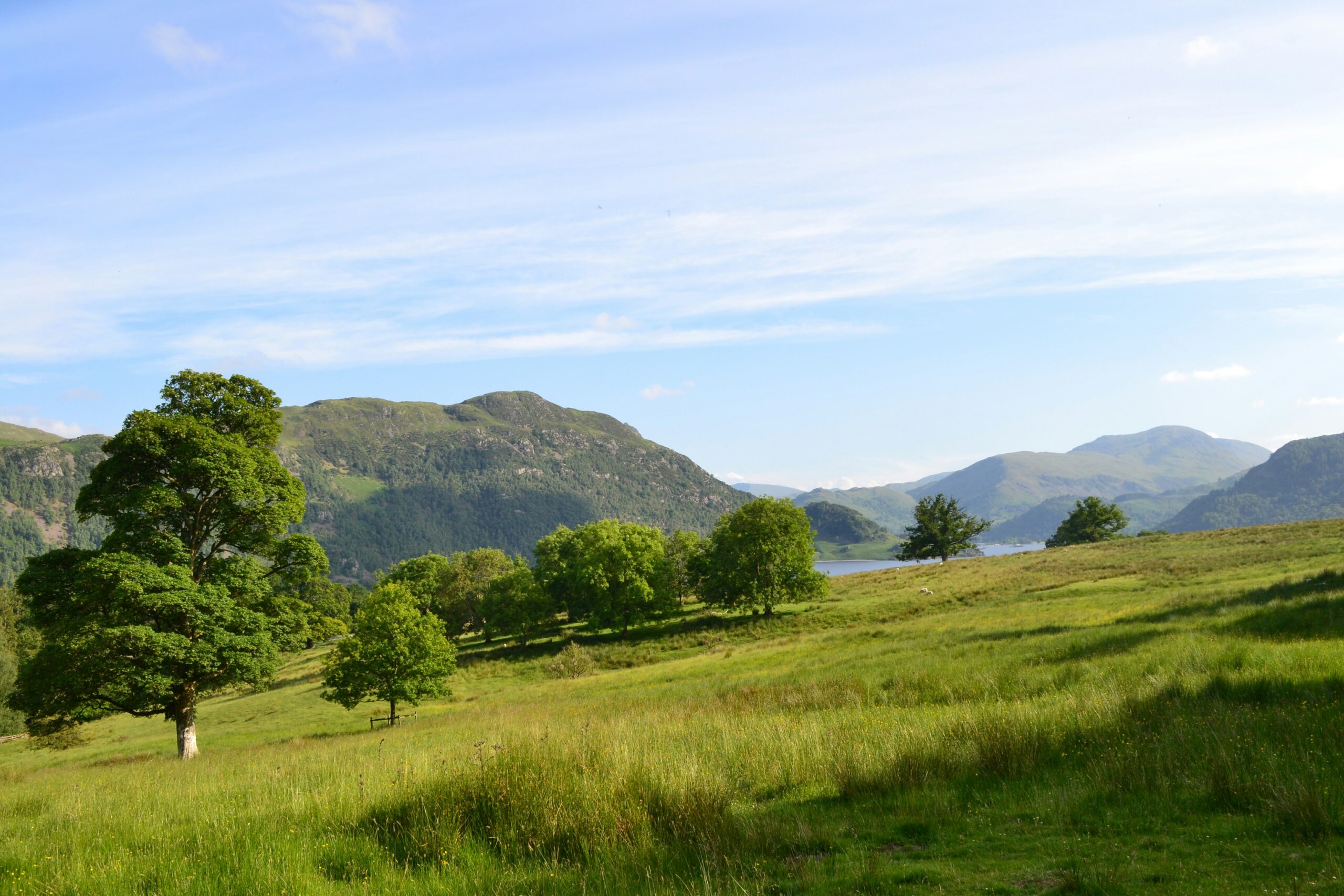
Image description: Landscape shot in the Lake District, with oak and sycamore trees in the foreground, and hills and water in the background. Image by Shreya 06 on Unsplash.
Natural capital (the UK’s forests, rivers, biodiversity and natural assets) should be formally recognised as critical national infrastructure to protect economic resilience and national security, according to a new policy paper from The Institute of Sustainability and Environmental Professionals (ISEP) supported by Jacobs.
The report demonstrates that environmental degradation poses direct threats to the 13 existing critical national infrastructure sectors including energy, water, transport, food and communications. The Office for National Statistics values UK ecosystem services at £1.8 trillion, equivalent to 72% of GDP, while the Green Finance Institute estimates environmental deterioration could trigger 6-12% GDP losses by the 2030s, comparable to the 2008 financial crisis or COVID-19 pandemic impacts.
Economic case for protection
Natural capital provides essential ecosystem services underpinning industrial productivity and climate resilience. Natural England warns that environmental degradation threatens both, yet nature-based solutions offer significant returns, generating £3 in benefits for every £1 invested while creating jobs and supporting economic growth.
Despite policy evolution from site-specific conservation to strategic nature restoration, and natural capital recognition in frameworks like the UK’s 25 Year Environment Plan and HM Treasury Green Book, application remains largely voluntary and inconsistent across sectors.
Six priority actions proposed
The report, drawing on expertise from infrastructure, energy, water, highways, rail and finance sectors, recommends:
- Relevant government bodies should formally recognise natural capital as a critical national infrastructure alongside its essential role in supporting the Critical National Infrastructure (CNI) sectors and the UK Government’s growth agenda.
- Create a Strategic Nature Network (SNN) and designate it as a Government Major and Nationally Significant Infrastructure Project, creating opportunities for economic growth and targeted investment in nature recovery.
- Recognise the SNN in National Policy Statements and Spatial Development Strategies and promote the uptake of natural capital approaches to deliver a consistent reporting requirement.
- Explicitly recognise the economic importance of natural capital in delivering the Environmental Improvement Plan and embed environmental net gain in decision making, including mandating nature-related financial disclosures for CNI sectors and public bodies. This will help the UK Government to deliver its nature restoration targets.
- Establish a dedicated Natural Infrastructure Investment Fund for nature restoration projects that connect the SNN, to create early-stage investment that provides private sector confidence and targets nature recovery in the most nationally critical locations.
- Develop guidance and training on natural capital and asset management approaches for public bodies and companies across all CNI sectors to enable decision makers to reach balanced and sustainable investment decisions.
Policy integration shortfall
ISEP CEO Sarah Mukherjee emphasised the critical gap between evidence and action: “Despite growing evidence that nature loss poses significant risks to society and the economy, there remains a shortfall in policy integration. Natural capital directly underpins the functioning and resilience of each existing CNI sector.”
She warned that unaddressed nature-related risks could negate government economic growth targets: “To futureproof the economy and provide resilience against increasing climate change impacts, natural capital should be recognised as critical infrastructure and integrated more effectively into UK fiscal policies. Current forecasts predict that nature-related risks – unless addressed and properly integrated into decision-making -will negate any potential gains in economic growth that the government is striving to deliver.”
The report highlights that while UK policy has evolved from site-specific conservation to strategic nature restoration, and natural capital is recognised in frameworks like the 25 Year Environment Plan and HM Treasury Green Book, application remains largely voluntary and inconsistently applied. This stands in stark contrast to the economic significance: nature provides up to £72 trillion worth of ‘free’ goods and services globally each year through ecosystem functions.
Cross-Sector Support
Several infrastructure operators endorsed the recommendations including Network Rail and National Highways.
Jacobs, which led the research and facilitated workshops with CNI sector representatives, emphasised the business case. Senior Vice President Amy Bentley said: “By embedding nature-based solutions and nature-related financial disclosures into policy and investment decisions, we enhance the evidence for public and private investment in nature recovery while ensuring natural systems are recognised and managed as strategic national assets.”