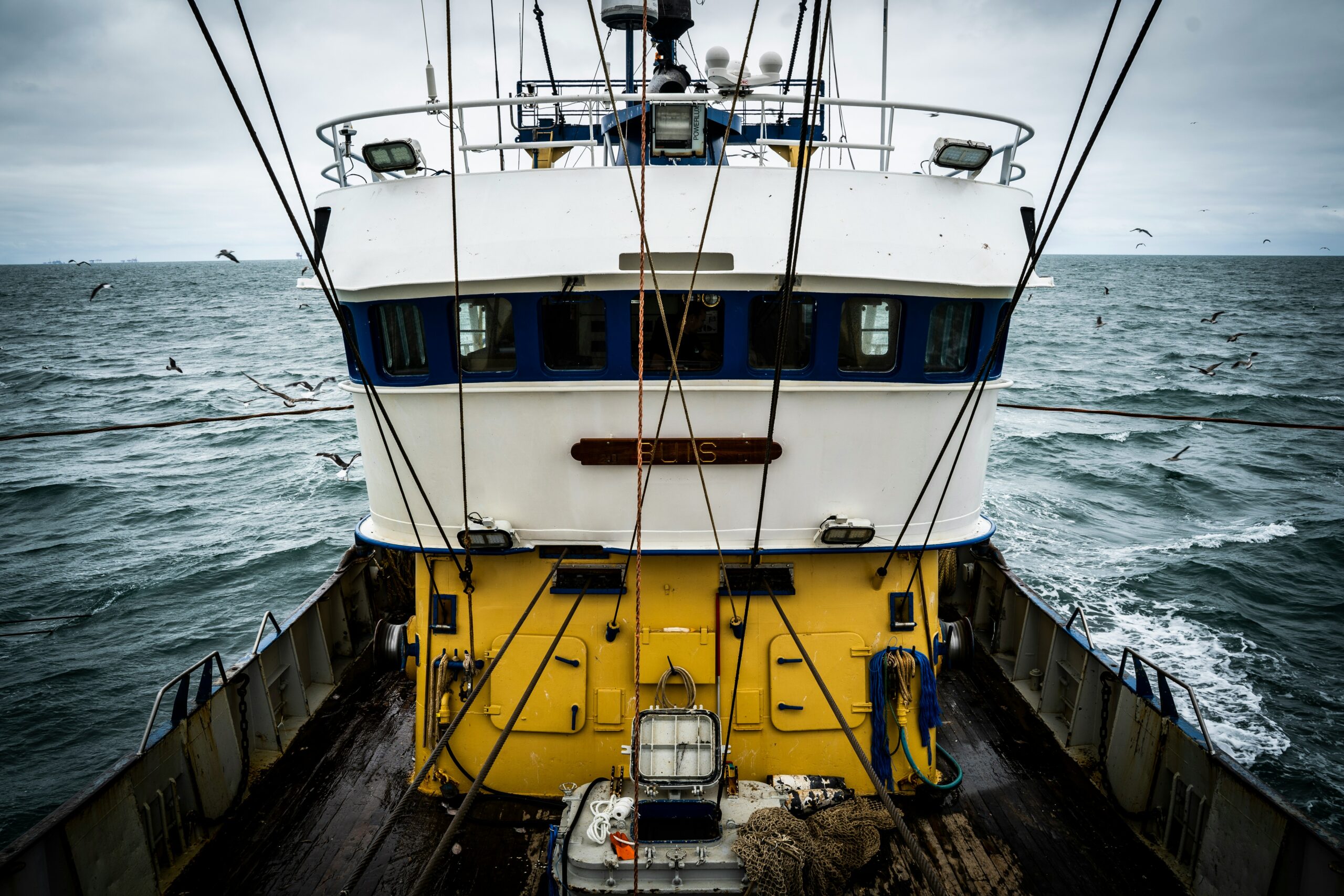
Photo by Paul Einerhand
A new report from Blue Marine Foundation argues that continued overfishing, rather than climate change or other external pressures, remains the dominant force behind the decline of the UK’s fish populations, and that the outcome is a political choice rather than an inevitability. Apocalypse Now: The True Cost of Overfishing, published in September 2026, describes overfishing as “the single greatest and most preventable threat facing our seas.”
The report analysed 55 distinct fish stocks around the UK and found that 62 per cent have declined since 2016, with the total estimated weight of fish in UK waters down by 41 per cent over the same period. Cod has fared worst: scientists now advise zero catches for three of the UK’s four cod stocks, and the Celtic Sea population has collapsed by 98 per cent since 2016. Mackerel, once one of Europe’s largest and most valuable fisheries, has declined by 76 per cent in a decade.
The scale of underreporting compounds the problem. The charity found that 58 per cent of UK fishing quotas were set above scientifically advised sustainable levels in 2026, and that so-called hidden overfishing, where fish caught in mixed fisheries are discarded rather than landed against quota, means true fishing mortality is likely higher than official figures suggest.
A political choice, not an inevitability
The report draws a sharp contrast between the North Sea, where haddock and whiting stocks have more than doubled since 2016 because fishing pressure has stayed within sustainable limits, and the Celtic Sea, where the same species have collapsed by 79 and 73 per cent respectively after catch limits repeatedly exceeded scientific advice. Oceanographic Magazine reports that the charity’s Fisheries Policy Lead, Jonny Hughes, described a domino-like sequence in the Celtic Sea, in which cod, whiting and haddock were sacrificed in turn to protect short-term catches of the others.
Celebrity chef and broadcaster Hugh Fearnley-Whittingstall, backing the report’s calls for reform, said ministers who set catch limits above scientific advice are “choosing to run down our seas.” A YouGov poll commissioned for the charity found that 71 per cent of UK adults support a legal requirement for catch limits never to exceed scientific advice, against just 3 per cent opposed.
Industry pushback
The Scottish Pelagic Fishermen’s Association has pushed back, specifically over the report’s mackerel figures. Its chief executive-designate, Hannah Fennell, said the report “is misleading and cherry-picks figures,” arguing that the 2026 mackerel total allowable catch comes from an ICES scenario within 3 per cent of the headline spawning stock biomass advice, and pointing to UK-led work to cut international fishing pressure on the stock by 20 per cent over three years, alongside remote electronic monitoring already in place across the UK pelagic fleet. She also disputed the report’s suggestion that fleet consolidation has harmed coastal communities, saying Scotland’s pelagic sector directly employs around 300 crew and supports roughly 2,500 processing jobs at peak season, mostly in the north-east and Shetland.
The report calls on the UK government to ensure all catch limits align with scientific advice, to factor discarding into quota-setting, to introduce mandatory remote electronic monitoring on vessels at high risk of discarding, and to implement time-bound recovery plans for the most depleted stocks, including Celtic Sea cod, haddock and whiting.