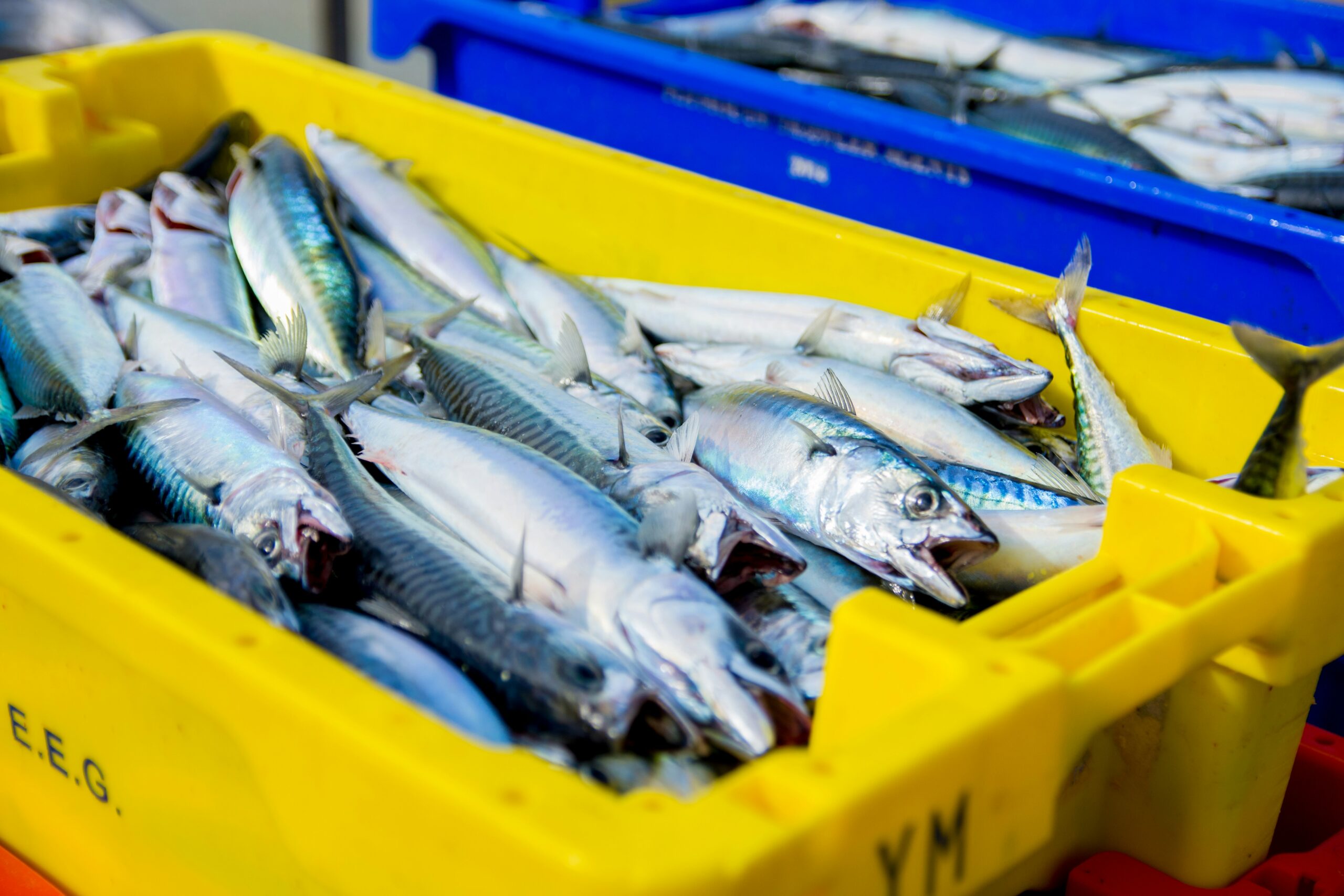
Photo by Richard Bell
A consumer group has accused supermarkets of “skimpflation” after tins of mackerel sold under some of the UK’s best-known brands turned out to contain an entirely different fish. Princes, which supplies own-label and branded tinned fish to Tesco and Sainsbury’s, has substituted Chilean jack mackerel for Atlantic mackerel across its range, with Lidl selling a similar swap under its own house brand. Sue Davies, head of food policy at Which?, said: “It’s a real concern when manufacturers quietly downgrade everyday staples like these as shoppers can end up paying the same price for a product that delivers significantly less nutritional quality.”
A quiet substitution
Despite the shared name, jack mackerel is a different species entirely, belonging to the Carangidae family rather than true mackerel’s Scombridae family. It contains roughly half as much omega-3 and around a third as much vitamin B12 as the real thing, and around 100 fewer calories per 100g. Consumers have also complained of bigger bones and a different smell and texture. Until December 2025, UK rules only allowed this species to be marketed as “jack”, “scad” or “horse mackerel” – shortly after Princes launched its product, Defra changed the rules to permit the “jack mackerel” name specifically. Davies said manufacturers “have a responsibility to shoppers to be completely upfront when they change a product’s recipe,” adding: “Skimpflation – quietly changing ingredients to cut costs – has become increasingly common, but it can feel particularly sneaky as shoppers may not realise a product has changed until they get it home and eat it.”
Why the switch happened
Princes announced the change last October, framing it as a sustainability decision rather than a cost-cutting one. David McDiarmid, Princes’ Corporate Relations Director, said the company had long called on coastal states “to agree quotas in line with scientific advice and implement a long-term science-based management plan,” but that “to date there has been insufficient tangible progress, and we now have NGOs warning of stock collapse.” The Marine Stewardship Council’s George Clark welcomed the move, saying it “represents a clear market signal of the need to provide certified sustainable choices for UK shoppers.” Industry figures suggest wholesale Chilean jack mackerel costs roughly a third as much as Atlantic mackerel, though several retailers are selling the substitute tins at close to the same price as the original.
A fishery without an agreement
The switch reflects years of overfishing against scientific advice, and advice that has itself become contested. ICES recommended a 70% cut to the 2026 north-east Atlantic mackerel catch, to 174,357 tonnes. Coastal states didn’t follow it: the UK, Norway, the Faroe Islands and Iceland agreed a smaller 48% cut instead, setting the TAC at 299,010 tonnes – more than 100,000 tonnes above the scientific advice – with the EU and Greenland left out of the deal entirely. Industry bodies pushed back hard on the science itself. Elspeth Macdonald of the Scottish Fishermen’s Federation accused ICES of “stepping out of their remit of providing scientific advice and stepping into fisheries management.” Ian Gatt of the Scottish Pelagic Fishermen’s Association called the advice “a hammer blow to the industry because of bad assumptions and, frankly, guesswork.” An EU spokesperson, meanwhile, warned that without a comprehensive agreement, the scientific recommendation for 2027 “would almost certainly be zero.” ICES issues its next advice on 30 September 2026, with coastal-state talks to follow in October.
Industry unconvinced by the supermarket response
Waitrose became the first UK supermarket to act, announcing in February that it would stop sourcing fresh mackerel, saying the agreed 48% cut “did not go far enough.” Charles Clover of the Blue Marine Foundation called overfishing a “crisis” that had been “ignored for too long,” while the Marine Conservation Society’s Kerry Lyne said: “To keep favourites like mackerel on the menu, we need support right across the supply chain with fishing kept within sustainable limits.” But the shift to jack mackerel has drawn its own criticism. Hannah Fennell of the Scottish Pelagic Fishermen’s Association said retailers moving away from UK mackerel were “unfairly punishing the UK industry while instead sourcing a different, less omega-3-rich species from the other side of the world with a significantly higher carbon footprint to the UK market.” The trend isn’t confined to Britain – supermarkets in the Netherlands no longer sell Atlantic mackerel at all, and at least one Swedish chain has made the same switch.