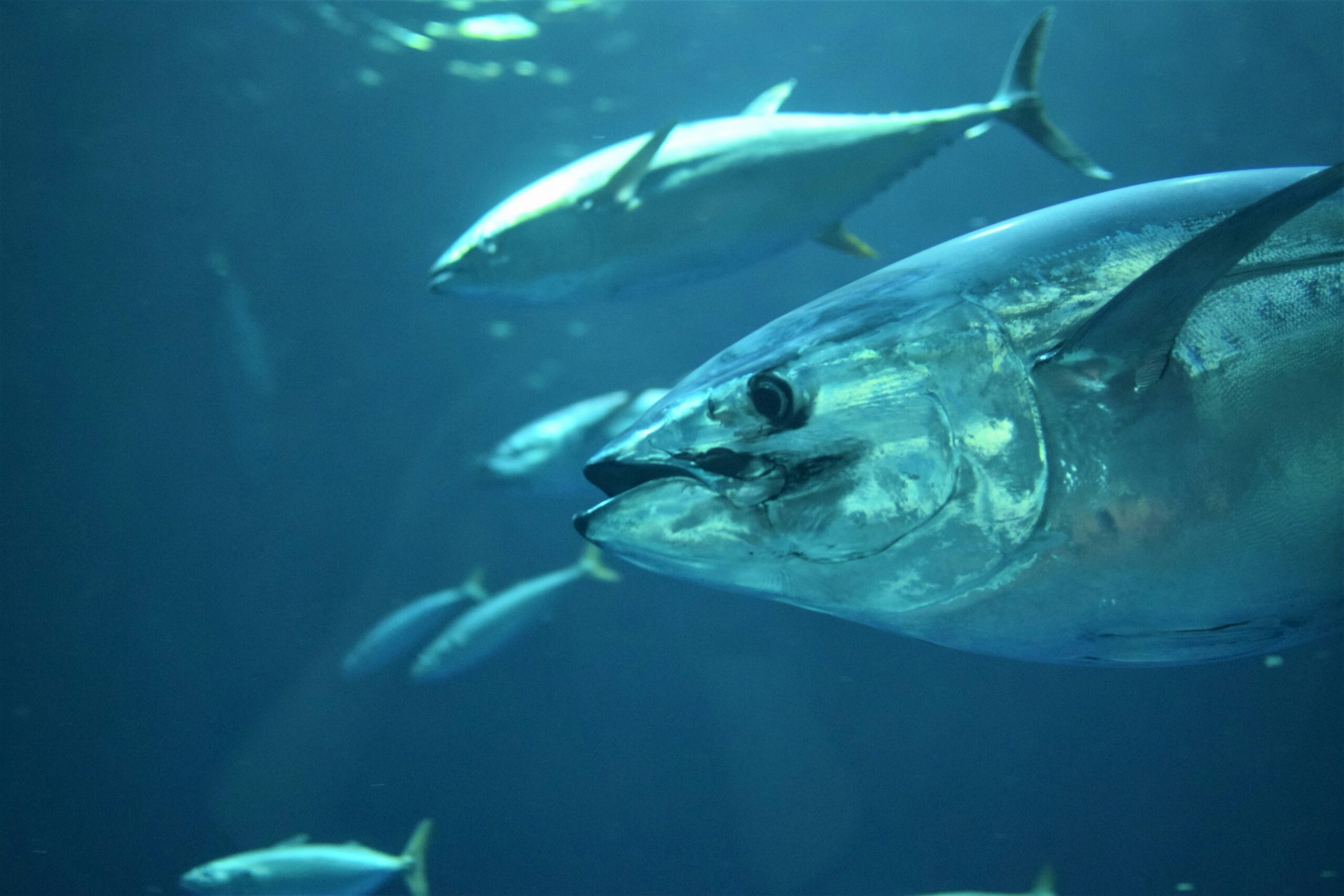
Photo by Kate Estes
A landmark investigation has revealed that European fishing companies have quietly expanded their dominance of the Indian Ocean tuna fishery by registering vessels under the flags of coastal states – allowing them to circumvent quota restrictions at a time when key tuna species are still recovering from severe overfishing.
The report, Europe’s Hidden Tuna Empire, was produced jointly by the London-based conservation charity Blue Marine Foundation and Kroll, a global investigations firm, and published ahead of an annual meeting of the Indian Ocean Tuna Commission (IOTC) in the Maldives. It finds that European companies have taken a third of the Indian Ocean’s tropical tuna catch over the past decade, skipjack, yellowfin and bigeye, despite Europe’s vast geographical distance from the ocean.
A shrinking share that isn’t
The EU has held a dominant position in the Indian Ocean tuna fishery since the 1980s, when Spanish and French companies first introduced purse seine vessels to the region. At peak, vessels flying EU flags accounted for nearly 40 per cent of the catch of the three key tropical tuna species. As coastal states began asserting their rights through the 1990s, the EU-flagged share appeared to fall, dropping to between 16 and 21 per cent in the 2020s.
The report’s central finding is that this decline is largely illusory. Rather than reducing its footprint, the European-owned fleet has expanded significantly over the past 30 years by reflagging ships to Indian Ocean coastal states, including the Seychelles, Mauritius, Kenya, Tanzania and Oman, gaining access to those countries’ larger quota allocations. The fleet has grown to more than 50 purse seine ships and supply vessels as a result.
Jess Rattle, head of investigations at Blue Marine Foundation, said the investigation began when she started noticing purse seine ships operating under unfamiliar flags: “We wanted to understand who really owned these vessels. Were they owned by the coastal states whose quota they were now using, or in fact, were they owned by the EU?”
Layers of concealment
Tracing true ownership proved complex. Parent company ownership is frequently obscured through layers of shell companies and foreign registries, which Rattle and the team at Kroll spent months working through. While reflagging is not illegal and is common in the fishing industry, it significantly limits regulators’ ability to assess the real impact of European companies on the fishery. Benedict Hamilton, a managing director at Kroll, said: “Europe’s opportunity to help stop overfishing is greater than first appears.”
The findings echo a January report by Oceana, which found that European companies routinely register vessels under the flags of foreign nations – including some countries the EU itself has accused of turning a blind eye to illegal fishing. Vanya Vulperhorst, Oceana’s illegal fishing campaign director for Europe, said: “What we found last year is that the real European fleet, if you add the non-EU flagged vessels, doubles.”
Quota pressure and a history of friction
The IOTC has in recent years introduced management measures to rebuild vulnerable yellowfin and bigeye stocks. As part of this effort, the EU agreed to reduce the yellowfin catch for EU-flagged vessels by 21 per cent – pressure that Glen Holmes, senior officer with Pew Charitable Trusts, suggested may be driving European companies to seek other countries’ quotas to maintain their overall catch.
The EU’s record at the IOTC has not always been constructive. Five years ago, the Maldives accused the EU of failing to put forward a serious proposal to lower quotas. In 2023, the EU objected to an Indonesian proposal for a purse seine fishing closure that passed with the support of 15 other member countries.
Europeche Tuna Group confirmed the report’s figure of more than 50 purse seine and supply ships operating throughout the Indian Ocean. Spokesperson Anne-France Mattlet said the industry’s relationships with coastal nations reflect long-term investment in the region, including payment of taxes and fishing licence fees and investment in local infrastructure. The European Commission, meanwhile, said reflagging is a private business decision not influenced by public authorities. “The EU has done, and keeps doing, its utmost to promote and respect catch limits,” spokesperson Maciej Berestecki added.