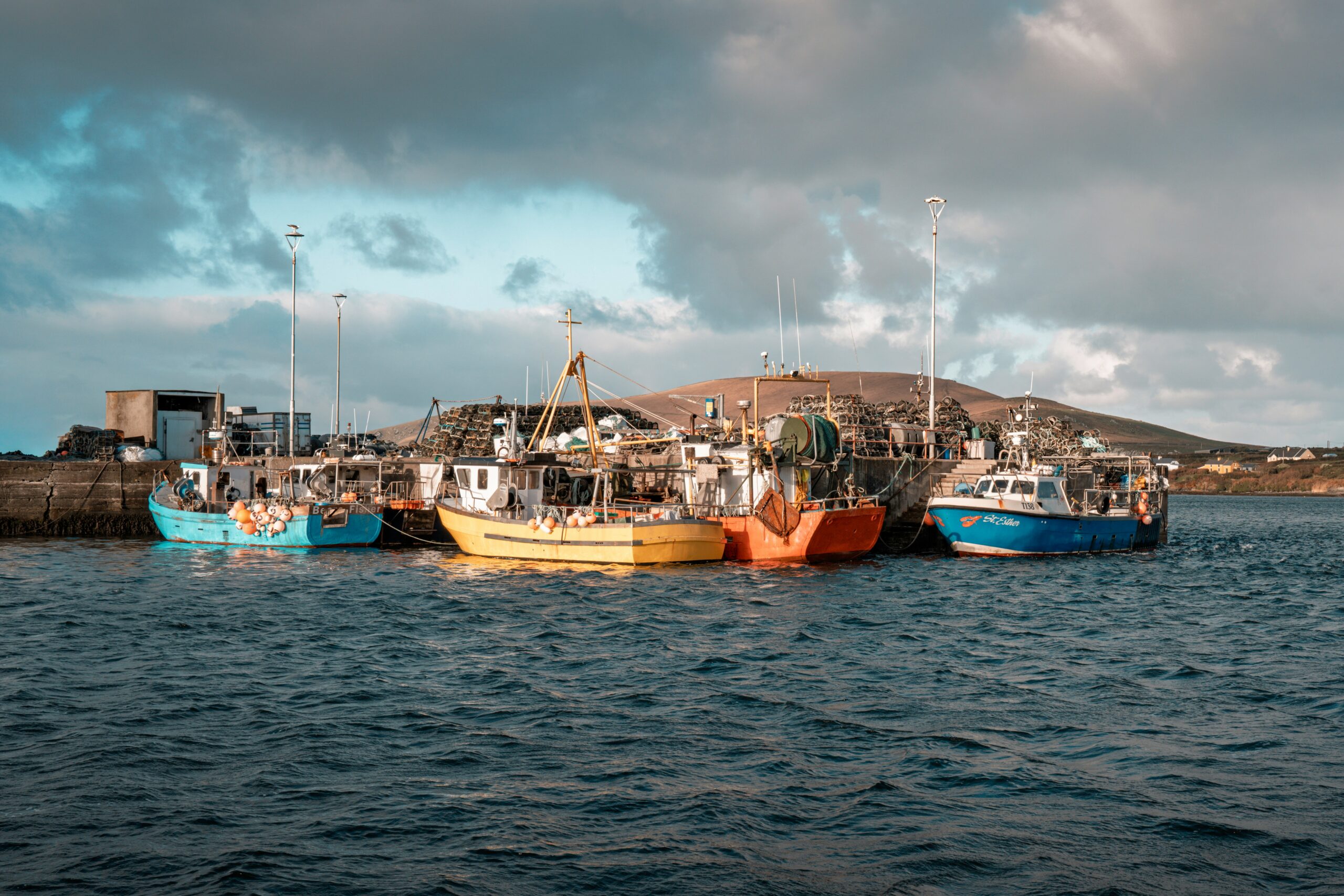
Photo by Raul Ling
The European Commission has published its annual communication on the state of EU fisheries, reporting continued long-term progress towards sustainable fishing while warning of declining stocks in several critical sea basins, a fuel cost crisis threatening to wipe out recent economic gains, and persistent failures to eliminate discards. The report, published on 5 June, simultaneously opens a public consultation that will inform fishing opportunities for 2027, with EU fisheries ministers due to agree total allowable catches at Council meetings in October and December.
The annual communication lands in the context of a broader reckoning for European fisheries policy. In April, the Commission published a decade-long evaluation of the Common Fisheries Policy covering 2014 to 2024, a review that confirmed some progress but delivered a frank assessment of underperformance. The proportion of stocks fished sustainably rose from 50% to 63% over the decade, but stock recovery lagged expectations, and economic and social gains fell well short of what was anticipated when the CFP was reformed in 2013.
Stocks declining in critical areas
Despite the headline progress, the Commission is clear about where trends are heading: the number and size of fish stocks in the North-East Atlantic continue to decline, and key commercial stocks in the Baltic Sea and Western Mediterranean remain under serious pressure.
The Baltic situation is acute. Eastern Baltic cod has been under a near-total fishing moratorium since 2019, yet the stock has been slow to recover, a consequence of decades of overfishing compounded by oxygen depletion in spawning grounds, rising temperatures and collapsing food webs. Western Baltic cod and western Baltic spring-spawning herring have both collapsed, described by scientists as a combined consequence of overfishing and climate change. Sprat catches have expanded to fill the void, but much of that catch goes to industrial uses rather than human consumption.
The Western Mediterranean also remains a problem area. Despite some gradual improvement, overfishing rates there have historically been among the highest in EU waters, and several stocks of hake, sardine and red shrimp remain at risk.
The Commission acknowledges that climate change is increasingly disrupting stock distribution and ecosystem dynamics, but maintains that fishing mortality itself remains a significant factor in stock condition – and that further management effort is required.
A shrinking but still-strained fleet
The EU fishing fleet continued to contract in 2025 as part of an ongoing structural adjustment. It now comprises 68,910 vessels employing more than 155,200 people in coastal communities across Europe. Vessel numbers fell by approximately 0.95% during the year, gross tonnage by 1.8% and engine power by 1.06%. Despite these reductions, 209 fleet segments still show at least one biological indicator in the red and 165 show at least one economic indicator in the red, a sign that fleet adjustment has not yet resolved either the ecological or the commercial pressure across the board.
The CFP decade evaluation, which drew sharp responses from across the sector, highlighted a troubling social dimension that the June annual report echoes. Employment in EU fisheries has been steadily declining, wages have stagnated, and the ageing workforce is struggling to attract new entrants. The European Transport Workers’ Federation noted that fishers have borne the cost of repeated capacity reductions and effort restrictions without seeing the stock recovery returns those sacrifices were meant to produce. Europêche, the EU fishing industry association, called for an “omnibus-style” revision of the policy, arguing that the current regulatory framework is too burdensome and insufficiently results-oriented. Vera Coelho of Oceana in Europe, by contrast, argued that “the priority now is not to rewrite the policy, but to fully enforce it.”
Fuel crisis threatens economic recovery
Fleet economic performance improved during 2025, but the Commission warns those gains are already under threat. Marine fuel prices almost doubled in 2026 following the disruption linked to the Middle East conflict, reaching around €1.00 to €1.10 per litre by the end of March. The Commission estimates that every €0.10 increase in fuel prices reduces annual gross profits across the EU fleet by approximately €156 million, and warns that if elevated prices persist, significant numbers of jobs in fishing communities could be at risk.
In response, the Commission activated the crisis mechanism within the European Maritime, Fisheries and Aquaculture Fund (EMFAF) for the second time, unlocking €760 million in direct compensation for affected fishers and aquaculture operators through Member States’ national programmes. It also adopted the Middle East Crisis Temporary State Aid Framework (METSAF) on 29 April, allowing Member States to cover up to 70% of additional fuel costs incurred since 28 February 2026.
The Commission is explicit, however, that these are short-term measures. “The EU has now faced two severe fuel crises within four years and responded swiftly through targeted measures, albeit short-term ones,” it states. “The durable answer is accelerating the energy transition of EU fishing fleets.”
Landing obligation failures persist
The annual report also revisits one of the most controversial elements of the CFP. Drawing on audit findings, compliance reports and an independent evaluation, the Commission concludes that illegal and undocumented discarding remains widespread and that the landing obligation, introduced in 2015 with the aim of progressively eliminating discards, has not achieved its objective. Shortcomings in monitoring, enforcement and industry acceptance are identified as the principal obstacles. From January 2028, fishing vessels over 18 metres deemed at high risk of non-compliance will be required to carry remote electronic monitoring systems under revised fisheries control rules.
Vision 2040 and next steps
Looking ahead, the Commission is developing a Vision 2040 for Fisheries and Aquaculture, due for adoption in September, which it describes as a long-term strategy pursuing environmental and economic objectives together. The strategy is intended to support stable incomes and profitability, improve working standards, attract younger people into the sector and advance the industry’s transition towards lower environmental impact. The energy transition, in particular, is expected to feature prominently: reducing fossil fuel dependence is framed not merely as an environmental imperative but as a structural resilience measure.
Stakeholders, including Member States, Advisory Councils, the fishing industry, NGOs and members of the public, are invited to submit views on the 2027 fishing opportunities by 31 August. Following the consultation and scientific advice from ICES and the STECF, the Commission will present quota proposals for the Atlantic and North Sea, the Baltic, and the Mediterranean and Black Seas. EU fisheries ministers will then negotiate total allowable catches at Council meetings in October and December.