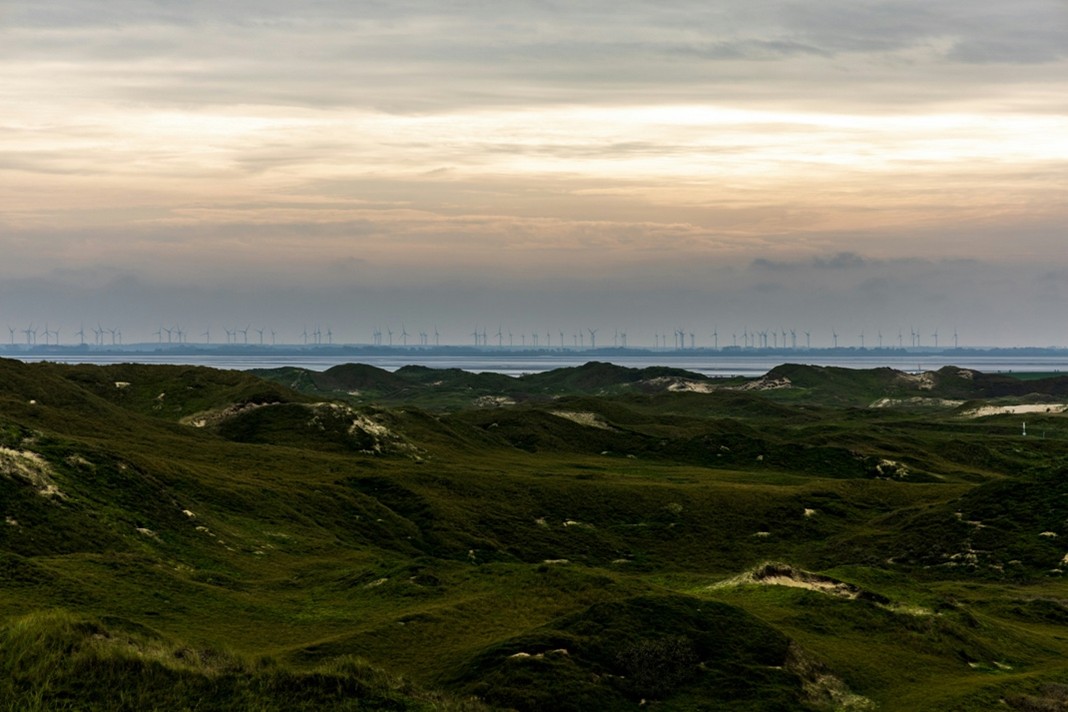
Photo by Dominik Lückmann
Ten European countries signed a declaration in Hamburg on Monday committing to deliver 100 gigawatts of offshore wind power through large-scale joint projects in the North Sea by 2050, in a move that underscores the continent’s ongoing commitment to renewable energy despite recent criticism from US President Donald Trump.
The Hamburg Declaration was signed by the UK, Belgium, Denmark, France, Germany, Iceland, Ireland, Luxembourg, the Netherlands and Norway at the third North Sea Summit. The agreement forms part of a broader goal to build 300 gigawatts of offshore wind capacity in the region by 2050, a target originally established in 2023 following Russia’s invasion of Ukraine.
Energy sovereignty and abundance
British Energy Secretary Ed Miliband said in a statement: “We are standing up for our national interest by driving for clean energy, which can get the UK off the fossil fuel rollercoaster and give us energy sovereignty and abundance.”
He added: “After our record renewables auction, we today go further by signing a clean energy security pact with European allies to ensure we maximise the clean energy potential for the North Sea.”
German Economy Minister Katherina Reiche stated: “By planning expansion, grids and industry together and implementing them across borders, we are creating clean and affordable energy, strengthening our industrial base and increasing Europe’s strategic sovereignty.”
Joint infrastructure and security focus
According to a draft declaration seen by Bloomberg News, transmission system operators will set 20 gigawatts of joint projects in motion in the 2030s. For the first time, some wind farms will be linked to multiple countries through undersea cables known as interconnectors.
Security of offshore infrastructure emerged as a key theme at the summit. The draft document states: “Considering the need to secure our offshore energy infrastructure against actions committed in the maritime sea and air space by malign actors and to negligent nautical behavior, it is essential to continue to pursue a high level of physical and digital protection of our energy infrastructure.”
Countries committed to exchange security-related data and head off physical and cyber threats, including by stress-testing components in wind turbines. The security focus follows a series of incidents affecting energy infrastructure, including an arson attack in Berlin earlier this month that left 45,000 homes without power for several days.
Context of US criticism
The agreement comes days after President Trump delivered a speech at the World Economic Forum in Davos heavily criticising European renewable energy policy. He claimed: “There are windmills all over Europe. There are windmills all over the place, and they are losers. One thing I’ve noticed is that the more windmills a country has, the more money that country loses, and the worst that country is doing.”
Trump also criticised UK North Sea policy, claiming the country was sitting on “one of the greatest energy sources in the world” but doesn’t use it, and stated that oil companies told him: “They make it impossible for the oil companies to go. They take 92% of the revenues.”
However, Trump’s claims about both offshore wind and North Sea oil reserves have been challenged by energy analysts. Research by University College London found that wind energy lowered UK energy imports by 12% and saved British consumers approximately £104 billion on energy bills between 2010 and 2023.
UK offshore wind progress
The Hamburg Declaration follows a record-breaking UK offshore wind auction earlier in January, when projects with a total capacity of 8.4 gigawatts were awarded contracts.
The UK currently ranks second globally in offshore wind capacity with almost 16 gigawatts in operation, behind China which leads with 43 gigawatts of the world’s 83 gigawatts of installed capacity, according to industry body RenewableUK.
Strategic context
Federal Chancellor Friedrich Merz emphasised at the announcement of the summit that collaboration in the North Sea is of critical importance for an economically strong, secure and independent Europe. He stated that participants are united around the goal of “developing the North Sea into the largest reservoir of clean energy in the world.”
The North Sea Summit was first held in Esbjerg, Denmark, in 2022 and most recently in Ostend, Belgium, in 2023. It was created as a result of Russia’s war of aggression against Ukraine to help Europe reduce its dependence on fossil fuel imports, particularly from Russia.
NATO and the European Commission also participated in Monday’s summit, which included pledges to strengthen security for offshore energy infrastructure amid rising concerns over sabotage and unsafe maritime activity.