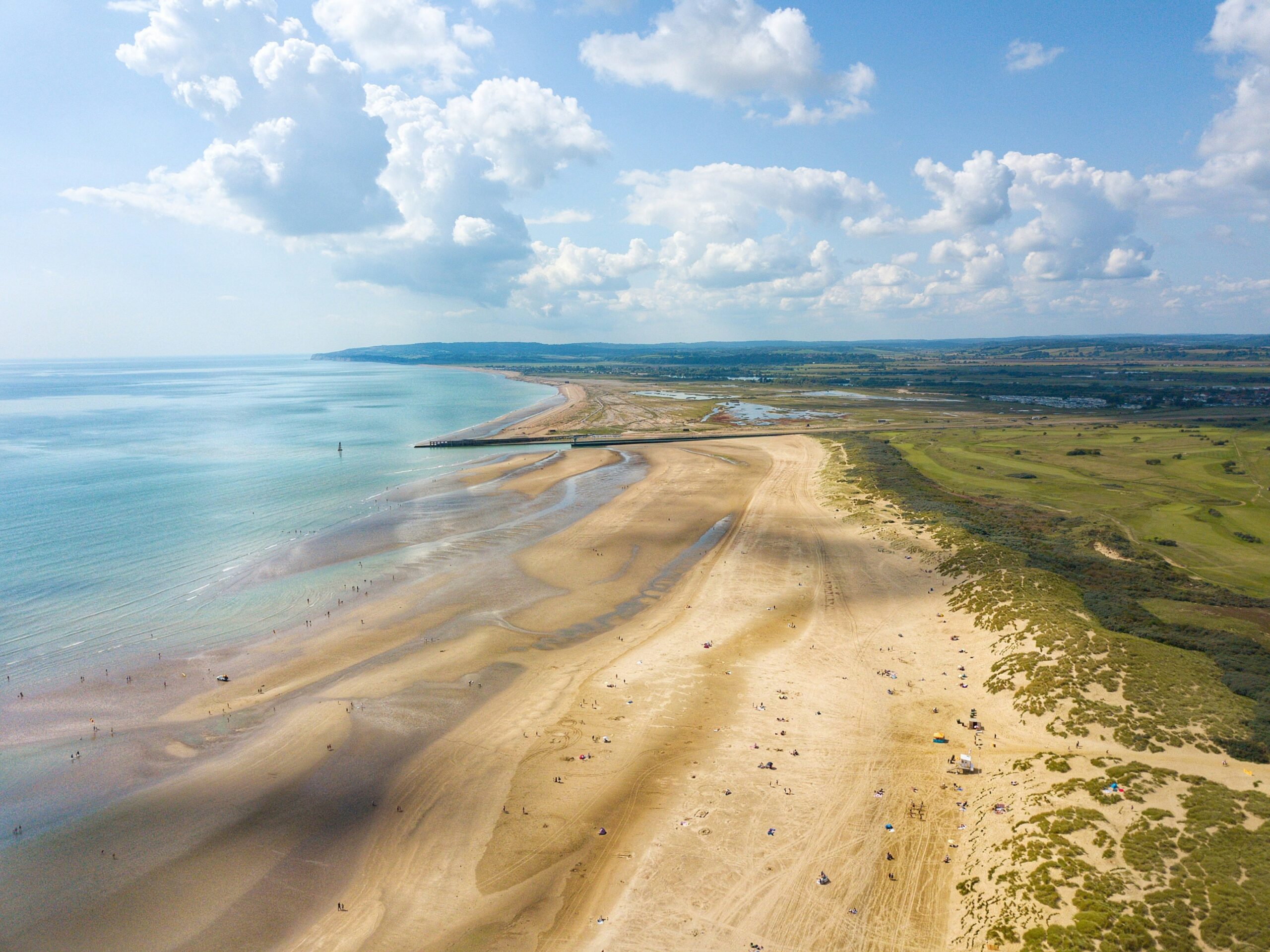
Photo by Chris Mitchell
A pollution incident involving millions of plastic bio-beads washing ashore on Sussex beaches has been upgraded to the most serious Category 1 classification by the Environment Agency. The move means Southern Water could face the most severe set of sanctions following investigation into the incident.
The micro-beads were accidentally released from Southern Water’s treatment plant at Eastbourne last October when a screening filter failed during heavy rainfall. The incident grew in seriousness after the plastic beads were found on sensitive salt-marsh at the protected Rye Harbour Nature Reserve, home to more than 4,355 species including 300 that are rare or endangered.
Devastating impact on protected site
In a joint letter, Helena Dollimore, MP for Hastings and Rye, and Chris Corrigan, CEO of the Sussex Wildlife Trust, urged the Environment Agency to treat the incident with utmost severity. “This pollution incident has devastating potential for major adverse effects on this statutorily protected site of special scientific interest,” they wrote.
Dollimore said: “It was devastating to discover the beads in Rye Harbour Nature Reserve, and I am worried about the harm they could cause our local wildlife.”
Independent testing by King’s College London found the bio-beads contain traces of arsenic and lead. Whilst levels did not classify them as hazardous waste, the heavy metals could prove hazardous to wildlife if ingested.
Sussex Wildlife Trust warned that “the beads will over time accumulate within species and could ultimately block internal systems potentially leading to death.”
Outdated technology still in use
Bio-beads are plastic pellets used in wastewater treatment since the early 1990s. Pollution risks became clear in 2010 when over 5 billion beads were released from a South West Water treatment plant near Truro. Despite this, the technology is still used in 14 older sites along the south coast, including five operated by Southern Water.
Dollimore told Sussex Bylines: “I wasn’t aware that these plastic beads were used in local wastewater plants until 320 million washed up on our coast, causing an environmental catastrophe.”
Clean-up and campaign
A continuous line of bio-beads has been found along a two-mile coastline at Camber Sands, with contamination now extending approximately 50 miles from Eastbourne to Kent. Southern Water has commissioned three new specialist microplastic vacuums and a large towable beach screener to support removal efforts.
Dollimore has launched a petition to end the use of plastic beads in wastewater treatment. Southern Water stated that bio-beads “were the best available technology when sites such as Eastbourne were constructed in the 1990s,” with newer sites using membrane sheets instead.
An Environment Agency spokesperson said: “This is an active investigation, and we will not hesitate to take robust enforcement action where appropriate.”