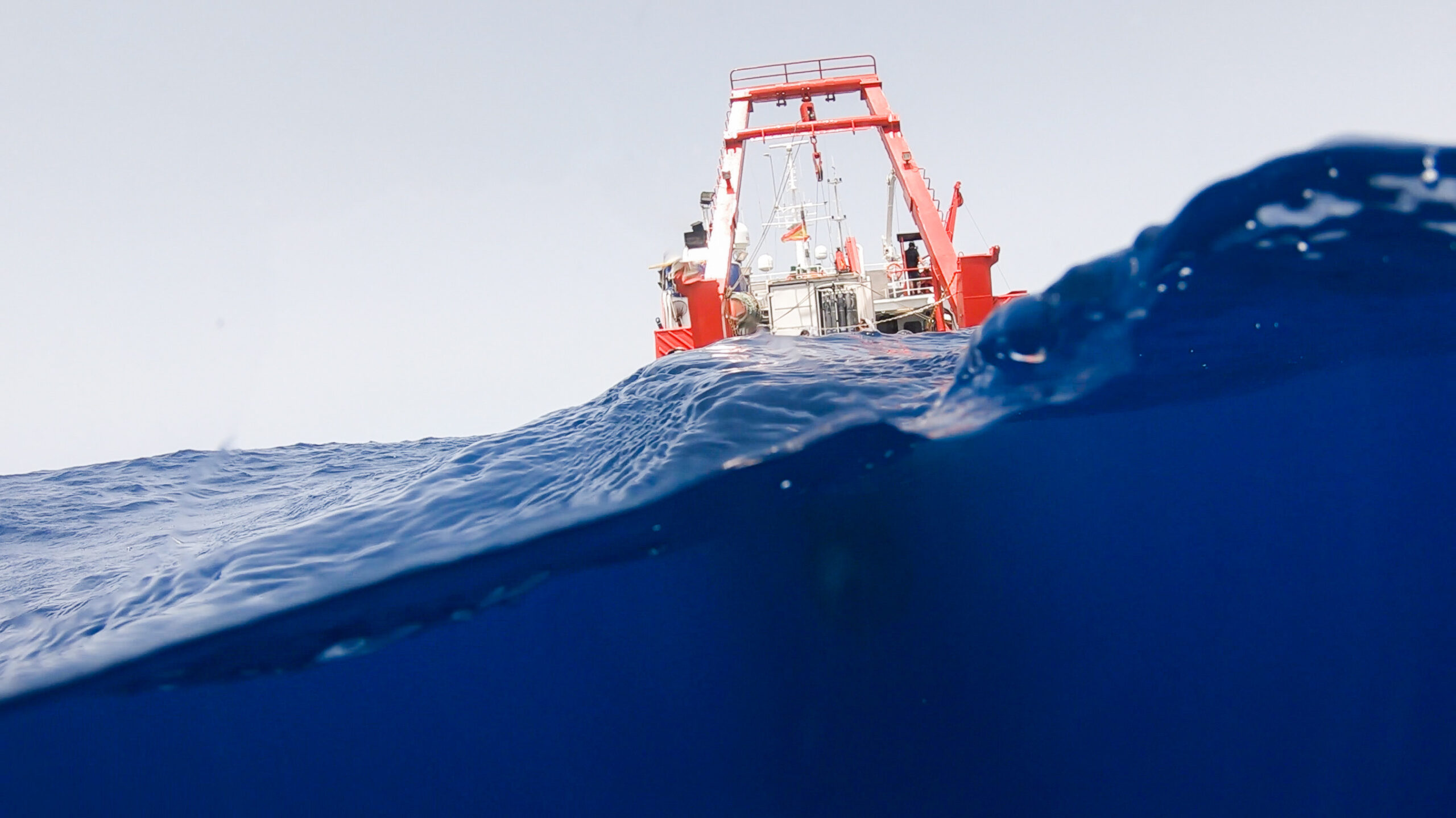
Oceanography vessel over calm waters prepared to work with instrumentation
Scientists have for the first time recorded and measured the real-time movement of microplastics through the digestive systems of tiny marine organisms, revealing their critical role in transporting plastic pollution from the surface to the deep sea.
The study, led by researchers at the Plymouth Marine Laboratory (PML) and the Oceanographic Centre of the Balearic Islands, focused on copepods—the most abundant group of zooplankton in the world’s oceans. These microscopic crustaceans act as a vital link in the marine food web, serving as a primary food source for fish larvae and larger predators.
Using advanced real-time imaging and fluorescently labelled beads, the team tracked individual microplastic particles, nylon fibres, and fragments as they were consumed by the copepod Calanus helgolandicus. The research discovered that microplastics spent a median of approximately 40 minutes inside the animals’ guts before being expelled.
The findings suggest that these animals are not just passive victims of pollution but active “biological pumps” that redistribute plastic throughout the water column. Professor Penelope Lindeque, a senior researcher at PML, stated that she would “liken this process to both a microplastic plumbing system, and a microplastic food delivery service.” She explained that zooplankton are both “sinking microplastics down the water column, and passing them higher up in the marine food chain.”
By combining these gut passage measurements with data on copepod abundance in the English Channel, the scientists estimated that these tiny creatures could be driving a downward flux of around 270 microplastic particles per cubic meter of seawater every day. As noted by Marine Technology News, this process repackages floating plastic into heavy fecal pellets that sink, directly contaminating the seafloor and underlying sediments.
The research highlights a significant gap in previous ocean models, which often lacked specific data on how biological processes affect the movement of plastic. Lead author Dr Valentina Fagiano stated that by “quantifying this flux, we can start to link what happens inside a single animal to how plastics are redistributed across entire ecosystems.”
Environmental groups have previously warned that the scale of microplastic pollution in the oceans has been vastly underestimated. As reported by The Guardian, there may already be more microplastic particles than zooplankton in some waters, creating an environment where these “biological pumps” are operating around the clock.
With over 125 trillion microplastic particles estimated to be circulating globally, the ability to predict where these pollutants accumulate is vital for protecting marine biodiversity. Experts hope that integrating this new biological data into computer models will allow for more accurate risk assessments for commercially important fisheries and sensitive deep-sea habitats.