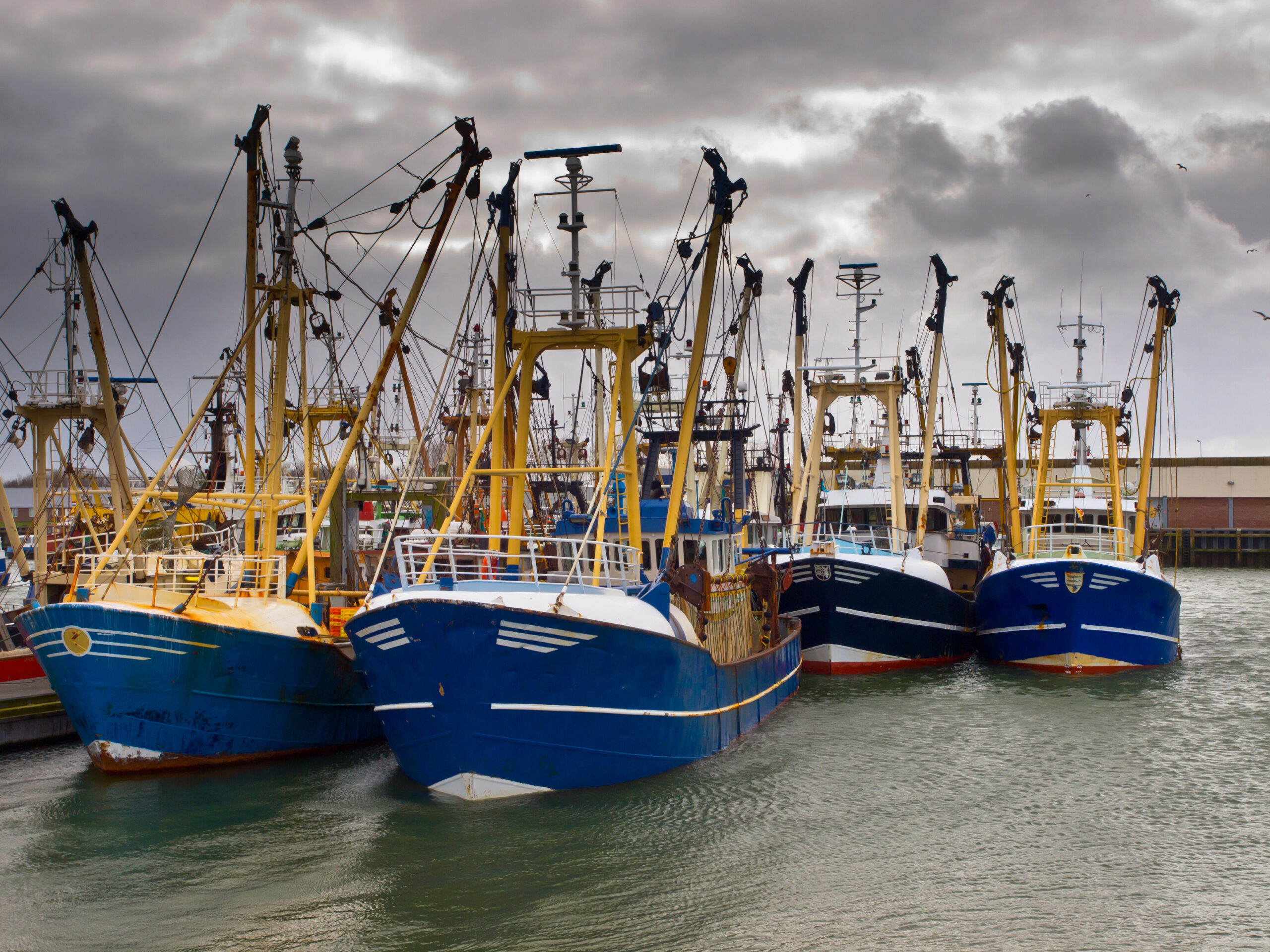
Modern fishing boats under a brooding sky in a dutch fishing harbor
The European Commission has expressed profound concern following a new agreement on mackerel fishing quotas between the United Kingdom, Norway, Iceland, and the Faroe Islands. In a strongly worded statement, Brussels warned that the arrangement, signed on 15 December 2025, threatens the long-term survival of one of the North-East Atlantic’s most significant fish stocks and undermines international cooperation.
The four-party deal sets a Total Allowable Catch (TAC) of 299,010 tonnes for 2026. However, this figure is 72% higher than the 174,357-tonne limit recommended by the International Council for the Exploration of the Sea (ICES), which has classified the stock as being in an unsustainable state, as reported by the European Commission.
The Commission stated that the “excessive exploitation exacerbates the problem of overfishing” and poses a “significant risk of irreversible damage” to the mackerel population. Officials in Brussels highlighted that when independent catches from other nations such as Russia are factored in, the total pressure on the stock could exceed 400,000 tonnes in 2026—more than double the scientific recommendation.
In contrast, the UK and its Nordic partners have defended the arrangement as a necessary step toward stability, with some signatories viewing the deal as a “measurable reduction in fishing pressure“. The Norwegian Minister of Fisheries and Oceans, Marianne Sivertsen Næss, stated that “the agreement will help limit mackerel fishing and reduce pressure on the stock over time,” adding that it was “particularly positive” to have Iceland join the expanded group.
The dispute has sparked outrage within the EU’s domestic fishing sector. French fishing organisations have labelled the decision a “scandal”, arguing that their vessels are being forced to adhere to strict conservation rules while being undercut by imports from nations ignoring scientific advice. As reported by The Fishing Daily, Olivier Le Nézet, President of the CNPMEM, stated that “Europe must act firmly to defend the resource” and protect the future of the entire sector from “irresponsible decisions that plunder the resource.”
The Commission is now expected to assess whether the arrangement complies with international law, including the EU-UK Trade and Cooperation Agreement (TCA). Brussels has urged all parties to reconsider their stance and return to a management strategy based on the best available science to ensure the livelihoods of those who depend on the North-East Atlantic’s marine ecosystems.