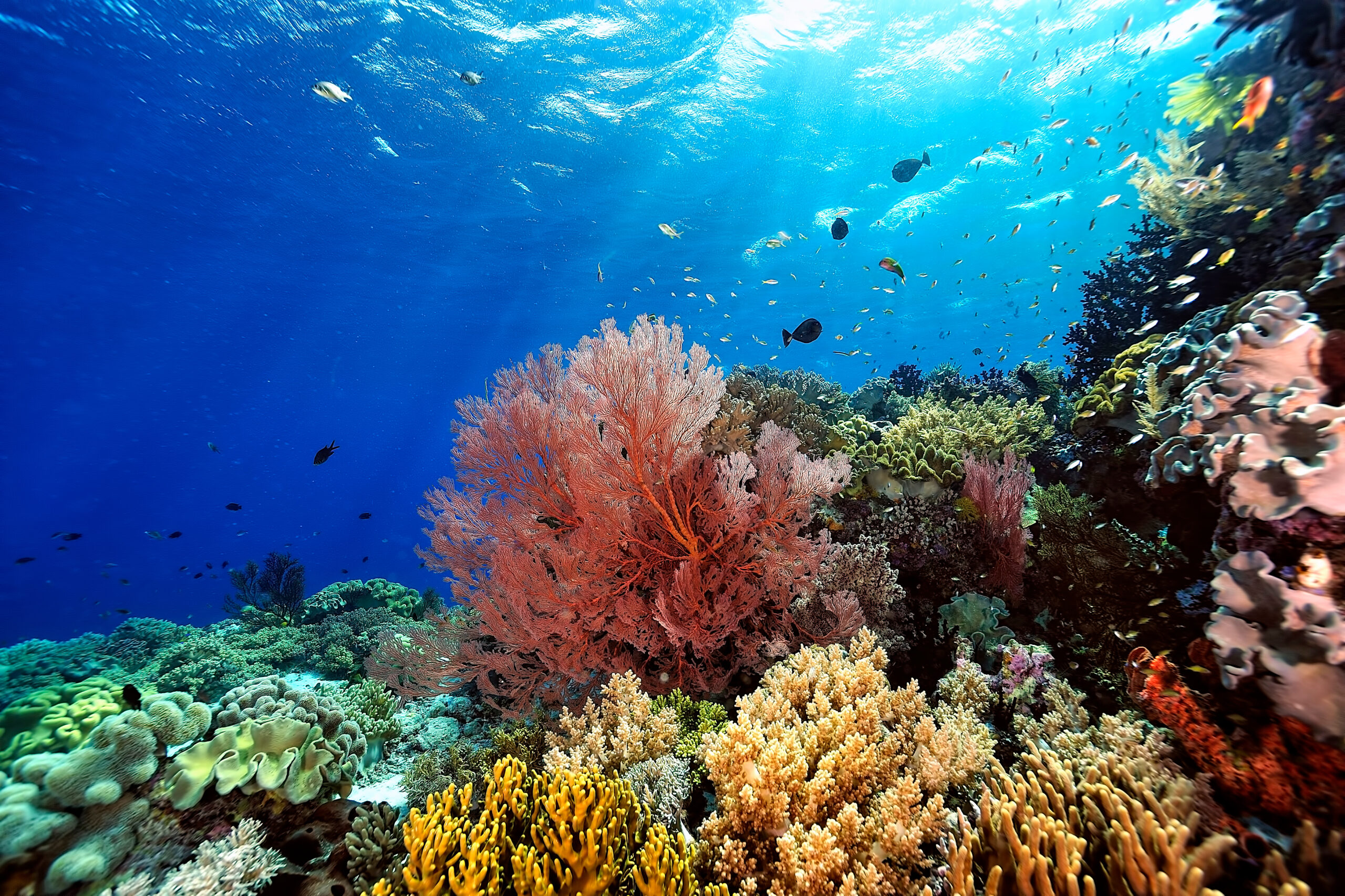
A beautiful picture of an healty coral reef
Scientists in Australia have conducted one of the largest reef restoration experiments ever attempted, timing the operation to coincide with the recent mass coral spawning event on the Great Barrier Reef. The initiative, as reported by the Australian Institute of Marine Science (AIMS), aims to develop scalable methods to accelerate the recovery of coral ecosystems following damage from climate-induced marine heatwaves.
The project, part of the Pilot Deployments Program (PDP), involved collecting millions of coral eggs and sperm—known as spawn—from the ocean surface. This biological material was then reared into larvae and young corals before being strategically placed onto degraded test reefs near Cairns, Port Douglas, and the Keppel Islands. The AIMS media release detailed the use of two primary techniques: “coral seeding,” where larvae are settled onto ceramic devices and deployed onto reefs, and a method often referred to as “Coral IVF.”
Dr Mark Gibbs, AIMS Pilot Deployments Program Director, stated that the trial would provide “first-time insights into best-practice approaches, supply chains, technology and the people power needed” to build a large-scale reef restoration industry. He emphasized that while scientific intervention is critical, the future of the Reef ultimately depends on global efforts to reduce carbon emissions.
A significant aspect of the trial is the collaboration with local maritime industries. Tourism operators and fishers provided vessels and local knowledge to assist in the deployment of the corals. Corey Brown, General Manager of Cairns Reef Fishing, stated that participating in the program reminded his crew of how vital a healthy reef is “for the entire ecosystem that depends on it.”
Beyond physical seeding, researchers are also exploring sensory tools to aid recovery. As reported by the Reef Song Project, scientists are investigating how underwater “songs”—recordings of healthy reefs full of fish and snapping shrimp—can be used to attract coral larvae and fish to degraded areas. Previous studies published in Royal Society Open Science have suggested that “acoustic enrichment” can increase coral settlement rates by nearly double, as larvae use sound to find suitable habitats.
The Pilot Deployments Program is funded by the Australian Government’s Reef Trust and is a key pillar of the Reef Restoration and Adaptation Program (RRAP). The Department of Climate Change, Energy, the Environment and Water (DCCEEW) noted that these techniques, including the use of “inflatable nurseries” to capture spawn, are essential for making restoration feasible at the scale required for the Great Barrier Reef.
The newly deployed corals will be monitored over the next 12 months. Scientists will assess their survival and growth rates, as well as their ability to compete with algae and withstand future bleaching events. These findings will determine whether these intensive “seeding” operations can be transformed into a permanent, operational restoration industry.