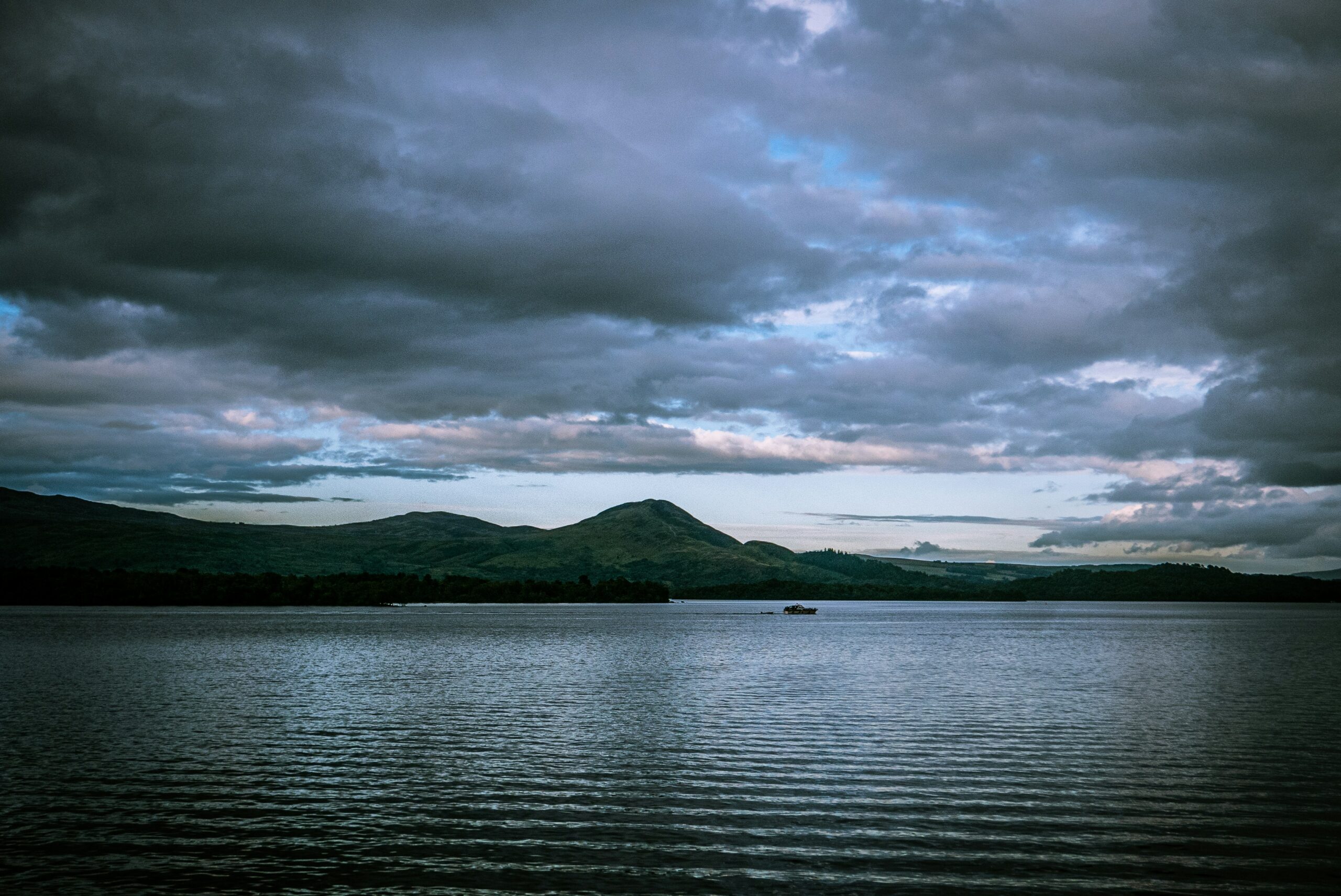
Image description: The dark waters of Loch Lomond in Scotland, with rolling hills in the background. Photo by M on Unsplash.
Environmental officials in Scotland have issued an urgent call for businesses and landowners to prepare for potential water shortages in 2026, warning that even a wet winter may not be enough to fully replenish the country’s depleted reserves.
The Scottish Environment Protection Agency (SEPA) stated that significant above-average rainfall is required over the coming months to rebuild natural water stores. The warning follows a challenging 2025, which saw 17 different catchments reach “significant scarcity” – the highest level of alert – resulting in temporary bans on water abstraction for many farmers and industrial users.
While recent winter weather has brought some relief, SEPA noted that the underlying groundwater levels in parts of eastern Scotland remain historically low. These deep-earth reserves act as a buffer during dry spells, and their current state leaves the region vulnerable to a rapid return of drought conditions if the spring of 2026 proves to be dry.
This regional divide in rainfall has become a growing concern for infrastructure planners. As reported by Scottish Water, the country is seeing an increasingly stark “east-west divide,” where the west remains frequently wet while the east faces its driest conditions in decades. The utility provider has described this as the “end of the myth of endless water,” noting that climate change is forcing a total rethink of how Scotland’s resources are managed.
The impact of these shortages is already being felt across Scotland’s most famous industries. According to reporting from the Guardian, the vulnerability of the water supply chain has recently prompted high-level government intervention. A £120 million package was secured this week to protect chemical production at Grangemouth, specifically because the facility is essential for producing the chemicals required for national water treatment and purification.
In response to these recurring cycles of drought, the Scottish Government is currently scrutinising new environmental legislation designed to streamline how SEPA regulates water use. The proposed Integrated Authorisation Framework aims to give the regulator more flexible powers to manage water activities during periods of crisis.
Experts at SEPA are advising those who rely on private water supplies or abstraction licences to begin auditing their usage now. The regulator urged businesses to look into alternative water sources, such as on-site storage lagoons or more efficient irrigation technology, rather than waiting for restrictions to be imposed.
The warning serves as a reminder that Scotland’s reputation for heavy rainfall no longer guarantees a secure water supply. As SEPA’s latest assessment suggests, the decisions made by industries over the next few months will determine how resilient the country remains when the drier seasons return.