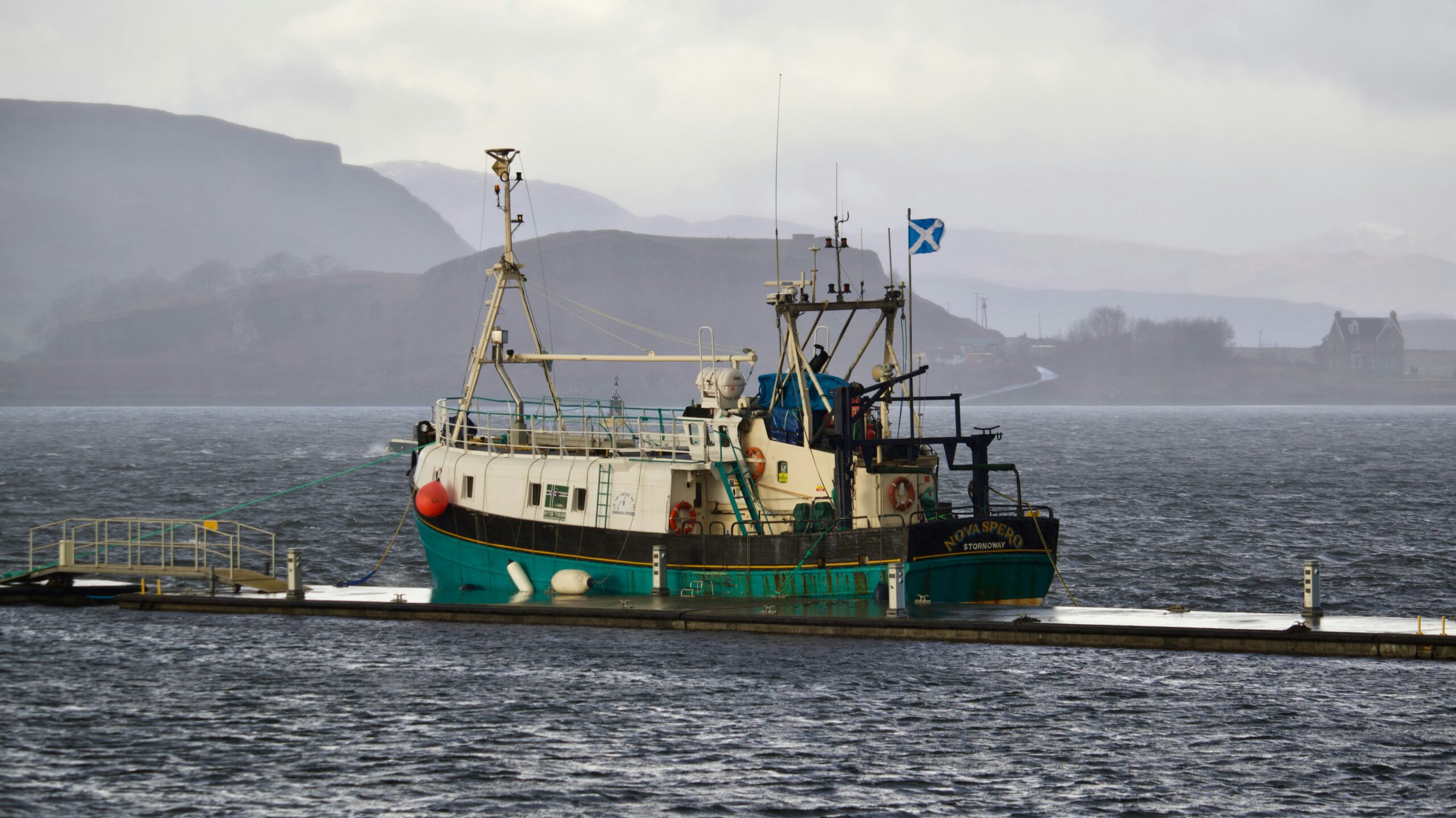
Photo by Andrew D
Environment charities have reacted with frustration after the Scottish government announced that fisheries restrictions in marine protected areas, originally due to be implemented in 2016, are to be delayed for the fourth time.
Gillian Martin, Cabinet Secretary for Climate Action and Energy, announced this week that the consultation on inshore fisheries management measures for MPAs and other important wildlife areas outside of MPAs will not take place until after the next Scottish election in May 2026. This consultation was initially due to launch in November and had already been pushed back to December.
The charities, members of Scottish Environment LINK, say repeated delays are allowing the destruction of marine life to continue, including vital seabed habitats like flame shell beds and maerl which are being torn up by bottom trawling and dredging.
Most of Scotland’s marine protected areas were designated in 2014. The Scottish government is required by law to design and implement fishing restrictions for each area to protect the marine wildlife it contains. The original 2016 deadline for these measures was missed, as were subsequent deadlines of 2020 and 2024.
The Scottish Wildlife Trust said: “The longer we wait to fully protect our seas the more damage will be done and the harder it will be to recover. Not only are the Scottish Government falling behind on their own legal requirements, as a country we are also failing on international commitments to protect and recover our struggling coasts and seas.”
Scotland has committed to 30 by 30, an international initiative to ensure that at least 30% of land and sea is properly conserved and managed by 2030. The Trust noted that if Scotland is to achieve this, it must protect ecologically diverse marine areas and ensure they are effectively managed.
The organisation said it is already hearing disappointment from communities involved in the Sea the Connection project, which aims to remove barriers to involvement in marine decision making. “They care deeply about their local marine environment and are tired of waiting to have their voices heard.”
Marine habitats within MPAs, such as seagrass meadows, maerl beds, kelp forests, coral reefs and burrowed mud are essential for maintaining Scotland’s diverse marine life, as they provide food, refuge and protection as well as being important carbon stores.
The Scottish Wildlife Trust emphasised that it is vitally important management measures are brought in, particularly in relation to bottom trawling and dredging, which is currently permitted in 95% of Scotland’s inshore waters. “Dredging and bottom trawling are the most damaging types of fishing due to their impact on the seabed, where many protected species and habitats are found, thereby undermining their protected status.”
Analysis has found that none of Scotland’s MPAs currently offer a high level of protection to “the site as a whole”. The organisation warned that failing to protect these habitats from physical damage will affect not only the health of the marine environment but also those who make their livelihoods from the sea, with knock-on effects for the rest of society.
Seabed habitats in Scotland’s coastal marine protected areas are vital spawning and nursery grounds for many of the fish and shellfish on which coastal communities depend for their livelihoods. They absorb carbon which can help combat climate change. Inshore marine protected areas are also intended to protect wildlife including seabirds, whales and basking sharks.
Fisheries restrictions for offshore marine protected areas between 12 and 200 nautical miles from the shore finally came into force in October 2025.
Jessica Jones, Living Seas Manager at the Scottish Wildlife Trust and acting convenor of Scottish Environment LINK’s Marine Group, said: “Without protection measures in place, marine protected areas are little more than lines on a map. Giving these areas the protections they need is a vital first step to bringing our amazing seas back to life.”
She added: “By repeatedly delaying these measures the Scottish government is failing not only marine wildlife, but coastal communities who have been waiting to have their voices heard and are fatigued by the repeated build up and subsequent disappointment when significant opportunities to protect our seas are yet again withheld.”
Calum Duncan, Head of Policy and Advocacy at the Marine Conservation Society, said: “Scotland’s seas can’t afford further delay on this critical action to prevent damaging fishing activities happening in so-called marine protected areas. Delays will only make recovery harder and risk further damage to our seas.”
He added: “Following global acknowledgement at COP30 that a healthy ocean is key to fighting the climate emergency, the Scottish government must act decisively to deliver these long-awaited protections and live up to crucial legal and international commitments before it is too late.”
The delay comes as new research has revealed significant gaps in monitoring vessel activity within Scotland’s marine protected areas. A study by Heriot-Watt University found that 64% of vessels operating in Scottish MPAs are not broadcasting Automatic Identification System signals, meaning their activities go unrecorded in official monitoring systems.
The research, published in Ocean & Coastal Management, surveyed six Scottish MPAs and found widespread non-compliance with AIS broadcasting requirements. In Lamlash Bay, only 6% of the time surveyed showed AIS coverage, while 62% of the surveyed time had vessels present that were not broadcasting AIS.
Dr Emily Hague, lead researcher at Heriot-Watt University, said: “Our findings suggest we are significantly underestimating the extent of human activities and vessel traffic in Scottish MPAs.”
She added: “This is concerning for marine mammals which rely on sound to navigate and communicate. Vessel noise can mask these sounds, potentially causing disturbance and displacement.”
The Scottish government previously committed to implementing fisheries management measures by March 2024 under the Bute House Agreement. Scottish Environment LINK has noted that only 0.6% of historically fished seabed is now protected within Scotland’s MPAs.
The Scottish Wildlife Trust concluded: “Proper marine protections must be taken seriously by the Scottish Government if we are to avoid our MPAs becoming ‘paper parks’ and if we are serious about tackling the twin nature and climate crises for a more resilient future.”