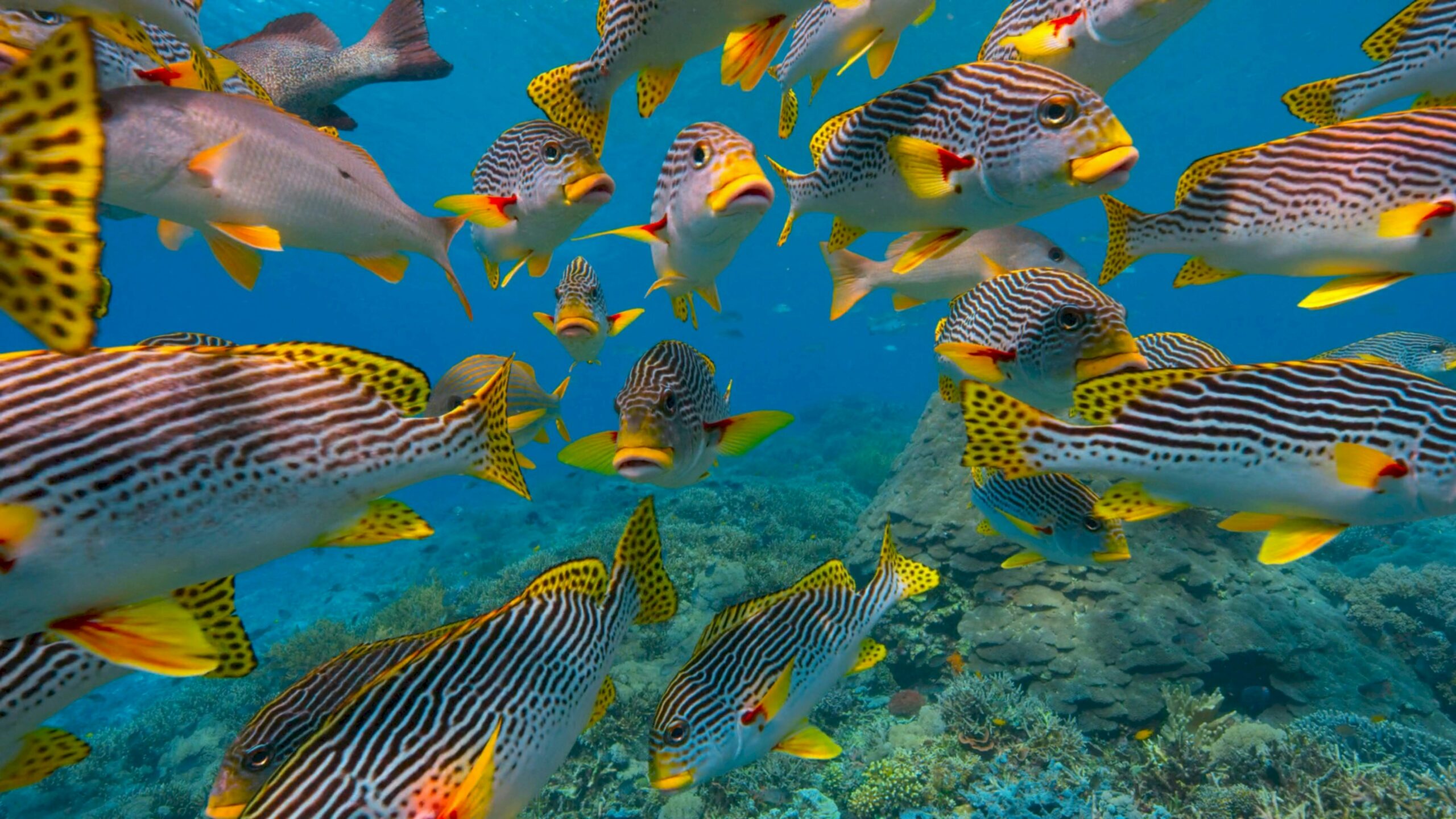
Photo by Oleksandr Sushko
International funding to help countries meet the global “30×30” biodiversity target is rising but remains billions of dollars short of what is needed, according to a new study launched at the UN Environment Assembly in Nairobi. The analysis warns that current financial flows put the landmark conservation goal at serious risk.
The State of International 30×30 Funding report, released by Indufor and funded by Campaign for Nature, The Pew Charitable Trusts, and Rainforest Foundation Norway, provides the first comprehensive overview of international funding flows since world leaders adopted the Kunming-Montreal Global Biodiversity Framework in December 2022. That historic agreement committed nations to protect at least 30% of the planet’s land and ocean by 2030.
The study found that annual international funding has grown by about 150% over the past decade, reaching just over $1.1 billion in 2024. That increase, however, falls far short of the roughly $6 billion per year needed by the end of the decade to meet Target 3 of the Kunming-Montreal Global Biodiversity Framework.
Between 2022 and 2024, average annual funding increased by 70% compared to the previous four-year period, while the philanthropic sector raised funding by 89%. However, the report warns that if the current trajectory continues, international funding specifically for protected and conserved areas will fall short of the implied 2030 need by approximately $4 billion.
Michael Owen, study author from Indufor North America LLC, said: “To date, there has been limited public analysis of international funding flows for protected and conserved areas.”
He stressed that transparency is uneven among donors and that the data needed to understand 30×30 funding are fragmented across various sources.
The report notes that existing global costing studies suggest protected areas will require an estimated 20% of total biodiversity financing by 2030. Roughly $4 billion per year is needed by 2025 and $6 billion per year is needed by 2030, for Target 3 alone. Against this backdrop, the report finds that international protected and conserved areas funding would need to grow at about 33% per year—more than three times the 11% annual growth observed from 2020 to 2024.
Regional and thematic gaps stand out prominently in the analysis. Africa now receives nearly half of all tracked funding, while small island developing states receive only 4.5%, despite being identified as priorities under the framework. Marine ecosystems receive just 14% of funding, though the ocean covers most of the planet.
Brian O’Donnell, director of Campaign for Nature, said there is “a clear need to ramp up marine conservation finance”, especially to small island states.
He added: “Meeting the 30×30 target is essential to prevent extinctions, achieve climate goals, and ensure the services that nature provides endure, including storm protection and clean air and water.”
The report also highlights the vulnerability of donor concentration. Just five major donors and mechanisms – Germany, the World Bank, the Global Environment Facility, the EU and the United States – provide more than half of all tracked funding.
Owen warned: “There is a real risk or a significant vulnerability if even one major donor were to pull back.”
He added that this leaves global biodiversity protection vulnerable to political transitions, at a time of rising geopolitical tensions, which could trigger sudden changes in funding or even retrenchment. The report notes that “the shuttering of USAID leaves a significant gap to be filled, as it has been the sixth largest international 30×30 funder making up nearly 5% of total flows”.
The authors say their estimate is conservative. The analysis includes only flows that are clearly linked to protected and conserved areas and relies on patchy donor reporting. Still, they argue, the trend is clear: Recent growth in funding is not enough to match countries’ commitments under the Global Biodiversity Framework.
The report warns that the projected shortfall in targeted international funding poses a severe risk of failing to reach the 30×30 target, leading to significant consequences for global biodiversity and climate protection efforts, the wellbeing of people, and national economies.