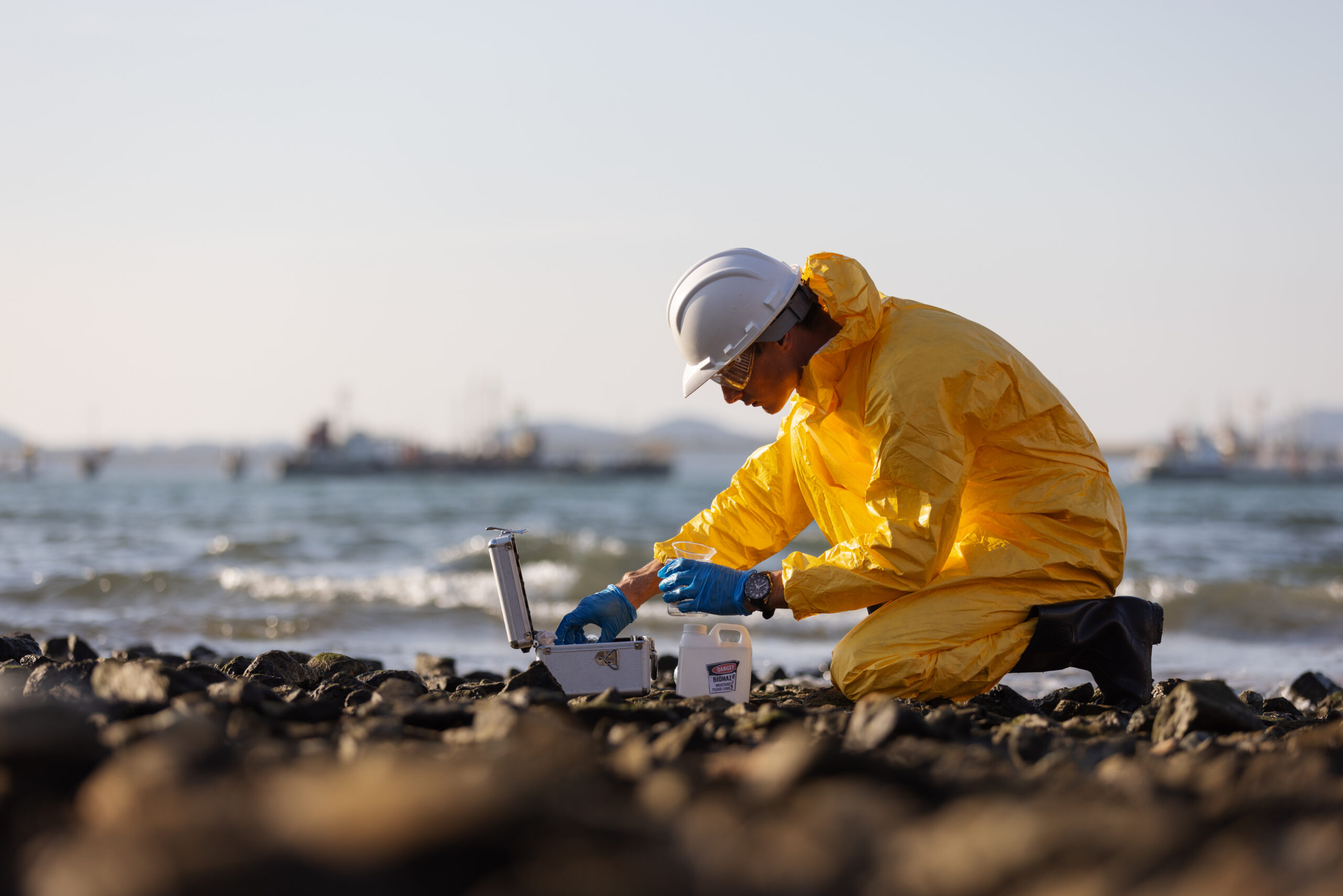
Image description: A person wearing a yellow hazmat suit and white helmet kneeling on a rocky shore, performing water quality testing using a sample vial and a testing kit. The sea and boats are visible in the background.
Cocaine and its metabolites have been found in 91% of water samples collected from Northern Ireland’s major rivers and lakes, according to new research by the Agri-Food and Biosciences Institute (AFBI) and Imperial College London. The study examined 137 samples from 50 locations across Lough Neagh, Lough Erne, Dundrum, River Lagan and River Bush between December 2022 and February 2024.
Scientists detected 21 compounds in total, including Class A and B drugs, pharmaceuticals and personal care products. Tramadol, a strong opioid painkiller, appeared in 91% of samples, caffeine in 80%, and the antidepressant venlafaxine in 76%. Ketamine and amphetamine were also present alongside painkillers and other antidepressants.
Contaminants extending far beyond urban centres
Lead author Dr Billy Hunter emphasised that drug contamination extends far beyond urban areas. While cocaine levels were highest around Belfast due to population density, the substance appeared consistently across the region, including in Lough Erne – potentially linked to recreational activity hotspots.
The findings align with broader drug use patterns: Police Service of Northern Ireland data shows cocaine was the second most seized drug in 2024/25 with 1,353 incidents, while Northern Ireland’s Substance Misuse Database reports cocaine as the most commonly used drug among more than half of recorded users.
Environmental and health risks
While researchers confirm minimal immediate risk to human or pet health from water contact, several compounds pose environmental concerns. Caffeine presents the greatest ecosystem risk in Northern Ireland, potentially altering animal metabolism and behaviour patterns within food webs. The anti-inflammatory drug diclofenac also presents moderate to high environmental risk.
“If caffeine is doing to animals what it does to humans – raising metabolism and alertness -their interactions within the food web are going to change,” Dr Hunter explained. The presence of drugs in lakes and rivers could add to the cumulative detrimental effect on marine ecosystems, as shown by studies in England that documented antidepressants altering shrimp behaviour and ecosystem dynamics.
Antibiotic resistance concerns
The detection of trimethoprim, commonly prescribed for urinary tract infections, around the River Lagan raises antimicrobial resistance concerns. “If bugs are able to pass on antibiotic resistance in the environment, then those bugs potentially bring infection back into contact with humans,” Dr Hunter warned.
The contamination context is significant: almost 46 million prescriptions were issued in Northern Ireland in 2024/25, driven by an ageing population and healthcare system pressures leading to prolonged medication use.
Professor Leon Barron from Imperial College London noted that while Northern Ireland’s contamination levels are lower than other UK regions, “this is no reason to become complacent.” He advocated for expanding monitoring scope and using rapid, large-scale testing to detect pollution early.
The research focused on raw water in rivers and lakes, not treated drinking water supplies.