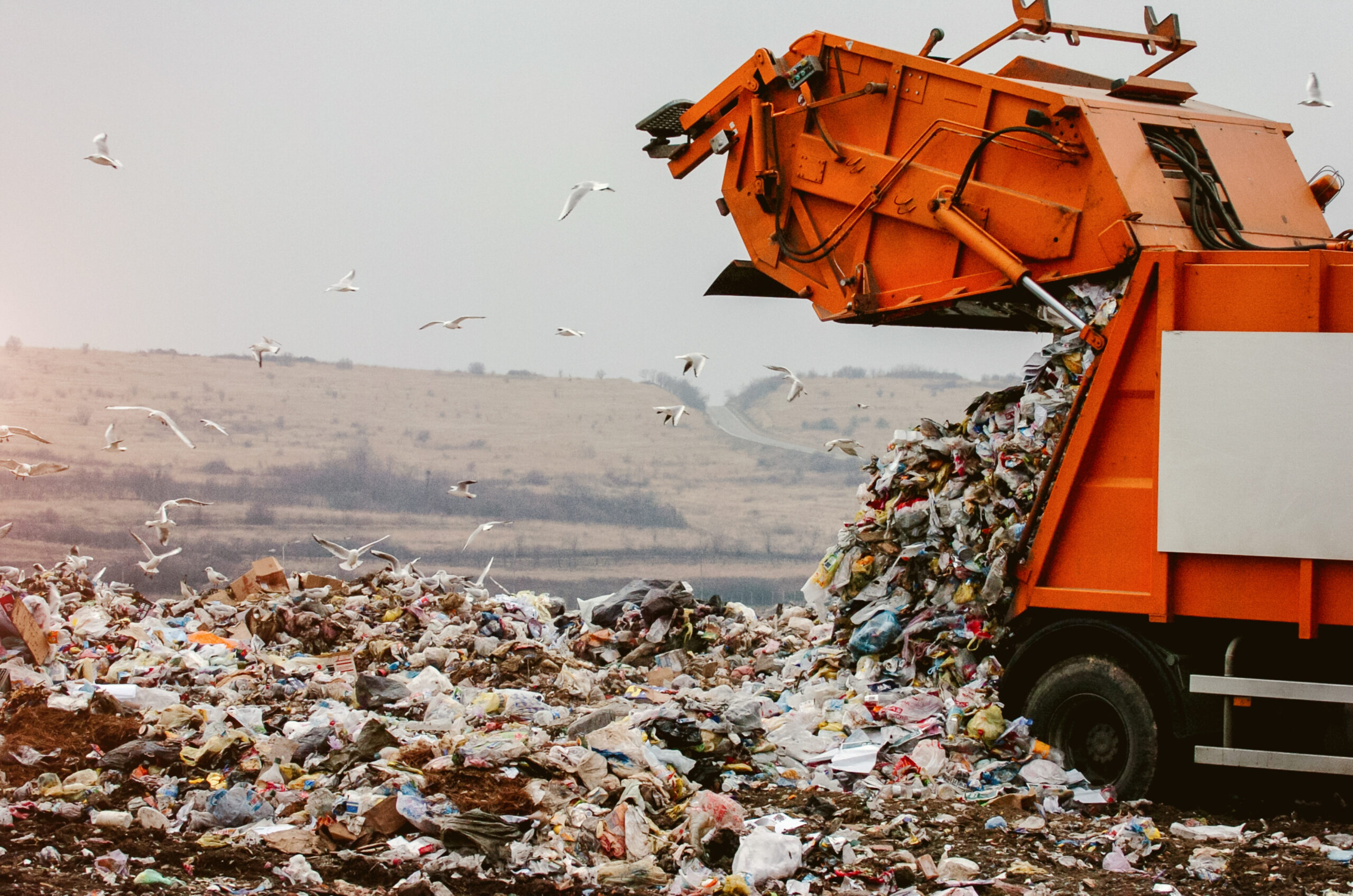
A landmark investigation has exposed a widespread environmental hazard across Europe, where thousands of unlined, forgotten landfill sites are at risk of releasing toxic chemicals into water supplies and ecosystems as rising flood risks driven by climate change threaten to breach them.
The findings are the result of the “Toxic Ground” investigation, a collaborative mapping project conducted by Investigate Europe, Watershed Investigations, and partners. The investigation, which uncovered the potential for leaks from thousands of landfills to threaten Europe’s water and wildlife, was reported by The Guardian and ITV News.
The scale of the inherited problem is vast: Europe is estimated to have up to 500,000 landfills, with approximately 90 per cent of them lacking modern pollution controls. Of the sites mapped in detail, nearly 30 per cent were found to be in areas with a significant risk of flooding. Modelling suggests the true number of sites at risk of flooding could be as high as 140,000.
Threat to Water and Wildlife
The study highlights that these ageing sites could release physical waste, toxic metals, and chemicals such as PCBs(polychlorinated biphenyls) and Pfas (‘forever chemicals’). Patrick Byrne of Liverpool John Moores University emphasised the urgency, saying that “With increasing frequency and magnitudes of floods and erosion from climate change, there’s a greater risk of these wastes washing into our environment,”.
The threat extends directly to essential resources. The analysis found nearly 10,000 landfills located in drinking water zones across six countries, including the UK, France, Spain, Germany, the Netherlands, and Italy. Furthermore, over 3,000 mapped sites were situated in protected conservation areas, putting vulnerable ecosystems and wildlife at risk.
Inadequate Regulation and Data
Reporters commissioned laboratory tests in Greece, finding that leachate from the former Maratholaka landfill in the Taygetos Mountains contained Pfas levels 76 times higher than drinking water standards, alongside mercury and cadmium. Similarly, in the UK, the analysis found elevated levels of Pfas near a historic landfill in Wilmslow, Cheshire, at 20 times the acceptable drinking water limits.
The issue is compounded by a lack of oversight. Jutta Paulus, a Green German MEP, stated that the “hundreds of thousands of legacy sites… remain a dangerous blindspot” due to inadequate and inconsistent national records.
The UK is estimated to have 22,000 historic sites, with more than 4,000 in England and Wales situated in drinking water zones. In Ireland, the investigation found over 260 historic landfills are “left in limbo,” lacking certification from the Environmental Protection Agency (EPA) despite many being classified as a high or moderate environmental risk, according to reporting by The Journal (Ireland).
A spokesperson for the European Commission confirmed that the Drinking Water Directive ensures water quality is checked “at the tap” across the EU and requires member states to take remedial action if limits are exceeded. The UK’s Environment Agency stated it is currently engaged in a multi-year programme to improve data on Pfas pollution originating from landfills, reported The Guardian.