Photo by Mitili Mitili
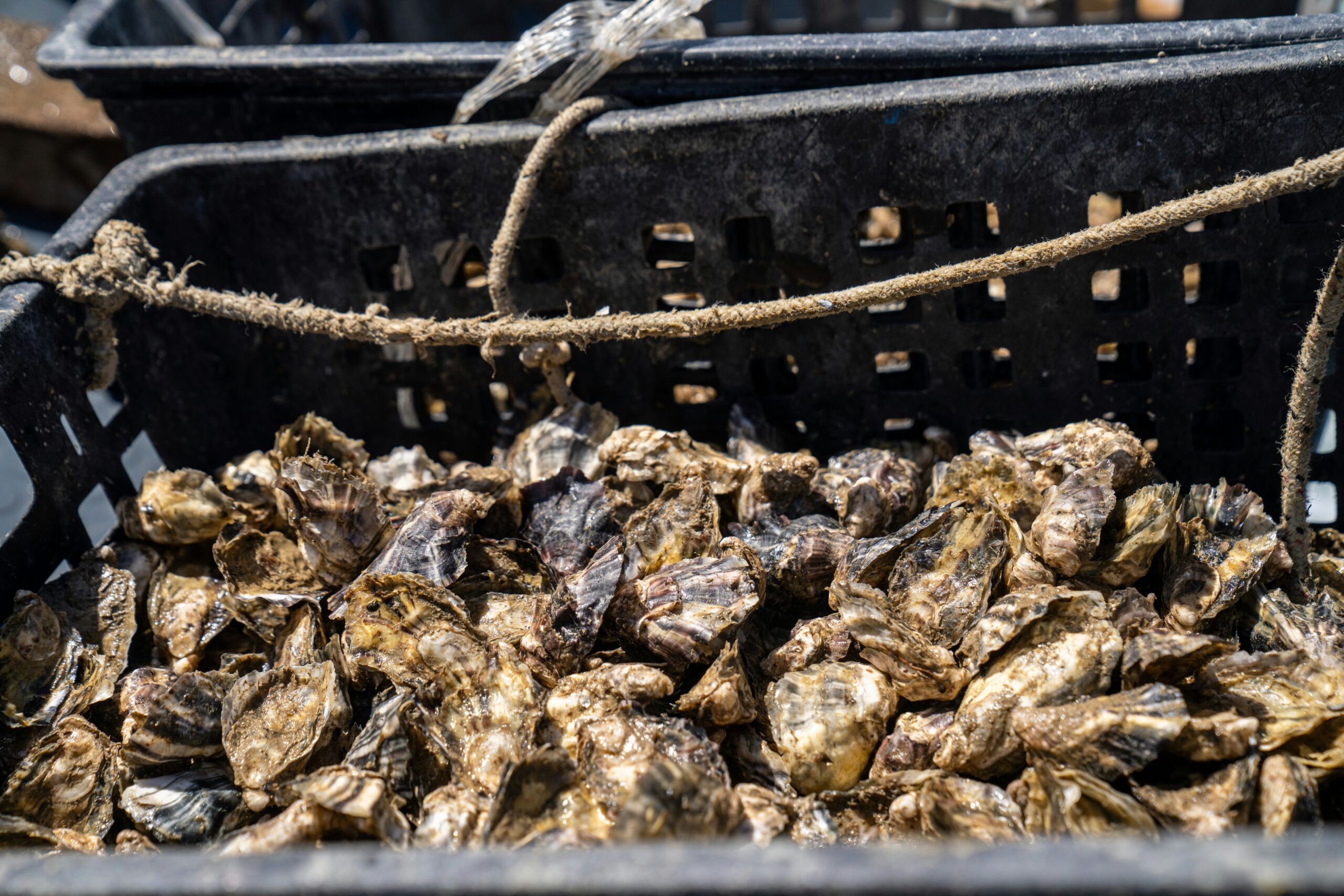
Nearly 20 tonnes of rock armour carrying thousands of young European flat oysters have been deployed on two cable crossings in the Dutch North Sea, as part of a pilot project testing whether cable protection infrastructure can double as a tool for reef restoration. The trial is led by grid operator TenneT alongside eight partners including Wageningen Marine Research, Wageningen University and the Port of Rotterdam Authority, TenneT said.
TenneT uses rock armour to protect subsea electricity cables where they cross existing infrastructure, and the material is also used extensively during the construction and maintenance of offshore wind farms. The consortium is investigating whether these rocks can be seeded with oysters before deployment, creating so-called “oyster stones” that combine cable protection with nature restoration. European flat oysters were once widespread across the North Sea but have largely disappeared due to overfishing, pollution and disease; as a keystone species, they form reefs that provide habitat for other marine life and filter the water to support the wider food web.
From shipping container to seabed
To grow oysters on rock armour at scale, the partners converted shipping containers into mobile hatchery units, using a method known as “remote setting.” Oyster larvae were transferred from a hatchery to a site near the sea, where millions of larvae attached themselves to rocks inside seawater-filled containers and grew to several millimetres over a period of months, before the containers were loaded onto a work vessel and the seeded rocks deployed at sea, according to De Rijke Noordzee, one of the project partners.
This marks the first test of the method in open sea conditions, building on an initial trial last year in the Port of Rotterdam. Lessons from that harbour-based test fed directly into this year’s approach: the temperature and food supply in the mobile hatcheries were kept more stable, resulting in significantly more oyster spat settling on each rock, TenneT said. Oyster survival will now be monitored through every stage, including transport by land and sea and placement on the crossings, with a year of monitoring to determine whether the young oysters survive and grow under open sea conditions.
A shared bet on nature-inclusive infrastructure
Marcel van Veldhuisen, Spatial and Environmental Strategist at TenneT, said the project reflected a wider opportunity as offshore infrastructure expands. “TenneT will realise many new offshore wind farm connections in the coming years,” he said. “As we develop infrastructure in the North Sea, it is important to seize opportunities that also support the conservation and restoration of marine ecosystems. This experiment provides valuable insights into how such measures can contribute to large-scale nature restoration in the North Sea.”
Vera Bánki, programme director at De Rijke Noordzee, went further, suggesting that the deployment shows offshore infrastructure can actively boost nature restoration rather than simply avoid harming it, with partners working together to create new opportunities for oysters and other species as part of a North Sea where energy infrastructure and a thriving underwater ecosystem reinforce one another.
The trial follows a series of related oyster restoration efforts at offshore wind sites in Dutch waters, including reef structures at the Borssele V wind farm and planned “Oyster Hubs” at Hollandse Kust West VI, offshoreWIND.biz reported, suggesting a growing pattern of treating offshore infrastructure build-out as a platform for habitat recovery rather than simply a source of disturbance to it.