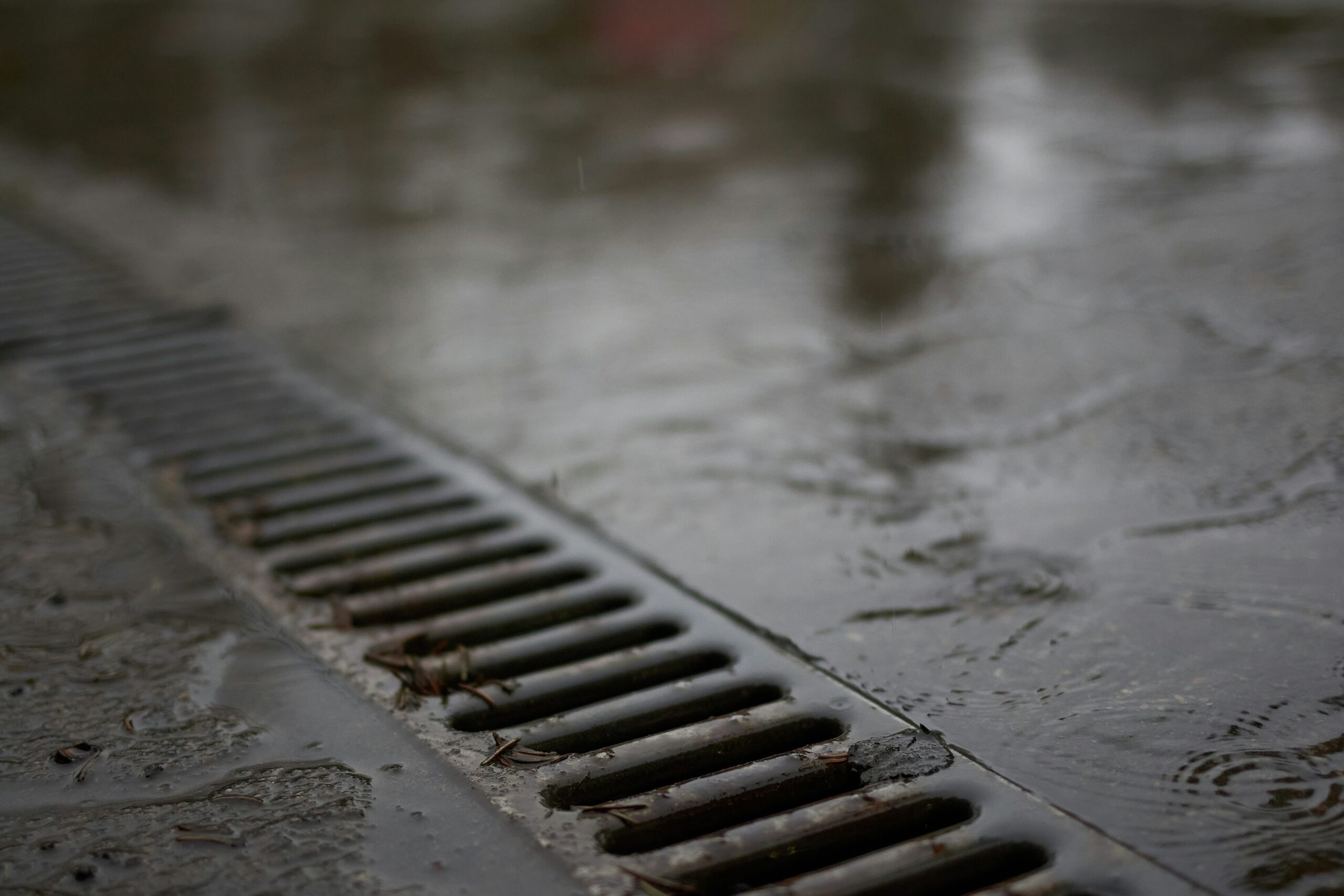
Image description: A metal drain cover pictured in the rain. Photo by Ilya Semenov on Unsplash
A simple intervention with scaling potential
Yorkshire Water and the local environmental group River Holme Connections have launched a pilot to relaunch the national Yellow Fish campaign in the region, installing 43 Yellow Fish discs next to surface water drains in the New Mill area of the Holme Valley. The premise is straightforward: a small visual reminder at the point of behaviour, encouraging residents and businesses to think before tipping oils, detergents, paints or cleaning fluids down a drain that flows untreated to the nearest river, stream or bathing water. If effective, the pilot offers a low-cost, easily replicable behavioural intervention at a time when many of the sector’s responses to river pollution involve major engineering investment.
Why surface drains matter
Many people are unaware that surface water drains are separate from the foul sewer system. Emily Eden, who Yorkshire Water describes as river health investigation and engagement lead, said that oils, detergents, paints and other harmful substances often reach rivers because of this misunderstanding, and that the discs serve as a small reminder that “only rain goes down the drain.” Kayleigh Szostak, river ranger at River Holme Connections, told Huddersfield Hub that the marking process was straightforward, with the 43 drains identified and marked in a short space of time. Yorkshire Water has also identified further pilot areas in the Holme Valley and Aire catchments, with the next phase planned for Silsden, working with local councils who own the surface water drains.
A national approach with local variants
The Yellow Fish concept is not new: variants have been used internationally for years and other UK water companies have run similar schemes. Warminster Town Council and Wessex Water launched a campaign earlier this spring, and Southern Water has partnered with Adur and Worthing Councils since 2025. What’s distinctive about the Yorkshire pilot is its phased, catchment-based rollout in partnership with a local rivers organisation, a model that, if it proves effective, may inform similar schemes elsewhere.