Photo by Yuriy Kostin
A mother-and-daughter team of citizen scientists has discovered what is believed to be the world’s largest known coral colony on Australia’s Great Barrier Reef – a structure stretching approximately 111 metres and covering nearly 4,000 square metres, roughly the size of a football pitch.
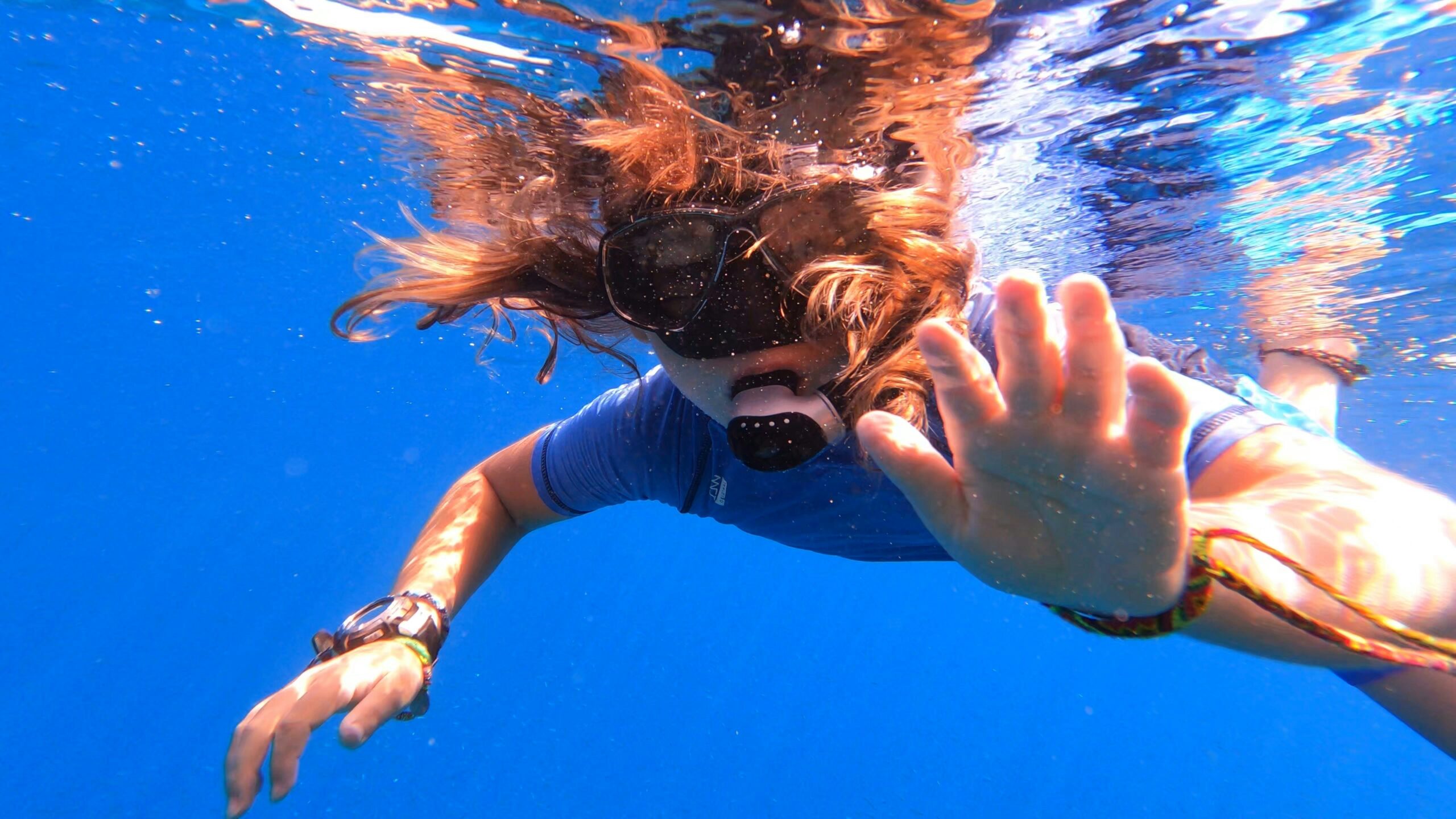
The coral was found late last year by Sophie Kalkowski-Pope, marine operations coordinator at conservation organisation Citizens of the Reef, and her mother Jan Pope, an experienced diver and underwater photographer, while surveying the reef from their family vessel as part of the Great Reef Census. The discovery was announced this week and has since been verified through coordinated in-water measurements, surface-based photogrammetry and three-dimensional spatial modelling.
“I knew right from the minute we dropped in that it was something special,” Sophie Kalkowski-Pope told CNN. Her mother Jan described the experience of entering the water: “I’d never seen coral growing like this before. It looked like a meadow of coral. It just went on and on.”
Citizens of the Reef describes the find as “the largest documented and mapped coral colony in the world.” The colony belongs to the species Pavona, and its exact location is being withheld to reduce the risk of unintended damage. Relevant management authorities have been informed.
The power of people power
The discovery was made possible by the Great Reef Census, an initiative that mobilises more than 100 vessels and thousands of citizen scientists to collect reef imagery across the full extent of the reef system. The programme, which has surveyed nearly a quarter of the entire Great Barrier Reef since launching in 2020, uses a combination of community participation, AI-assisted image analysis and leading marine science.
Andy Ridley, CEO of Citizens of the Reef, said the census was designed to complement existing monitoring: “To drive conservation at the scale now required for reefs around the world, we need to engage local reef communities, leading scientists, and people power to target the best places for intervention and conservation impact. This is made possible by people already out on the water, like Sophie and Jan, and thousands of citizen scientists around the world.”
Professor Pete Mumby of the Marine Spatial Ecology Lab at the University of Queensland added that the census “helps us to locate the most important sources of reef recovery, helping scientists and managers better target their protection.”
The 3D model produced from the discovery will allow researchers to return in future years and make direct comparisons, tracking how the colony changes over time. Scientists are now examining whether the site’s strong tidal currents and relative shelter from tropical cyclone waves may help explain the existence of such an unusually large structure.
A hopeful find in a bleak picture
Researchers are careful to note that the discovery does not signal broader reef recovery. More than 80% of the world’s reefs have been affected by an ongoing global bleaching event that began in 2023, driven by record-high marine temperatures. The Great Barrier Reef itself has been hit by a series of devastating mass bleaching events in recent years, and reported its worst coral decline on record in 2024.
Michael Sweet, professor of molecular ecology at the University of Derby, told CNN the find was nonetheless remarkable: “What makes this discovery even more special is that in a time where many corals are really struggling due to disease, bleaching, physical destruction from land reclamation and pollution, that individual genetic entities like this Pavona colony surpass all expectations and not only survive but flourish.”
He also highlighted what the discovery says about citizen science’s role in conservation: “This showcases that everyone can play a part in not only conserving our planet but also monitoring and documenting cool things like a colony at an unprecedented scale.”
Sophie Kalkowski-Pope reflected on the broader significance of the find: “Discoveries like this are significant because the reef still holds so many unknowns, and we don’t know what we stand to lose. I think this shows why reef conservation efforts like the Great Reef Census matter now more than ever.”