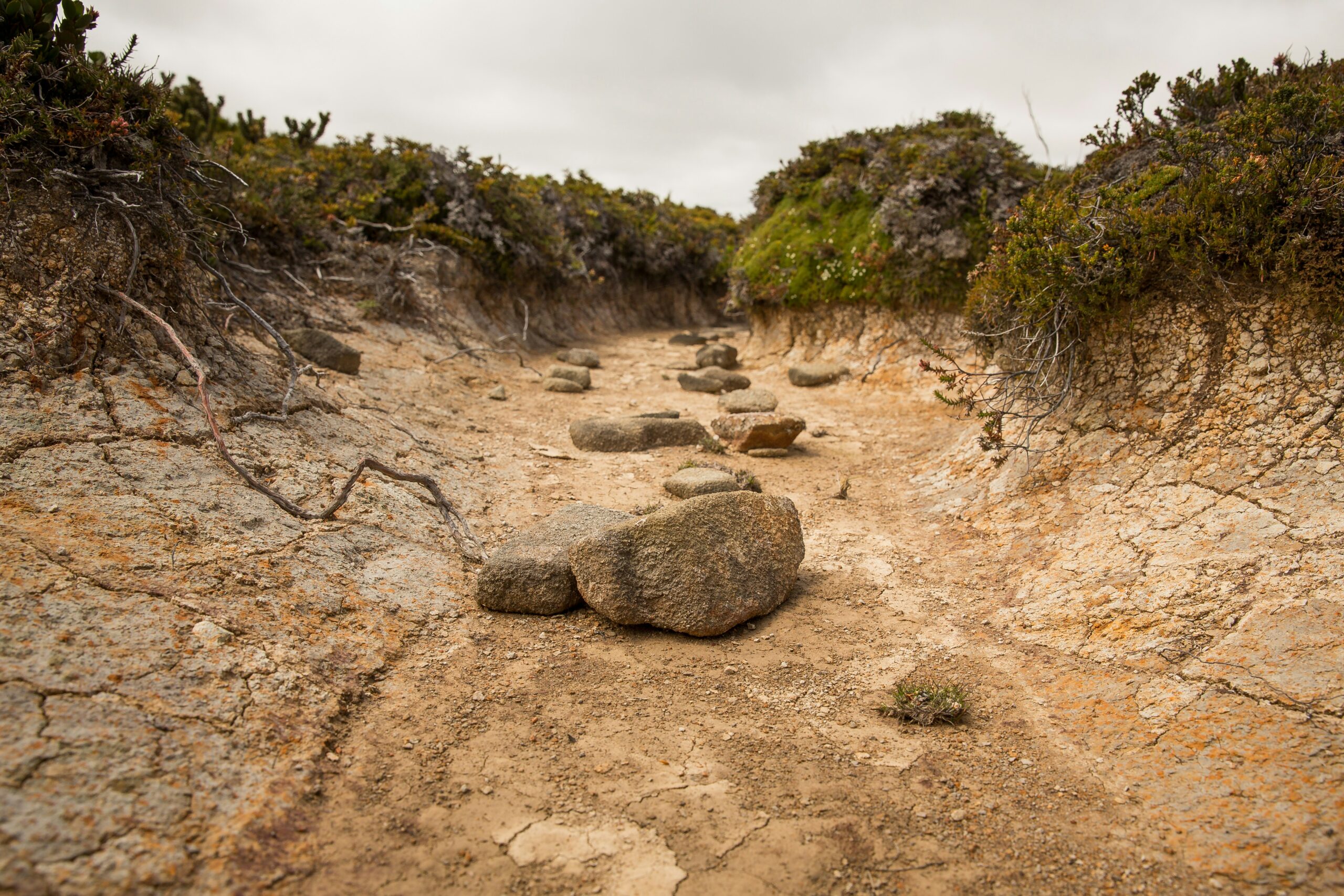
 Image description: A dry creek bed in Hartz Mountains, Tasmania, Australia. Brown rocks have been deposited on brown soil. Photo by Matt Palmer on Unsplash
Rivers across the world experienced one of their driest years in more than three decades, the World Meteorological Organization (WMO) has revealed, reflecting declining water storage across the Earth’s surface and raising concerns about future supplies.
The analysis, published in the WMO State of Global Water Resources report, is a comprehensive, science-based assessment of the entire water cycle loop, including river flows, groundwater, evaporation and transpiration, land water storage, and snow and ice. Wayne Jenkinson, director of hydrology at the WMO, said the research was a call to action in the face of a continuing global picture of declining water resources.
The report revealed that terrestrial water storage in groundwater, lakes, vegetation, ice and snow has been in decline for a decade. The world’s water savings bank: the amount of freshwater held on or under the ground, was 42% below normal across the world last year.
The United Nations agency warned of the “serious future implications” of this trend since such stocks act as a buffer for the planet in exceptionally dry years, such as this year.“We are depleting that savings account. Global terrestrial water storage has shown a declining trend since 2014–2016 – a persistent, decade-long signal,” WMO Secretary-General Celeste Saulo said in a statement released with the report. The WMO’s latest assessment finds river flows were below normal across more than a third of the world’s river basin area during 2025, in one of the driest years for rivers globally in 35 years of data collection. But some river basins, such as parts of South Asia, had too much water, reflecting more erratic and unpredictable water cycles, the report said.
Widespread glacier losses were also reported across all regions in 2025 for the fourth consecutive year, the report said, adding this would lead to long-term water insecurity.