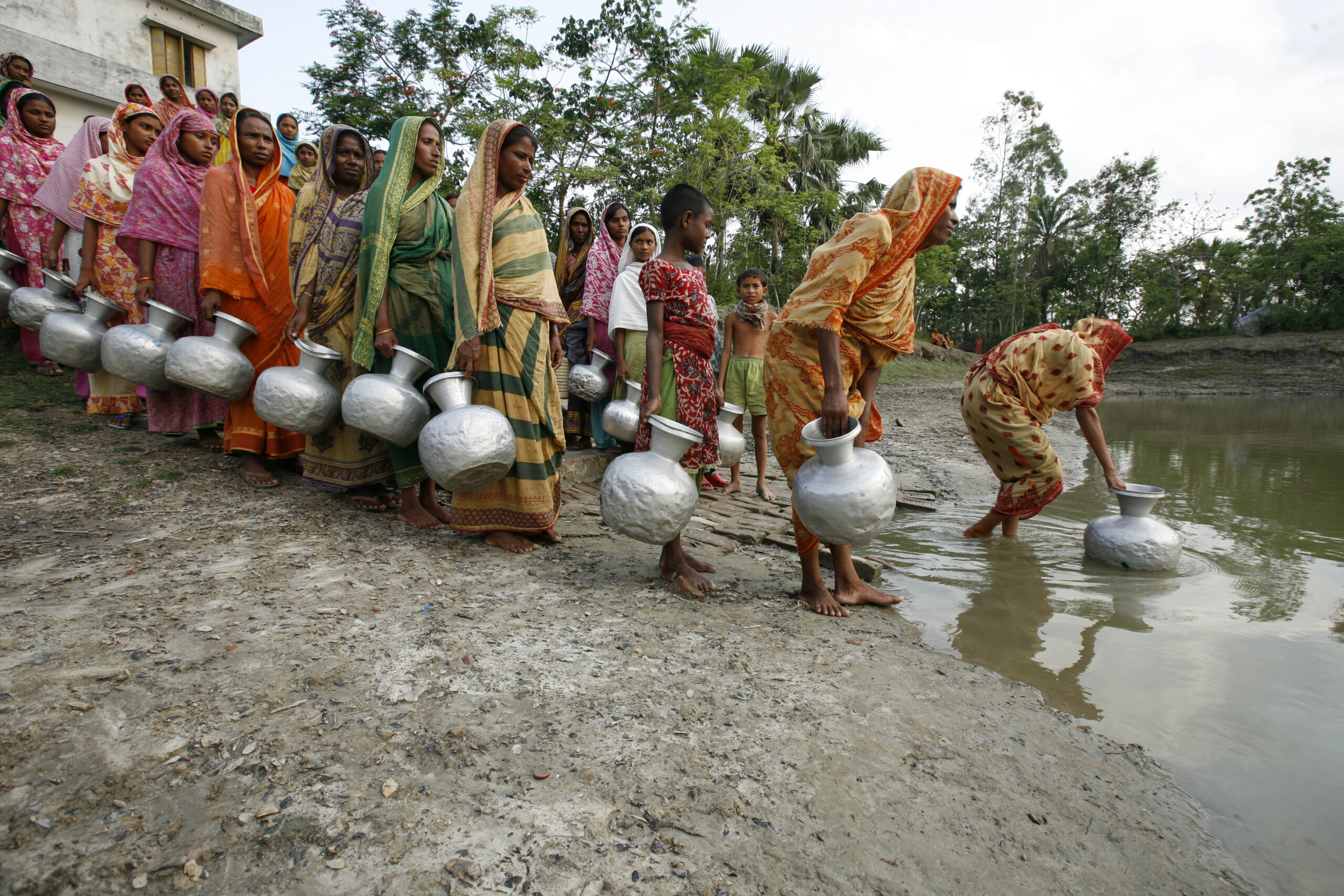
Image description: Village women are in a queue to collect drinking water as they travel long distances to collect drinking water, Satkhira, Bangladesh. The southwestern coastal region of Bangladesh has faced thirty large-and moderate-scale natural disasters in the last two decades. Image credit: Abir Abdullah / Climate Visuals
Women and girls continue to be disproportionately impacted by water shortages and a lack of sanitation around the world, hindering the economic and social development of poorer countries, the UN has warned.
The World Water Development report found women are the main collectors of water for more than 70% of rural households that are not connected to a mains supply, exposing them to physical strain, lost education and livelihoods, health risks, and heightened vulnerability to gender-based violence – particularly where services are unsafe or unreliable. Women and girls collectively spend 250m hours a day collecting water globally.
The new UN report highlights that the climate crisis is exacerbating the problem. A 1°C rise in temperature reduces incomes in female-headed households by 34% more than in male-headed ones, while also causing women’s weekly labour hours to increase by an average of 55 minutes relative to men’s.
The UN has called on countries to bridge the gender gaps in water access and leadership, which are leading to poorer health and worse educational prospects for women, while also affecting food security. Khaled El-Enany, the director general of Unesco, said: “Ensuring women’s participation in water management and governance is a key driver for progress and sustainable development. We must step up efforts to safeguard women and girls’ access to water. When women have equal access to water, everyone benefits.”