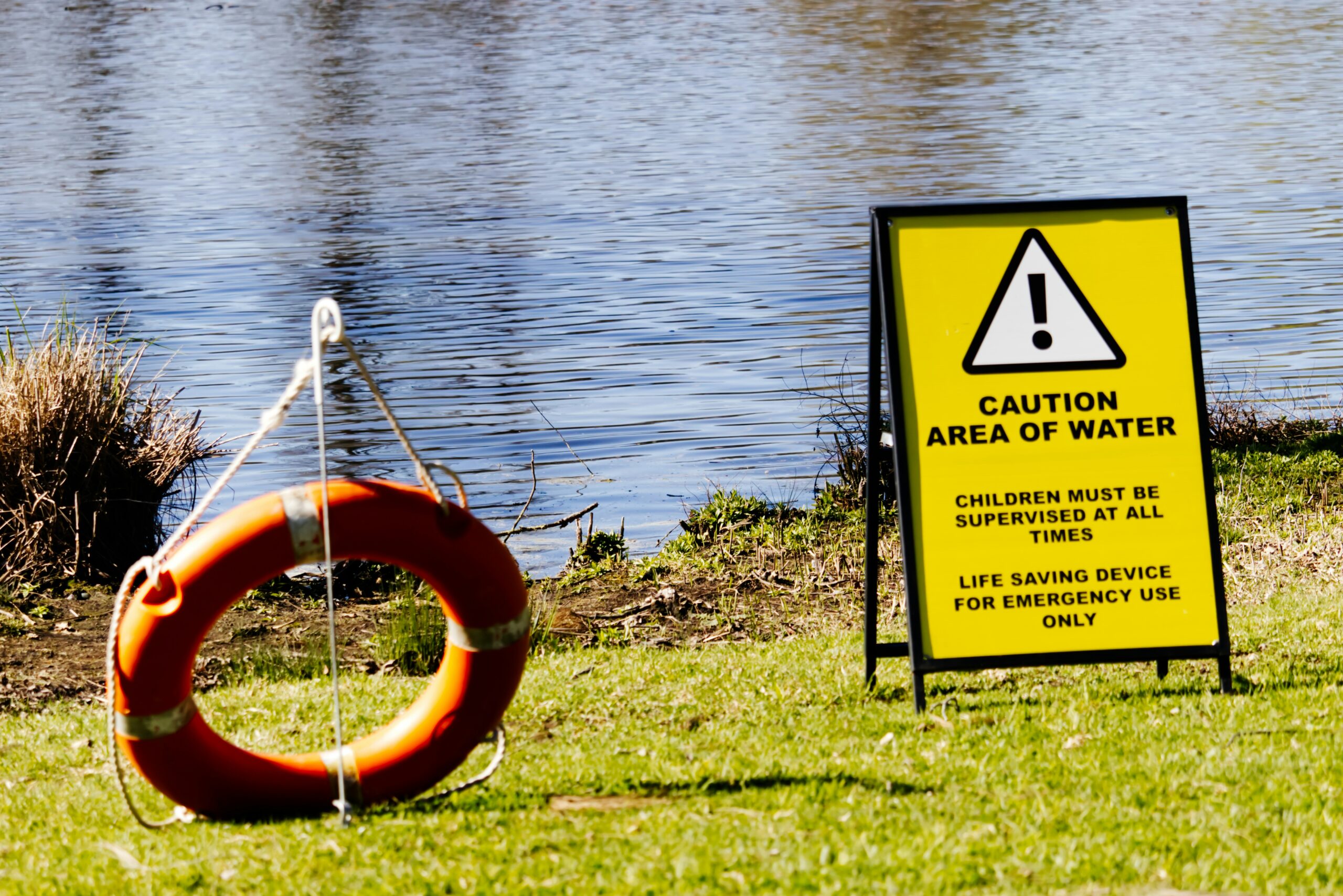
Image description: Life preserver and caution sign near water. The sign reads ‘Caution area of water. Children must be supervised at all times. Life saving device for emergency use only. Photo by Tijan Manandhar on Unsplash
A deadly bank holiday weekend
Water safety experts have issued urgent warnings about the dangers of open water swimming after multiple drownings during the UK’s hottest May bank holiday weekend. As England and Wales recorded their warmest May day on record, large numbers of people headed for rivers, lakes, reservoirs and beaches to cool off. By the end of the weekend, nine water-related deaths had been reported across the UK.
Among those who died were 13-year-old Reco Puttock at Leadbeater Dam near Halifax, West Yorkshire, and a teenage girl whose body was recovered from Kingsbury Water Park in Warwickshire. A 72-year-old woman also died at West Angle Bay in Pembrokeshire, Wales. Several of those who died were teenagers, according to reports compiled from incidents at beauty spots across England.
Cold water shock: the hidden killer
Safety experts have stressed that even when air temperatures soar, water beneath the surface remains dangerously cold. Ashley Jones, Head of Water Safety and Education at the Royal Life Saving Society UK (RLSS UK), told the Met Office that cold water shock can affect even strong swimmers, causing an involuntary gasp, rapid breathing and panic, which can quickly lead to loss of control in the water.
Professor Mike Tipton, chair of the National Water Safety Forum, told Good Morning Britain that drowning deaths represent an “enormous problem” which disproportionately affects younger people, particularly those under 40. Hidden currents, sudden drop-offs and underwater hazards can also catch out experienced swimmers in unfamiliar inland waters.
What the experts are recommending
Safety bodies are urging the public to swim only at lifeguarded locations where possible. The RNLI is encouraging anyone who gets into difficulty to remember the float-to-live technique, leaning back in the water and staying calm to conserve energy, which the lifeboat service credits with saving lives during recent hot spells.
Demand for safety information has surged. NHS England reported more than 20,000 visits to its heatstroke advice page on bank holiday Monday alone, compared with fewer than 500 on the equivalent Monday a week earlier. Visits to baby first aid and sun safety pages also rose sharply.
A pattern linked to climate
The deaths come amid a clear pattern: accidental drownings tend to rise during spells of hot weather as more people seek relief in unsupervised swimming spots, according to the Royal Life Saving Society. With UK heatwaves becoming more frequent and starting earlier in the year, water safety organisations are pressing for greater public awareness of the risks of inland waters, particularly reservoirs, quarries and rivers without lifeguard cover.
For water sector practitioners, including reservoir operators, river trust staff and catchment managers, the events highlight the importance of clear signage, public communication and coordinated work with water safety bodies during periods of extreme heat. With further hot weather likely as summer progresses, the warnings from safety experts are unlikely to fade.