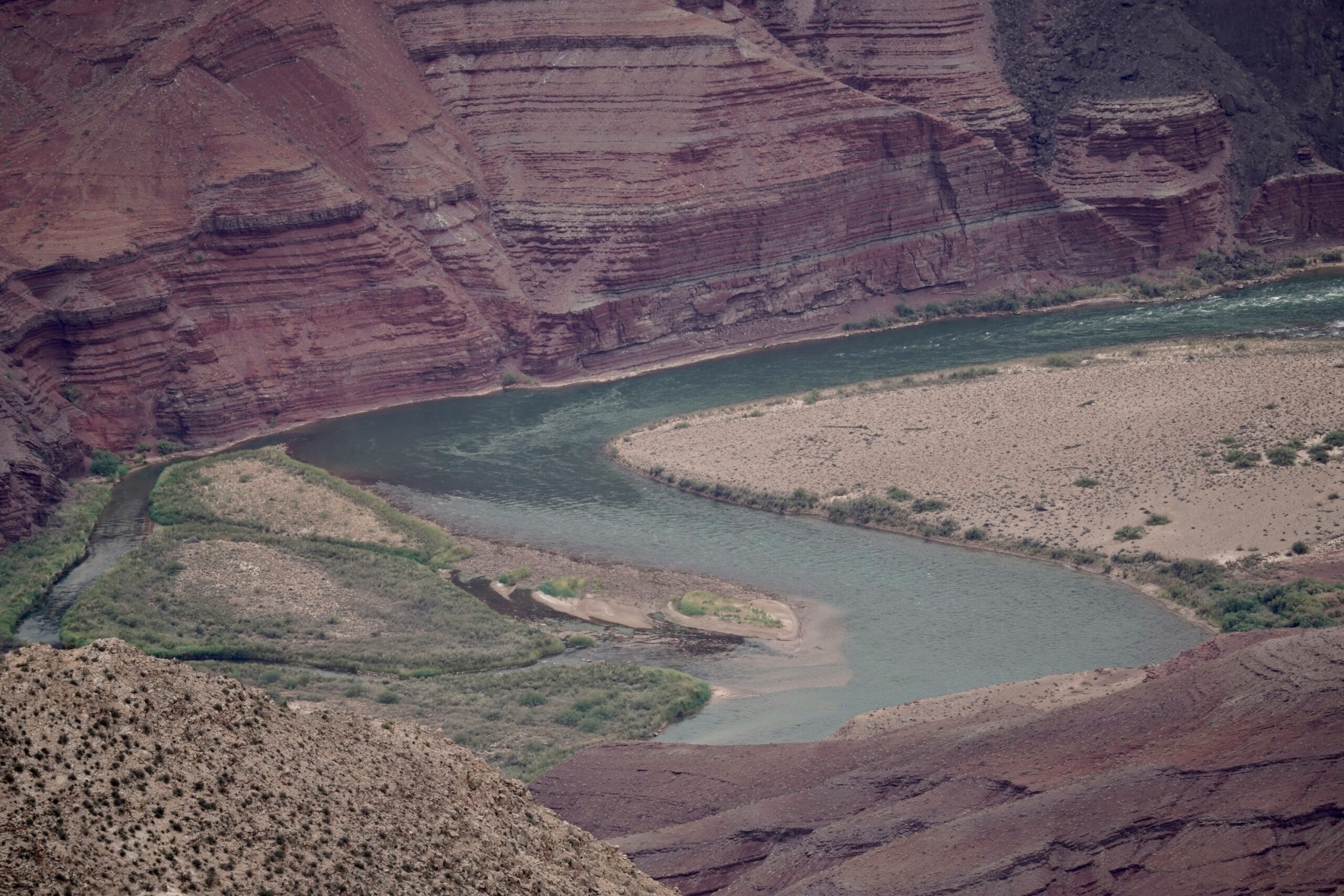
Photo credit: Yihong Chen
The US government has stepped in to break a long stalemate over the drought-stricken Colorado River, proposing cuts of up to 3 million acre-feet a year for the three lower basin states. The Interior Department’s preferred management framework, published on 31 July, would reduce the allocation of Arizona, California and Nevada while sparing the upper basin states of Colorado, Utah, New Mexico and Wyoming for now.
A river under strain
The Colorado supplies water to more than 40 million people across seven states and dozens of tribal communities, but two decades of drought and heavy demand have driven its major reservoirs, Lake Mead and Lake Powell, to critically low levels. The wet winters of 2023 and 2024 brought some recovery, but two dry years have handed those gains back, leaving both reservoirs below the crisis lows they set in 2022.
The current operating guidelines expire this autumn, and the seven basin states have been unable to agree how to share the shortfall. The new framework, a Final Environmental Impact Statement, takes effect in October and runs for two years before it is reassessed.
What the plan does
The framework is described as an adaptive approach rather than a fixed schedule of cuts. It sets outer limits now, which the Bureau of Reclamation calls sideboards, allowing up to 3 million acre-feet of reductions in the lower basin through 2036, subject to hydrology, and commits to writing detailed operating rules at roughly two-year intervals unless the states reach a longer-term deal of their own. In the near term, the plan is reported to require Arizona, California and Nevada to cut their use by around a fifth over the next two years, with the full ceiling held in reserve for worse conditions.
The asymmetry of the plan, reductions for the lower basin and only voluntary conservation for the upper basin, is its most contested feature. Arizona has said the framework is unacceptable in its current form. Interior Secretary Doug Burgum framed the plan as preserving flexibility for the states to keep negotiating. For a UK readership, the episode previews the allocation choices that recur wherever demand outgrows a shrinking resource, the same tension now surfacing between housing, farming and industry at home.
Sources: