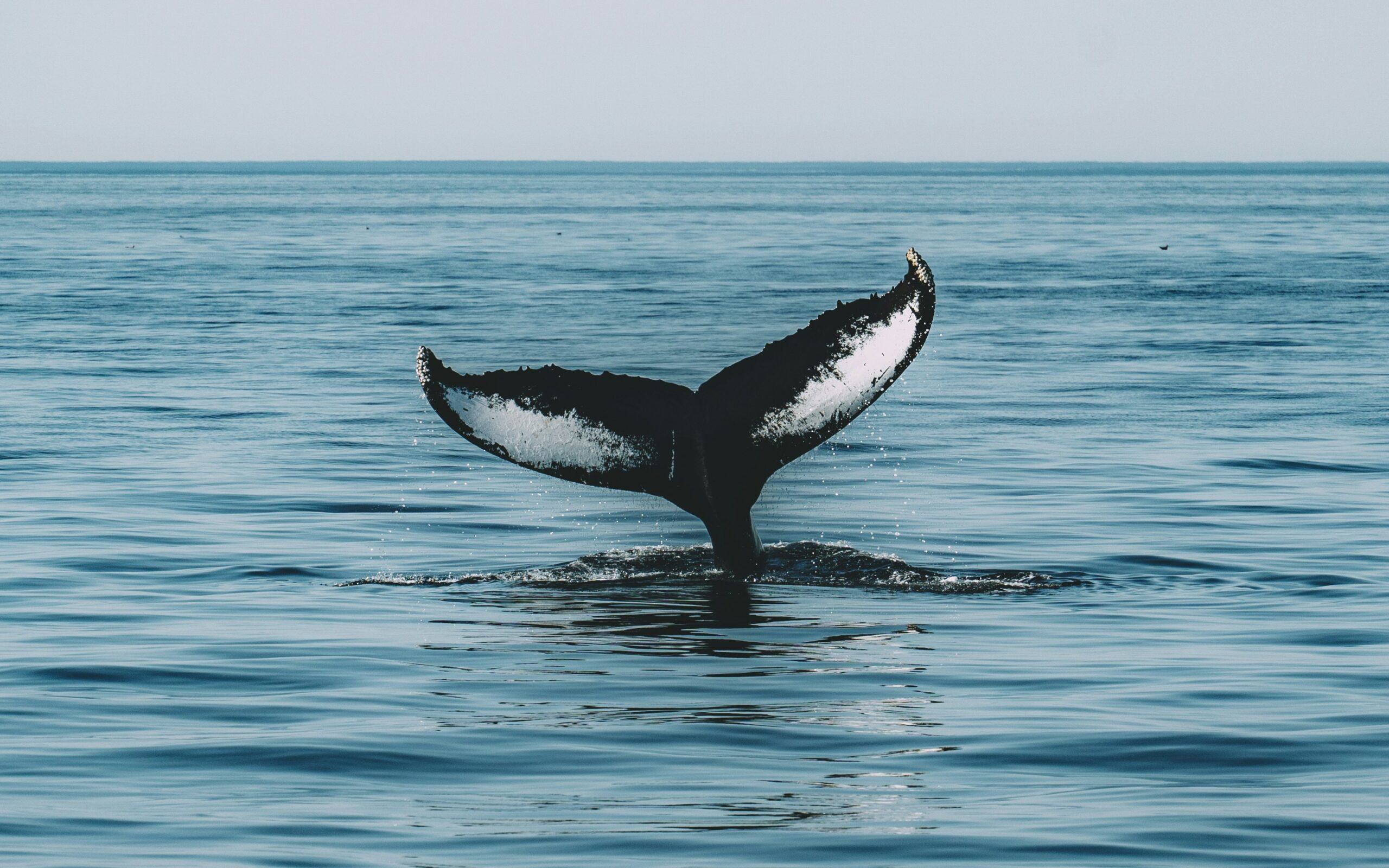
Photo by Yilei (Jerry) Bao
President Donald Trump signed a proclamation on 6 February reopening the Northeast Canyons and Seamounts Marine National Monument, the only marine national monument in the Atlantic Ocean, to commercial fishing, reversing protections restored by President Biden in 2021.
The monument, designated by President Obama in 2016, covers 4,913 square miles roughly 130 miles southeast of Cape Cod. It protects underwater canyons deeper than the Grand Canyon, four extinct volcanic seamounts, and habitats supporting endangered whales, sea turtles, and ancient deep-sea corals. Trump argues that existing federal law under the Magnuson-Stevens Act is sufficient to protect the monument’s resources without a blanket fishing ban.
Conservation groups and scientists strongly disagree. Brad Sewell of the Natural Resources Defense Council said the monument is “a living scientific laboratory, a refuge for creatures as varied as cold-water corals and sperm whales,” adding that Trump’s move is “unlawful” and “won’t stand.” Erica Fuller of Conservation Law Foundation called the action “a blatant disregard for the health of our oceans,” while Senator Richard Blumenthal described it as “hugely misguided,” warning that “this natural treasure should be preserved for future generations, not endangered by industrial fishing.”
Industry groups welcomed the move. Bob Vanasse of Saving Seafood said any resumed fishing “will remain subject to the full force of the Magnuson-Stevens Act,” dismissing conservation criticism as “a broader, extremist agenda.” However, the economic case is thin, a 2022 study found the original closure had little measurable effect on the industry, with less than 1% of New England fishing grounds affected.
Legal challenges are expected. Trump’s equivalent move to open the Pacific Islands Heritage Marine National Monument to fishing was blocked by a federal judge in August 2025, and conservation groups say they are ready to fight again. As ecoRI News noted, four centuries of commercial fishing off New England have already driven Atlantic halibut, haddock, ocean perch and yellowtail flounder to near commercial extinction – a record critics say makes the case for protection, not further exploitation.