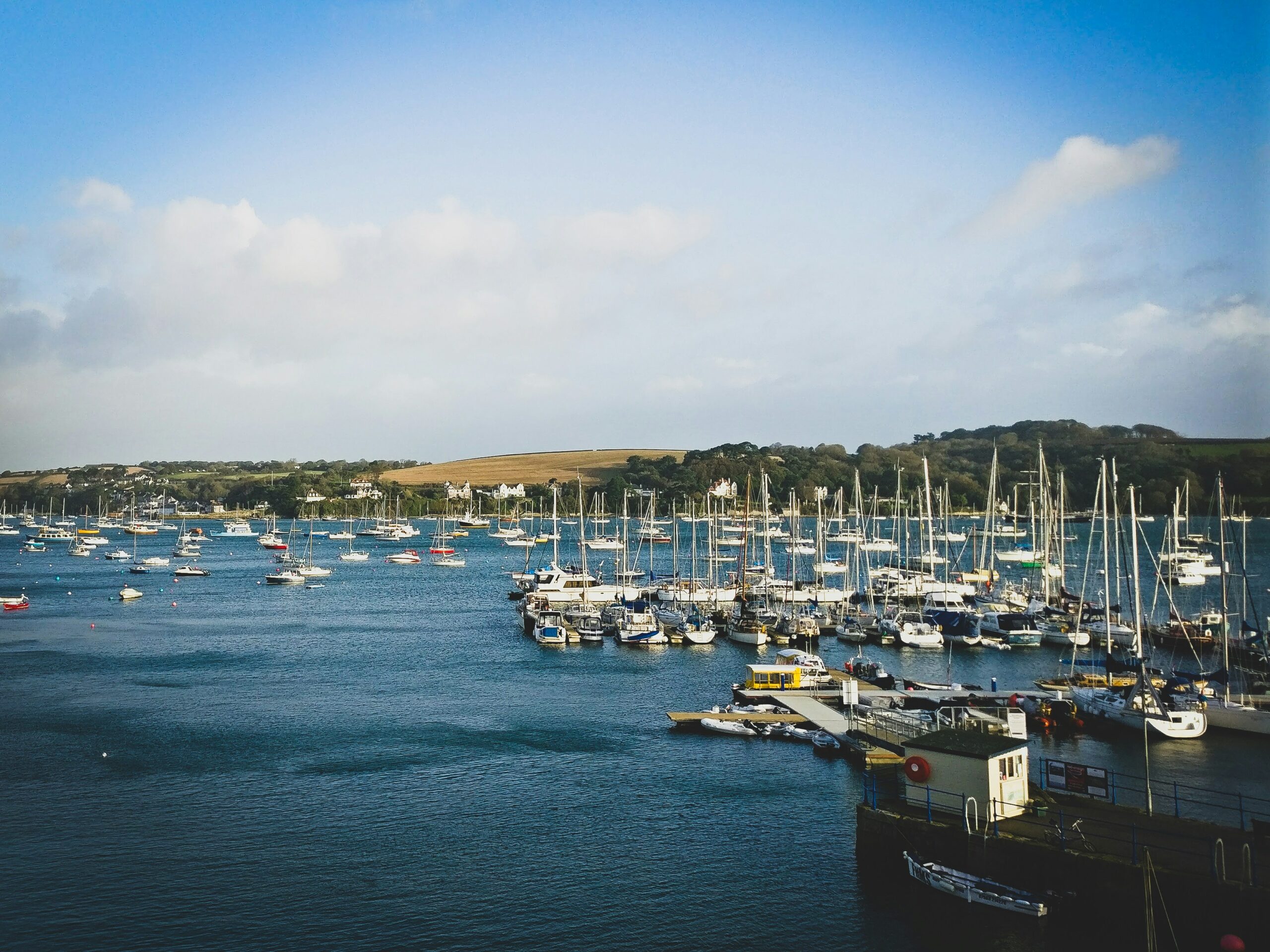
Photo by Kate Joyce
Cornwall Wildlife Trust has raised fresh concerns over the proposed £150 million redevelopment of Falmouth Docks, warning that sediment contamination testing carried out ahead of planned dredging operations may be too limited to reliably identify material unsafe for disposal at sea. The Trust’s own analysis of environmental data found that around three-quarters of core samples taken across the site suggest contaminant concentrations unsafe for disposal at sea, with heavy metals including mercury, zinc, lead, copper and tributyl tin found at levels up to 176 times higher than safe thresholds.
What the redevelopment involves
The project is now run by Balaena, the maritime engineering and shipbuilding group that took over operation of the docks in June, having acquired A&P Falmouth Ltd. The scheme would deepen and expand the site to accommodate larger vessels, including “Excellence-class” cruise ships of up to 345 metres in length, alongside new wharves and a new area for building floating offshore wind infrastructure. Government projections suggest the expansion could help attract up to 200,000 cruise visitors annually by 2030, bringing an estimated additional £13 million into the local economy and supporting more than 350 jobs. The work would also involve partial demolition of existing wharf structures and the demolition of eight buildings on site.
The most contentious element is the dredging needed to let cruise ships dock alongside. Cornwall Wildlife Trust describes this as around 643,000 cubic metres of sediment from the Fal Estuary; Stop the Dredge campaigners have separately described it as 850,000 tonnes of “polluted seabed” – the two figures use different units and are not directly comparable, and I have not been able to establish a single reconciled volume from the source material.
The UK government is backing the plans and has placed much of the project under its fast-track planning system, in which a single “lead environmental regulator”, the Marine Management Organisation (MMO), coordinates approvals. A government spokesperson said the model was “about ensuring better coordination between developers and environmental regulators to prevent delays in the planning process without lowering environmental standards.” The marine licence application (reference MLA/2025/00157) was submitted in March 2025, and the formal public consultation period has now closed, though the MMO can still be contacted directly quoting that reference.
Sediment and pollution concerns
Cornwall Wildlife Trust says the sampling undertaken for the project lacks the resolution needed to reliably distinguish contaminated sediment from material safe for disposal at sea. Matt Slater, the Trust’s Marine Conservation Officer, explained the scale of the gap: “The area of the dredge is 232,500 metres squared – this is equivalent to 32 football pitches, within this large area only 21 sample cores have been analysed. The huge areas between the samples mean that there could be contamination hotspots that have simply been missed.” He warned that disturbing sediment built up over centuries risked creating “plumes of disturbed silt” carried by tidal currents, “spreading new contamination with a huge impact on marine life.”
Dan Barrios-O’Neill, Head of Marine Conservation at Cornwall Wildlife Trust, said the Trust was not opposed to redevelopment in principle. “We do not want to see the docks decline, but redevelopment must be done carefully and in a way that protects this extraordinary marine environment for future generations,” he said. “Right now, the data simply cannot assure us that the organisations in charge can redevelop the docks in a safe and sustainable way.” He warned the potential impacts extended to “the local livelihoods of many people, from the traditional oyster fishers working in the Carrick Roads, to the trawlers in Falmouth Bay, to wildlife tour operators in Falmouth.”
The Trust has also raised concerns about roughly 50 weeks of pile driving planned during construction, saying underwater noise could significantly affect harbour porpoises, dolphins and seals, and that more recent acoustic monitoring suggests marine mammal activity in the estuary is greater than reflected in the project’s Environmental Statement.
What’s at stake environmentally
The Fal and Helford Special Area of Conservation is internationally important for biodiversity and blue carbon habitats, including England’s largest and best maerl beds, extensive seagrass meadows, dense kelp forests and Europe’s only remaining traditional native oyster fishery. It supports species protected under the Wildlife and Countryside Act 1981, including native oyster, giant goby and spiny seahorse, alongside common dolphin, harbour porpoise, Risso’s dolphins, fin whales and Atlantic grey seals.
Local fishers have voiced similar concerns. Peter Green, who has fished from St Mawes for over 50 years, recalled the impact of previous dredging in Penryn and said the current proposals involve “a greater quantity of sediment with higher toxicity,” calling the development “a gamble which could affect all marine life in our local areas.” Nick West, Chairman of the Mevagissey Fisherman’s Association, said “the dumping of waste material from Falmouth Docks development could be catastrophic,” while Jason Pascoe, who has worked the oyster fishery for 40 years, told the Guardian: “The river systems here are very complex. Can they be sure if they dump waste out to sea it won’t find its way back here? Ironically, we’ve just had our best ever season.”
Public opposition and views from the town
Opposition has been organised and visible. Around 130 people attended a recent public meeting organised by the Stop the Dredge campaign, including commercial fishers, native oyster fishers, business owners and residents. Separately, members of the campaign group Ocean Rebellion staged a protest at Falmouth harbour last year wearing gas masks, intended to symbolise what they describe as the toxic threat posed by the redevelopment.
Opinion in the town itself appears mixed. Gio Reale, a wildlife storyteller, told the Guardian it had been a strong summer for marine sightings, including small-spotted catsharks, nursehounds and octopuses, and warned the ecosystem was “beautiful but fragile.” Hannah Cocks, a marine social scientist, said she did not oppose redevelopment outright but wanted it “done in a way that is environmentally and socially just,” adding that “the community has not been adequately consulted.” Others take a different view: Susie, a Falmouth resident, said cruise visits “bring in money” and are “good for many of the shops,” while shopkeeper John Spargo was sceptical, noting that coach-bound passengers “don’t bring as much money into the town itself as you think.”
The developer’s response
Balaena has defended the scheme in detail. A spokesperson said: “For the last seven years, Balaena has worked closely with industry partners and regulatory bodies to develop a long-term infrastructure programme that will safeguard the future of Falmouth Docks. This programme is designed to strengthen the port’s role in supporting the UK’s defence, marine services, commercial cargo, floating offshore wind and tourism sectors.”
On the dredging specifically, the spokesperson said: “It has been determined that some targeted pocket dredging is required around the dock berths. The proposed dredging has been subject to a comprehensive Environmental Impact Assessment, which concluded that the works can be undertaken safely and without adverse impacts on the marine environment. Sampling was done in accordance with the regulator’s requirements.” They added that “the scheme avoids any dredging in the main docks channel or the wider estuary in order to protect the maerl habitat in the area,” and that any material unsuitable for disposal at sea “will be removed to a licenced facility ashore.” Dredging, they said, is “a routine and essential activity undertaken at ports across the United Kingdom,” necessary to keep navigational channels and berths safe and operational.
What happens next
Cornwall Wildlife Trust has previously submitted a formal Holding Objection to the MMO. Further environmental analysis is expected in the coming weeks. Cornwall Council’s Strategic Planning Committee is due to decide on the shoreside planning application (reference PA25/01598) on Thursday 20 August, while the marine licensing decision itself rests with the MMO.