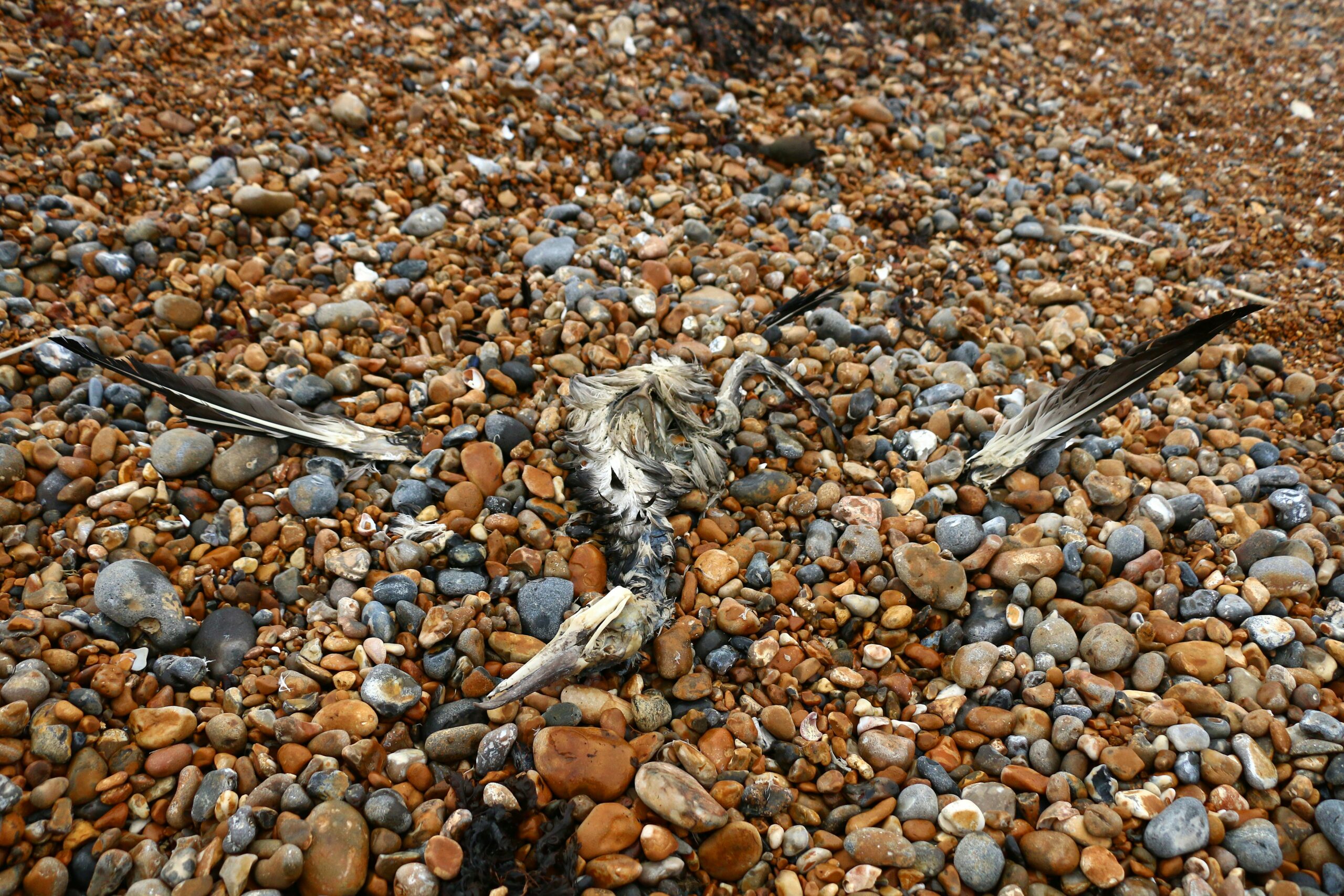
Photo by Pierre Bamin
Thousands of dead and dying seabirds have washed up on British and European coastlines in what the RSPB describes as the most significant seabird wreck since 2013–14, when more than 54,000 birds were recorded dead across European Atlantic coastlines.
Since late January, puffins, guillemots and razorbills have been washing ashore from Cornwall to northern Scotland. By the end of February, more than 300 puffins had washed up in Cornwall alone – against a typical annual total of 40 to 100 such reports for the entire country. Data from the British Trust for Ornithology’s BirdTrack platform recorded 150 dead puffins, 27 guillemots and 52 razorbills since the start of February alone, alongside nearly 100 other seabirds including divers and sea ducks.
The scale of the event extends well beyond UK waters. By 19 February, strandings in France, Spain and Portugal had exceeded 38,000 birds, with wildlife rehabilitation centres across the continent experiencing what the French bird protection charity LPO described as an “exceptional mobilisation.”
Storms and starvation
A seabird wreck occurs when large numbers of birds wash up dead or dying on beaches, typically after severe winter storms leave them unable to feed at sea. A succession of Atlantic storms, including Goretti, Ingrid and Chandra, battered coastlines from January onwards, creating prolonged and exceptionally harsh foraging conditions. Birds found on beaches showed the hallmarks of starvation: protruding breastbones, no body fat, and wasted muscle.
The exact cause is still under investigation, and avian flu has not been ruled out. Samuel Wrobel, senior marine policy officer at the RSPB, said the numbers that had washed up were likely to be “a fraction of those that are still out at sea.”
Populations already under pressure
The wreck arrives at a precarious moment for UK seabirds. Sixty-two per cent of seabird species are already in decline across the UK, rising to 70% in Scotland. When the first UK Birds of Conservation Concern Red List was published in 1996, just one seabird species appeared on it. Today, ten of the UK’s 25 breeding species – including puffin and kittiwake – are Red-listed.
The RSPB has drawn particular attention to the recently consented Berwick Bank offshore windfarm, sited within what it describes as globally important seabird feeding grounds close to the Bass Rock and Isle of May colonies. The developer’s own predictions estimate the project will kill tens of thousands of seabirds over its lifetime, a prospect the RSPB argues is unacceptable for populations already under severe pressure.
Katie-jo Luxton, the RSPB’s director of conservation, said: “Mass deaths like this underline just how fragile our seabirds are, as well as the urgent need to build resilience in their populations to be able to withstand exactly this type of unpredictable event. Wonderful birds like puffins are already in crisis, facing a huge range of pressures including unsustainable fishing, disease, badly sited offshore development and the impacts of climate change.”
The full population impact of this year’s wreck will not become clear until birds return to their breeding sites in the coming months. Puffins are long-lived but slow to reproduce, raising just one chick a year – meaning recovery from significant adult losses is likely to take many years.
Members of the public who find dead wild birds are asked not to touch them, and to report sightings to Defra (or Daera in Northern Ireland) and to BirdTrack via the BTO website or app.