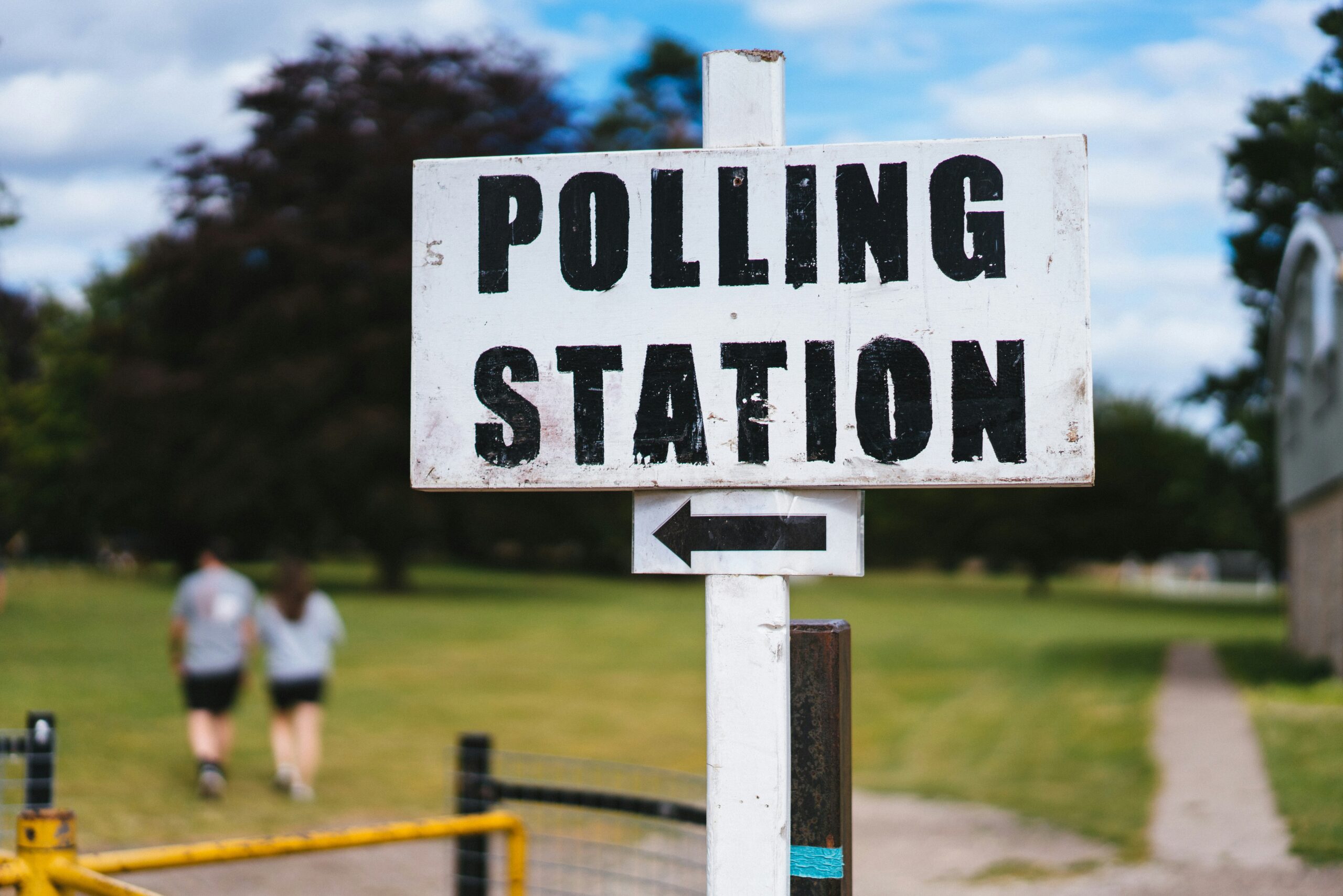
Image description: A pole with a sign that says polling station. Photo by Phil Hearing on Unsplash
Andy Burnham, Greater Manchester’s mayor and Labour’s candidate for the Makerfield by-election, has said public ownership of Thames Water is the right approach, citing the company’s pattern of regulatory failures and ongoing financial crisis. Speaking to Newsnight, he argued there is an “overwhelming case for public ownership” given Thames Water’s multiple breaches and its continued payment of dividends despite mounting debts of over £14 billion.
Burnham has previously called for “greater public control” over water companies. In an exclusive interview with the Guardian, he has confirmed this could mean nationalisation:
“Public ownership is absolutely an option,” he said. “I would say for Thames Water, that is what should be done.”
The intervention comes as Thames Water continues to struggle under the weight of debt, infrastructure deficits and environmental enforcement action. The company, which serves 15 million households across London and the Thames Valley, was fined £123 million by Ofwat in May 2025, the largest fine ever imposed, including £104 million for environmental breaches and £18 million for unjustified dividend payments.
Burnham’s position reportedly reflects growing political and public pressure on the privatised water model itself. Thames Water has been the focus of intense scrutiny over sewage releases, leaks affecting a quarter of its drinking water supply, and bill rises that will reach 35% by 2030 despite its poor operational performance. In 2024, water companies across England discharged raw sewage for a record 3.61 million hours into seas and rivers, with Thames Water accounting for a significant share of that figure.
The government has already prepared contingency plans for potential intervention. Should Thames Water become unable to raise sufficient private capital, the Treasury is ready to place it into special administration, the insolvency process used for energy supplier Bulb in 2021, effectively bringing it under state control without formal nationalisation.
Burnham’s framing, emphasising “public ownership” rather than “nationalisation”, signals a pragmatic political approach that distinguishes between different models of public control. Some councils, including Oxford and Haringey, have called explicitly for nationalisation and replacement of the private ownership model entirely. Environmental campaigners and consumer groups have also mounted sustained arguments that privatisation has failed the sector.
Winning the Makerfield by-election on 18 June would give Burnham a seat in Parliament, from which he can formally contest the Labour leadership. His positioning on water infrastructure, combining public ownership with regional flexibility, suggests utilities reform will be a central plank of any leadership bid.