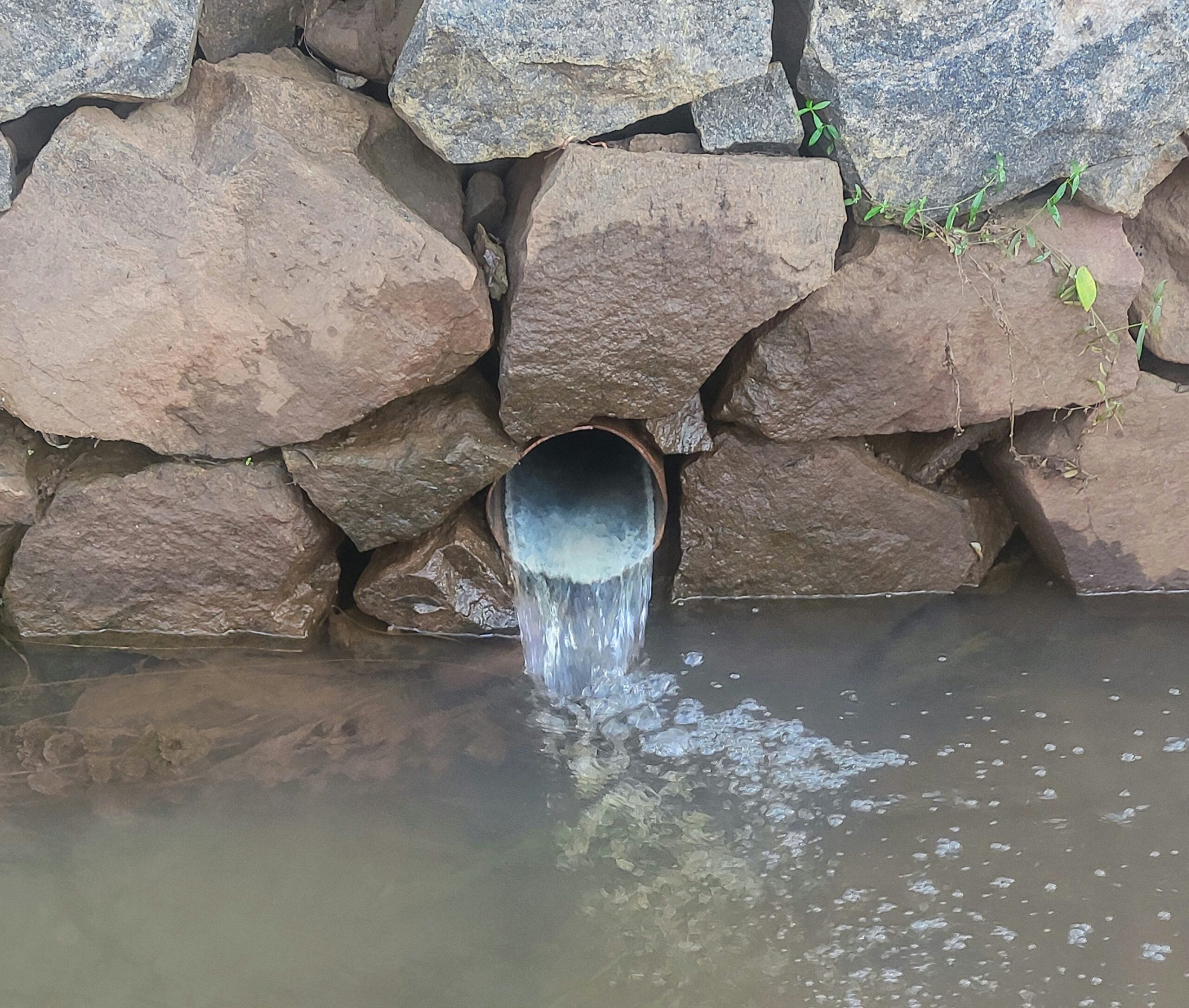
Image description: Sewage pipe contained between rocks pouring out into a river. Photo by Jacob Vathikulam on Unsplash
In a fresh exclusive, the Guardian reports that the number of suspected illegal discharges of raw sewage into rivers and seas during dry weather has risen sharply in 2026. Freedom of information requests submitted by Robert Forrester, a former Environment Agency officer of more than twenty years, allegedly reveal that water companies discharged raw sewage during dry weather 7,280 times between January and May 2026 alone. Their report compares these figures, drawn from the same recording system and based on the same reporting instruction, with the 8,576 dry spill pollution discharges recorded across the entirety of 2025.
Figures still need verification says Water UK
Combined sewer overflows are an emergency mechanism designed for use during extreme rainfall events. However, dry weather spills are often considered a breach of water companies’ environmental permits and are potentially illegal, as without rainfall to dilute sewage entering waterways, the toxic impact on rivers and seas is significantly greater.
Water UK, the industry trade body, has cautioned that the figures were as yet unverified and that it was too early to classify them formally as dry day spills. The watchdog simultaneously acknowledged that “no spill is ever acceptable”, pointing to a £12bn industry-wide investment programme aimed at halving storm overflow spills by 2030.
South West Water said storm overflow activations can occur for reasons beyond rainfall alone, and that near real-time monitoring data requires validation before regulatory reporting. Meanwhile, a Defra spokesperson has described the situation as “totally unacceptable,” and noted that for the first time water companies are now required to report dry day spills as pollution incidents. The government argues these reports will provide the evidence base needed to pursue enforcement action where performance falls short.
Former EA officer says dry day spills “almost always deliberate and illegal”
Last year, water companies in England were for the first time required to report to the Environment Agency the number of times they discharged raw sewage from combined sewer overflows during dry weather.
Forrester, who reportedly left the Environment Agency following his concerns about failures to tackle what he describes as water companies’ illegal practices, described dry day spills as “almost always deliberate and illegal” Forrester suggested the alleged surge during a drier year indicated that water companies were operating to undisclosed quotas regardless of weather conditions or legal risk. “This level of criminality shows that water companies do not believe they, or the government, will ever do anything meaningful to stop them,” he told the Guardian.
South West Water shows highest frequency of suspected dry day spills
According to the Guardian’s reporting, South West Water discharged raw sewage on dry days 1,299 times in just the first five months of 2026, compared with 2,451 times during the whole of 2025. Meanwhile they also report that public mapped data revealed water companies, including Southern Water and South West Water, discharged raw sewage from storm overflows within hours of the first significant rain following months of drought.
Data collated by WaterWatch suggested 664 separate spills across 184 sites despite just 16.5mm of rain across the south-west, equivalent to almost 300 hours of combined sewage discharge in a single week. Liberal Democrat county councillor Ed Tyldesley put the dilemma starkly: either the company’s own monitoring data is accurate and sewage was discharged for 299 hours in one week, or its legally mandated monitoring system is so unreliable that hundreds of apparent spills are being reported to the public that did not actually occur. Neither conclusion, he noted, is acceptable.