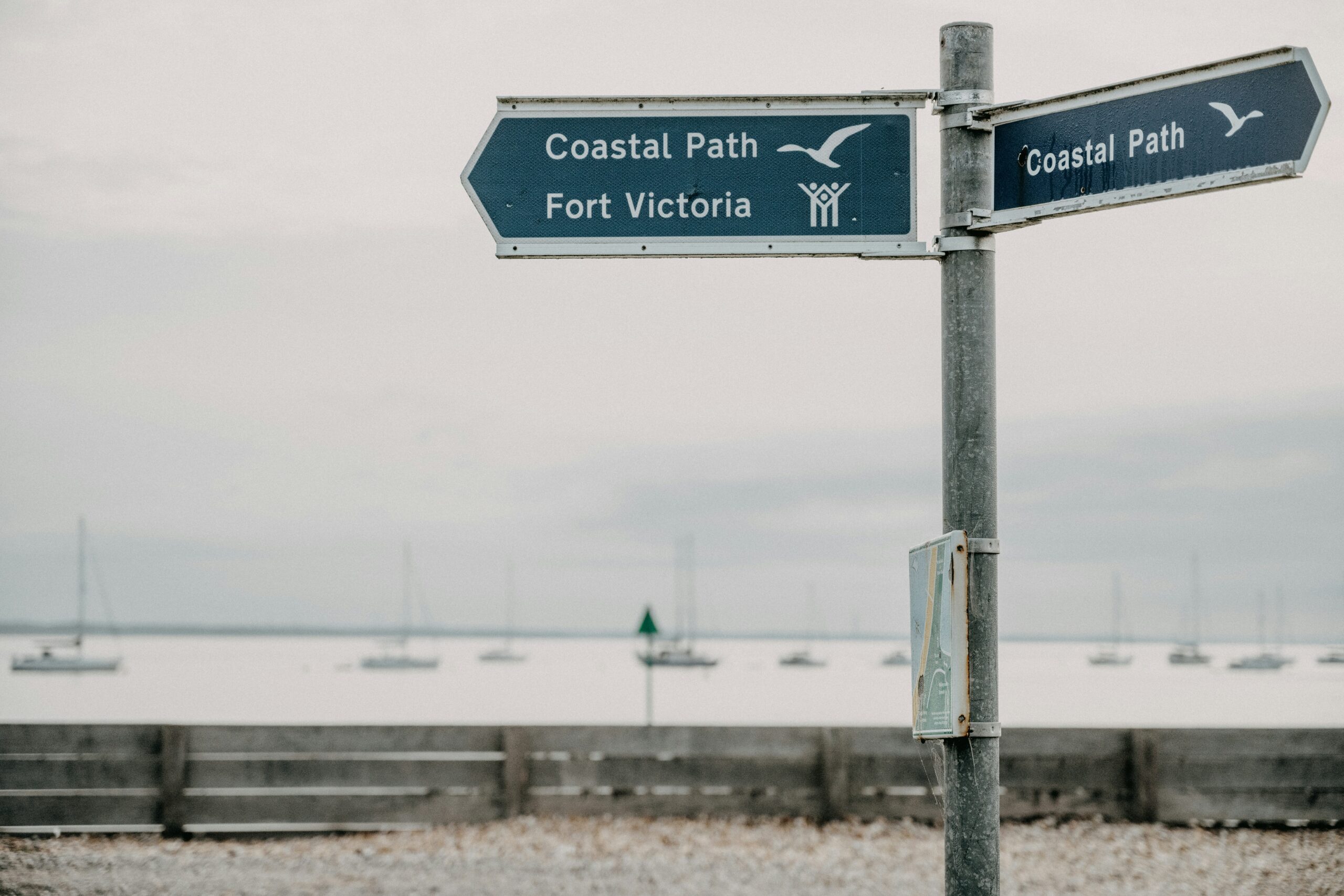
Photo by Annie Spratt
The Environment Agency issued bathing warnings for three Isle of Wight beaches this week after storm overflows released sewage-contaminated water following heavy rain, reviving long-running concerns about the resilience of the island’s sewer network. The agency advised against swimming at Gurnard, Shanklin and Bembridge on Wednesday 19 August, with Southern Water’s own Rivers and Sea Watch service listing around 15 further locations where an “outfall release within the last 24 hours” may have affected water quality.
Multiple beaches affected
According to Southern Water, cited by the Isle of Wight County Press, a release at Springhill Cowes Transfer lasting two hours and 14 minutes affected Gurnard, while outfall releases continued for nearly four hours in Shanklin and remained ongoing near Whitecliff Bay and Bembridge. Further releases were reported off Sandown, Norton, East Cowes and Cowes, though no bathing notices were issued for those areas. The County Press reported that the Environment Agency lifted its advice the following day, and that the alert followed the area’s first significant rainfall in several weeks.
The Isle of Wight Council urged residents and visitors to avoid direct contact with the water. “Sewage water can contain bacteria and viruses that may cause illness,” a council spokesperson said. “If you do [come into contact] – wash with soap and water – hand sanitiser does not kill all viruses which can cause illness. Keep children and animals out of the water.”
Southern Water points to investment programme
A Southern Water spokesperson acknowledged public frustration with the frequency of storm overflow releases. “We understand the public concern around storm overflows and are committed to reducing our reliance on them through our £1.5bn Clean Rivers and Seas Plan, which has already prevented hundreds of storm overflow releases in its first year,” the spokesperson said. “Storm overflows are designed to operate during periods of heavy rainfall to help prevent the sewer network from backing up and flooding homes, businesses and roads. In Hampshire and on the Isle of Wight, we’re investing £341m to reduce storm overflows including a recently announced £20m scheme to reduce them at Newport, Gurnard, West and East Cowes and Ryde.”
That £20m programme, announced earlier this month, was made possible through accelerated funding approved by industry regulator Ofwat, and builds on roughly £9m already spent trialling overflow-reduction measures on the island. Work is under way in Cowes and Gurnard, with plans to extend into Fishbourne, Wootton, Yarmouth and Freshwater.
The County Press reported that some islanders took to social media to question whether the rainfall that triggered the latest releases had genuinely been heavy, with some describing the sewer system as not fit for purpose. Southern Water attributed part of the pressure to the preceding dry, hot spell, noting that hardened ground can cause rainfall to run off rather than soak away, sending larger volumes of surface water into the combined sewer network.
A recurring pattern
The island’s ageing combined sewer network, which carries both wastewater and surface drainage in the same pipes, has been a persistent source of concern. The Isle of Wight Council has previously noted that the island’s water and wastewater infrastructure is among the oldest in the country, and Southern Water has confirmed accelerated work at eight locations, including Gurnard, Cowes, Ryde and Freshwater, is under way to address the issue.