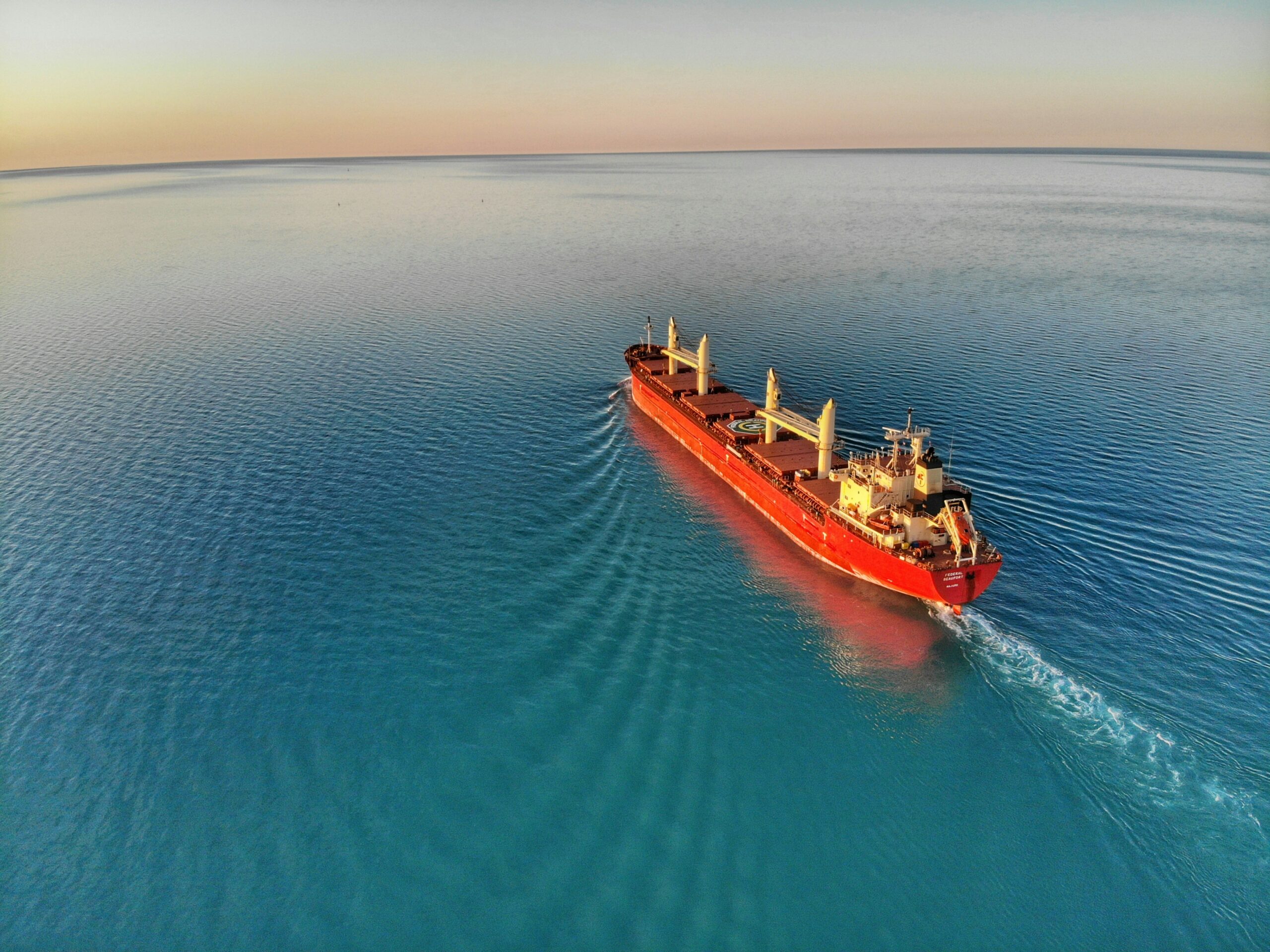
Photo by Chris Pagan
Commercial shipping in the Baltic Sea is causing significantly greater physical disturbance to the seabed than previously recognised, according to new research published in Nature Communications. The study reveals that wake turbulence from large vessels is disrupting water stratification and causing seabed erosion of up to 1.5 metres over a decade in shallow, heavily trafficked areas.
Researchers from the Leibniz Institute for Baltic Sea Research Warnemünde and Kiel University conducted the first comprehensive investigation into how ships physically disturb the seafloor. Lead author Jacob Geersen explained that whilst shipping’s impact has traditionally been discussed in terms of emissions and noise, this study investigated whether vessels mechanically disturb the seabed.
The research focused on Kiel Bay, where heavily trafficked routes cross waters often less than 20 metres deep, allowing propeller turbulence to reach the seabed. The study area experiences an average of 49 ship passages per day. Comparing high-resolution seafloor mapping from 2014 and 2024 documented substantial erosion correlating with vessel traffic patterns.
Using sonar to trace five vessels’ wakes, researchers observed propeller turbulence reaching from surface to seafloor in three cases. The team calculated bed shear stress from vessels ranged from 0.83 to 2.28 Newtons per square metre, exceeding critical thresholds and initiating sediment transport in bands 26 to 61 metres wide. The study documented hundreds of seabed depressions up to one metre deep created by propeller scouring.
Ship wakes break down stratified water columns, mixing water masses with approximately five kilograms per cubic metre density difference. This influences fluxes of oxygen, nutrients and trace elements whilst mobilising sediments containing organic matter, pollutants and nutrients. Wake-induced displacement can excite internal waves, potentially increasing mixing and methane emissions.
Researchers estimated approximately 7.5% of the Baltic Sea area—roughly 30,356 square kilometres in regions shallower than 20 metres with daily ship traffic—could be affected by ship-induced sediment changes, representing a potential eroded volume of 1.9 cubic kilometres.
The study identified ecosystem impacts including altered phytoplankton growth, oxygen intrusion into anoxic waters affecting biogeochemical processes, and disrupted benthic communities favouring opportunistic species over sensitive taxa.
Both researchers suggested that adjustments to shipping lanes, speed regulations or alternative routes could help relieve pressure on sensitive seabed areas. The findings have implications beyond the Baltic Sea for coastal environments worldwide where heavy vessel traffic intersects with vulnerable seabed ecosystems.