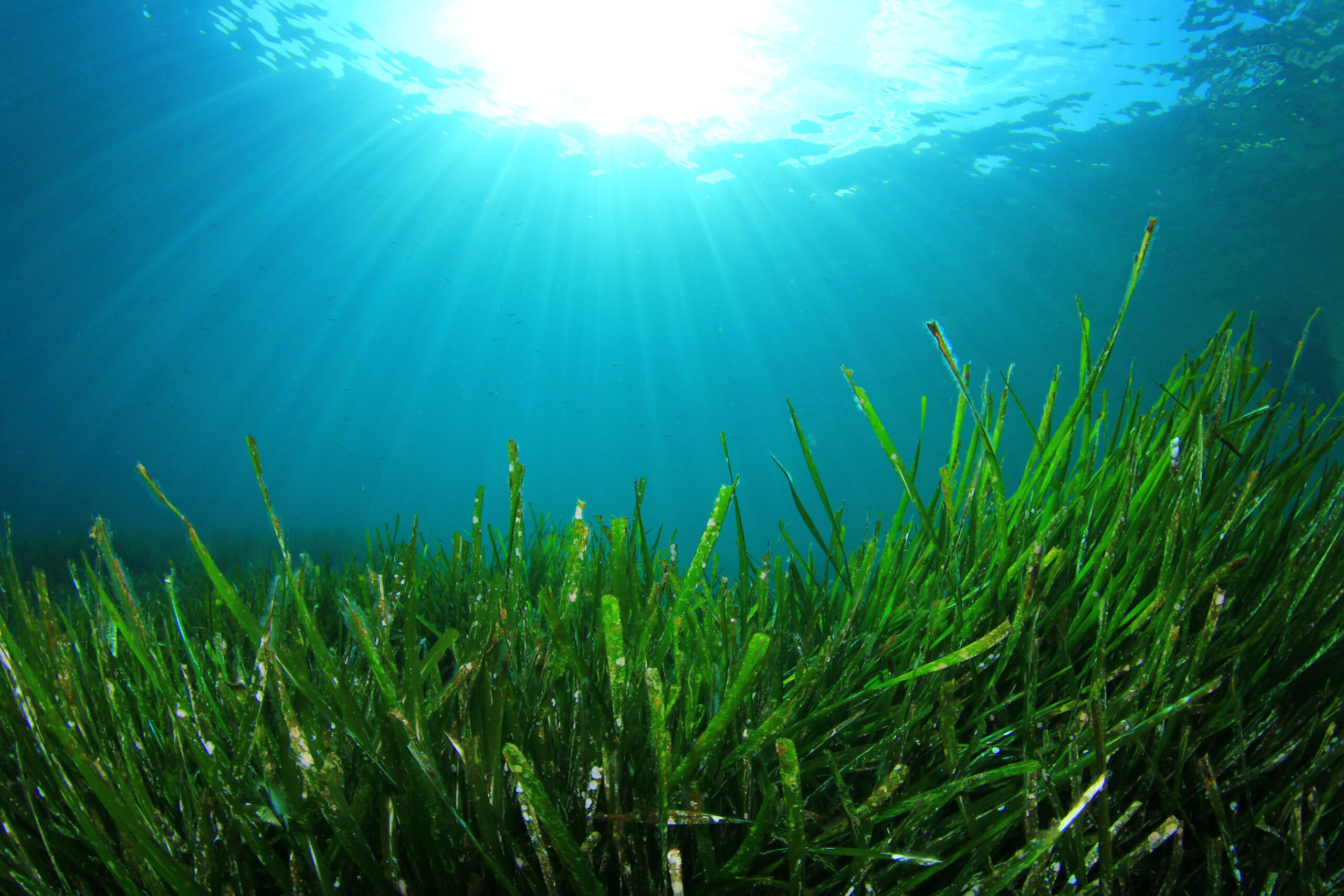
Image description: an underwater seagrass meadow.
A warning from “underwater forests”
New research has found that sewage and agricultural pollution in rivers is having an “alarming” impact on marine invertebrate life in Britain’s seagrass meadows. The study, carried out by Project Seagrass and Swansea University, examined 16 sites along the British coastline affected to varying degrees by eutrophication – the enrichment of water by excess nutrients from sewage discharges, fertiliser and manure runoff, and industrial wastewater. The findings are described by researchers as “stark.”
The scale of the damage
Seagrass meadows are among the most ecologically valuable coastal habitats, absorbing significant quantities of carbon dioxide and supporting dense communities of invertebrates, with a single hectare estimated to harbour as many as 100 million creatures including crabs, shrimps, and snails. The research found that sites with higher concentrations of nitrogen consistently showed reductions in both animal abundance and species richness, with an increase in nitrogen potentially corresponding to a 90% decrease in the abundance of life per unit of available habitat. Elevated phosphorus levels were found to be having a “devastating” effect on life within lagoon environments in particular. Excess nutrients are fuelling algal growth that smothers seagrass beds, blocks sunlight, and depletes oxygen, in turn undermining the entire ecosystem.
Where the damage is worst
Among the worst-affected sites identified were seagrass meadows in the Thames Estuary along the Essex coast and the Firth of Forth in Scotland. Issues were also flagged in Wales at Skomer Island, an internationally renowned wildlife haven, though researchers noted that seabird activity alongside human impacts were also factors there.
By contrast, sites with healthier, clearer water such as the Isles of Scilly and the Orkney Islands were found to support significantly greater levels of marine life.
An integrated response is needed
Researchers are clear that addressing marine ecosystem decline requires integrated thinking across land and sea. Dr Benjamin Jones of Project Seagrass noted that while public debate has focused on sewage, the connection between land-based nutrient inputs and marine biodiversity loss is a conversation that is “very rarely had.” Dr Richard Unsworth of Swansea University warned that riverine inputs from sewage and poor fertiliser use are flowing out to coasts and reducing the food available for fish and seabirds, with consequences that extend well beyond the seagrass beds themselves. The research adds further scientific weight to calls for a more integrated regulatory approach to nutrient pollution, spanning both freshwater and marine environments.