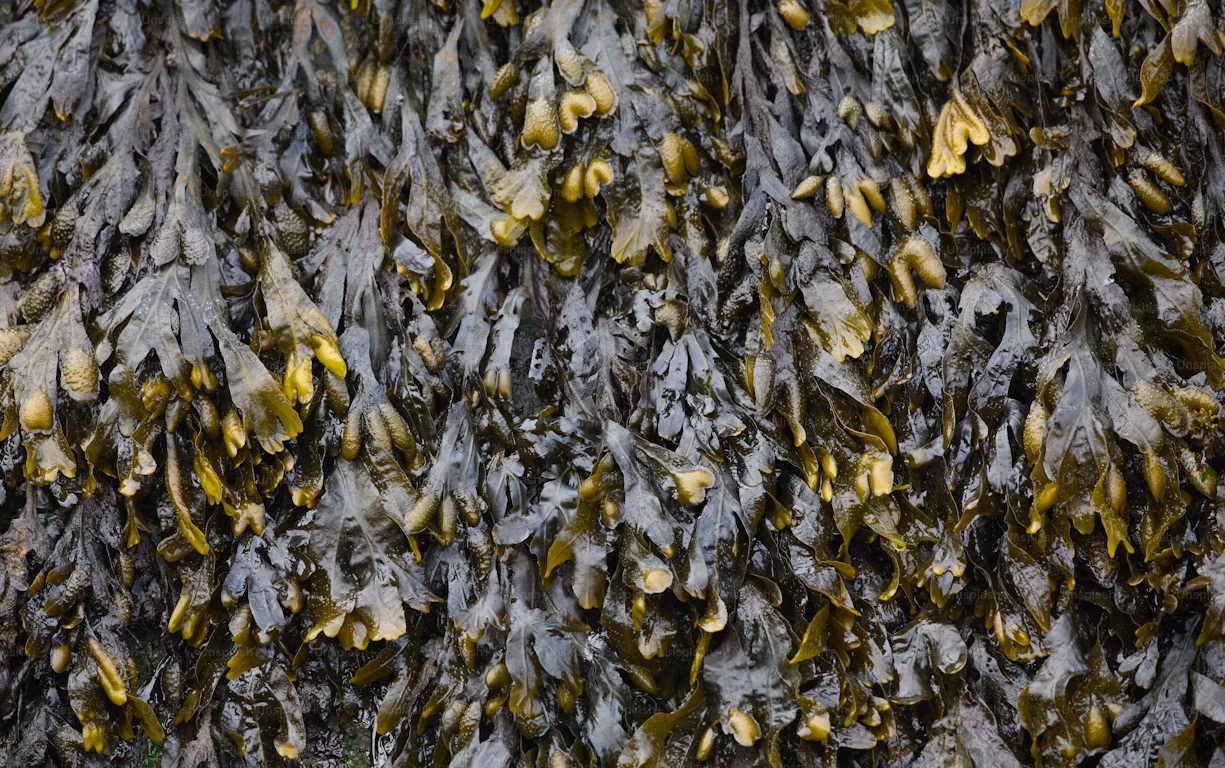
Photo credit: Zdeněk Macháček
Seaweed farming could create jobs and low-carbon products across the UK, but the sector will not grow without public trust, according to a new report from the Scottish Association for Marine Science in Oban. The report, Seaweed farming with and for our coastal communities, sets out six recommendations for policymakers and prospective farmers, centred on the idea that developments need a social licence to succeed.
The social licence problem
Social licence describes the acceptance a project earns from the community around it, reducing conflict and encouraging ethical operation. The report argues that seaweed farming’s economic and environmental credentials do not, on their own, guarantee it. Lead author Dr Suzannah-Lynn Billing said the industry can create skilled local jobs and build economic resilience when it is rooted in the needs and values of coastal communities, but that opposition can arise when proposals clash with local livelihoods.
She pointed to the recent rejection of the Port Quin application in Cornwall as an example of what happens when community voices are overlooked. Trust in operators and regulators, she said, depends on how open and transparent decisions are. Where engagement is lacking, farms may struggle to win acceptance, and poor relations can fuel negative political and media narratives that limit the sector’s potential.
A growing global market
The report frames the opportunity in commercial terms. Seaweed farming is projected to become a $27 billion global industry this year, with most activity concentrated in Asia. The European Union aims to scale up production by 2030 to build a sector worth €9 billion and supporting 115,000 jobs. The report argues the UK can capture part of that growth if it develops its own sector with community support built in from the start.
The six recommendations
The report sets out practical steps for farmers and regulators: early and ongoing engagement with communities and stakeholders; prioritising farming where local people accept it; integrating local knowledge and values into site selection; empowering communities through inclusive business models and local supply chains; investing in public awareness and education; and leading with empathy and awareness.
It was published by SAMS, a partner of UHI, with WWF-UK, Câr y Môr, the Centre for Environment, Fisheries and Aquaculture Science, University College London and Seaweed Scotland. Dr Piers Hart, aquaculture adviser at WWF-UK, said seaweed products can replace high-carbon materials such as plastics and fertilisers, while farms can support wildlife and absorb excess nutrients, but that these benefits depend on community engagement and support.
The work stems from Unlocking the Power of Seaweed, a National Lottery funded project working with coastal communities in Pembrokeshire and seaweed farms across the UK, backed by the Climate Action Fund.