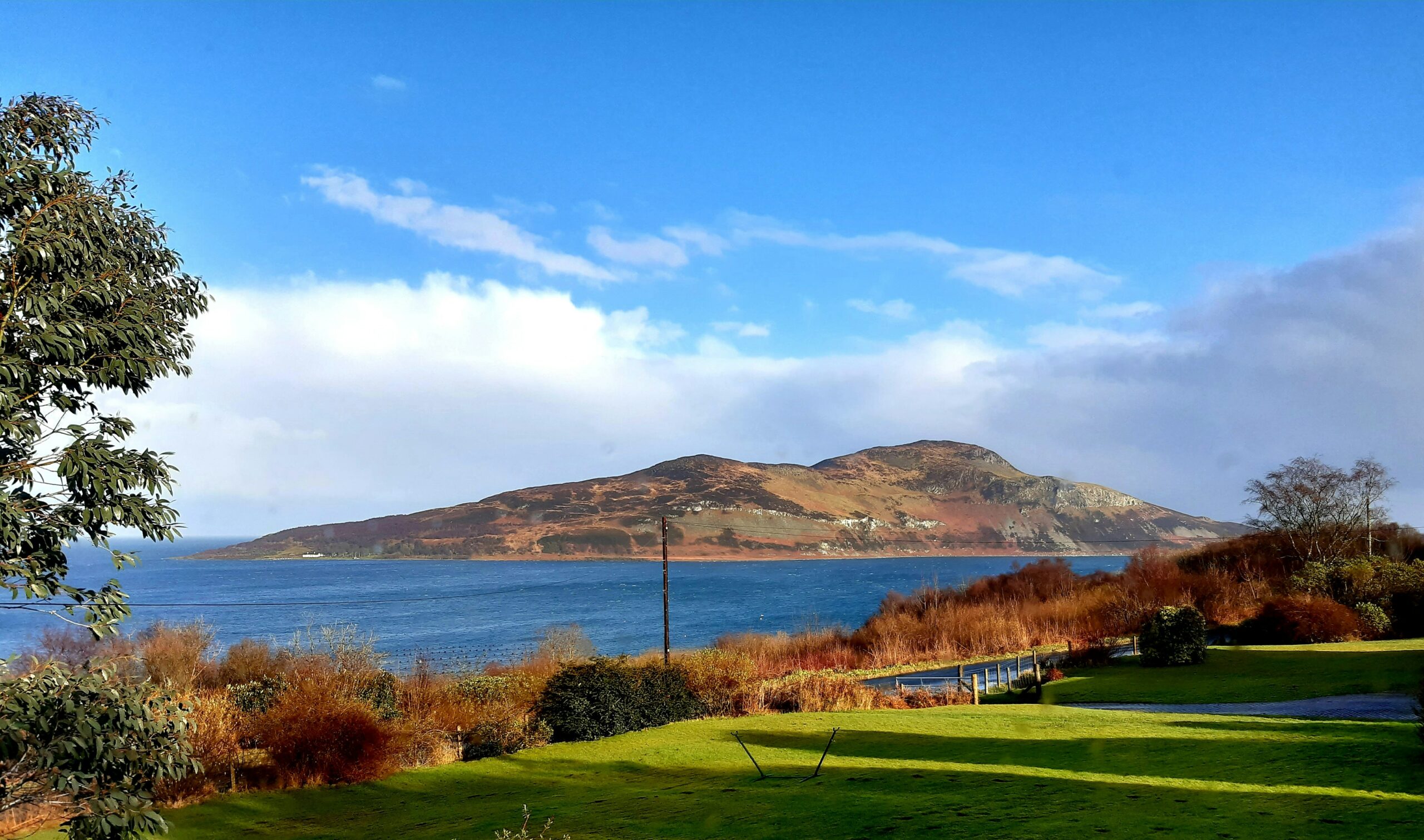
Photo by Jacqueline Heron Wray
A new study of Scotland’s South Arran Marine Protected Area has found that nearly a decade of protection from bottom trawling and dredging has produced striking ecological recovery, with highly protected seabeds recording around three times the abundance of marine life and twice as many species compared with nearby fished areas.
The research, led by Dr Ben Harris at the University of Exeter and published in Estuarine, Coastal and Shelf Science, was conducted under the Convex Seascape Survey – a global programme involving Blue Marine Foundation, the University of Exeter and Convex Group. Scientists surveyed 14 sites in and around the MPA, recording 1,592 individual infaunal organisms spanning 153 distinct taxonomic units across 16 phyla, alongside fish and epifaunal surveys using baited remote underwater video and ROV transects.
A muddy seabed reborn
The findings directly challenge the long-held assumption that soft sediment habitats are ecologically low-value. “What looks like a boring desert of mud, it’s actually really, really dynamic,” Harris told Mongabay. “Once you get a bit nerdy about it and look a bit deeper, you realize that they’re playing a really important role.” He described worms, shellfish and other small invertebrates as “important gardeners of the seabed, all performing different roles”, adding: “Extrapolate that over the entire region of the MPA, and you’re looking at billions of organisms.”
The paper’s key findings on infaunal communities are robust: highly protected sites had approximately three times greater abundance and double the species richness compared to unprotected areas, with the effect persisting across sediment types when environmental covariates were modelled. Indicator species particularly associated with protection included Amphiura filiformis (a brittlestar) and Turritellinella tricarinata (a tower snail), both well documented as declining under bottom disturbance. Unprotected sites were dominated by disturbance-tolerant species such as Glycera unicornis and Pholoe inornata; opportunists that thrive in mechanically disrupted habitats but contribute less to sediment stability and carbon storage.
Carbon: early signals, long timescales
On carbon, the study is carefully qualified. Protection did not produce a significant direct effect on total organic carbon concentration, sediment mud content remained the dominant driver of carbon variability. However, protection did increase the organic carbon-to-mud ratio and stabilised the positive mud–carbon relationship, which was significantly less reliable in unprotected sites. The authors interpret this as consistent with evidence that chronic bottom disturbance degrades carbon retention per unit of mud through resuspension and oxidation, without necessarily shifting mean mud content at the scale measured. As Harris cautioned: “These seabeds may appear empty, but they are anything but. They can recover when protected, but much more slowly than fish communities in protected areas. That means long-standing, well-enforced protection is needed to realise their full ecological and biodiversity benefits.”
The paper concludes that the biodiversity shifts observed, particularly in infaunal and epifaunal communities, are likely precursors to longer-term changes in carbon flux and storage, but that observable signals in carbon accumulation will take considerably longer still to emerge.
A community-led pioneer
The South Arran MPA has its roots in grassroots campaigning. The Community of Arran Seabed Trust (COAST)established Scotland’s first No Take Zone in Lamlash Bay in 2008, a fully protected 2.67km² reserve, after fish catches in the area had collapsed by 96% following the removal of the three-mile inshore trawling limit in 1984. The wider South Arran MPA, prohibiting dredging and limiting prawn trawling, came into effect in 2016. Earlier surveys had recorded an 8.5-fold increase in king scallop density within the protected area since designation.
Wider implications
The results carry significant weight for marine policy at a moment of growing international momentum. Just 0.2% of the European shelf is currently protected from bottom-towed gear, a figure the paper’s authors describe as leaving “limited opportunities for benthic ecosystem recovery.” Sweden has announced a ban on bottom trawling across its MPAs from July 2026, while the Wildlife Trusts have called on the UK government to introduce an Ocean Emergency Bill fast-tracking a whole-site trawling ban in English MPAs, a call that went unheeded in last week’s King’s Speech.
The study calls explicitly for the findings to inform MPA policy design: “protecting soft sediments can enhance biodiversity and may contribute to climate mitigation” and warrants “their consideration in the establishment of strict, well-enforced MPAs as an opportunity to re-calibrate chronically shifted ecological baselines.” Harris put the challenge in stark global context when speaking to Mongabay: “So much of the continental shelf that is soft sediment has been trawled for so long that we haven’t really recorded what was there very well before we destroyed it.” The records describing a healthy European continental shelf, he noted, date from 150 to 200 years ago — before large-scale industrial trawling began.