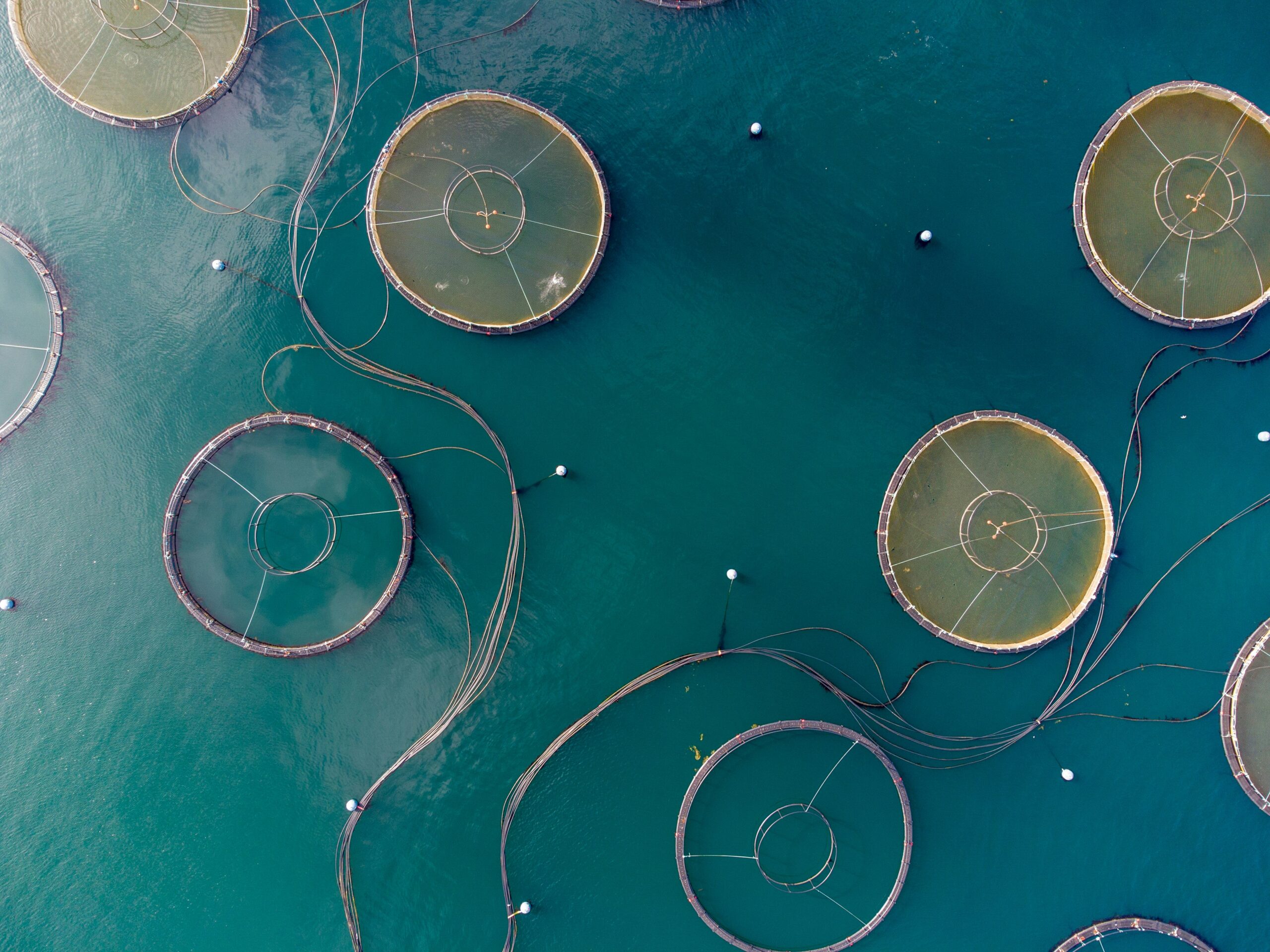
Photo by Bob Brewer
The Scottish Government has concluded that no new regulation is needed to address fish mortality on salmon farms, following the publication of a Marine Directorate research report into persistent elevated deaths at marine sites. The finding, presented to the Scottish Parliament’s Rural Affairs and Islands Committee on 11 March, has drawn immediate and sharp criticism from conservation groups, animal welfare organisations, fishing communities and protesters who gathered outside Holyrood on the same day.
The Marine Directorate’s report found that persistently high levels of fish deaths in marine salmon farms were “not a widespread issue”, and that the industry was already taking prompt steps to reduce mortality through measures including specialised seal nets, bespoke vaccines and selective breeding. Rural Affairs Secretary Mairi Gougeon told the committee the past year had seen “significant improvements to the resilience, transparency and sustainability of salmon farming.”
Gougeon said: “Scottish salmon is a high quality, home grown nutritious product, which is internationally renowned and commands a premium price in the market in recognition of its quality. That’s why it is in everyone’s best interests to manage mortality in salmon farms down to the lowest possible levels. This preliminary research is welcome, but we expect producers to continue prioritising action in this area across all sites.”
Protests at Holyrood
The announcement coincided with a demonstration outside parliament, where anglers, community campaigners, conservation charities, animal protection groups and wildlife tourism operators gathered in a peaceful protest. They brought a wooden carving of a wild salmon to present to the First Minister as a symbol of what they say is at stake. Government data shows there were 12 million deaths in salmon facilities in Scotland last year and 1,200 breaches of the industry’s lice Code of Good Practice. Wild salmon populations have declined by 70% over the past two decades.
A poll of 2,005 Scottish adults conducted by Survation on behalf of WildFish found that a third would like to see the government halt salmon farm expansion, with fewer than one in ten believing salmon farming should continue as it currently operates. Over a quarter called for a complete phase-out of open-net cage salmon farming in Scotland.
Nick Underdown, Scotland director for WildFish, said: “This Committee has a choice between protecting the private interests of salmon farming companies or protecting our environment and wild fish. Scotland’s once mighty populations of salmon are a shadow of their former health – in some smaller rivers, they have disappeared entirely. Already a third of Scots want to see an immediate halt on the unbridled expansion of salmon farms, and that number is only set to increase as public awareness around the industry’s reckless impact continues to grow. Political action is long overdue, and we urge MSPs to protect the heritage of Scottish wildlife by finally implementing a moratorium on new salmon farms and start planning to phase out salmon farming like other countries are doing. We present a symbol of Scotland’s wild salmon to the First Minister and ask him to heed these concerns and put the brakes on, before it is too late.”
Ken Reid, coordinator of the 32,000-member Salmon Fishing Club, said: “Anglers are typically conservation volunteers, not protestors. When those who quietly restore rivers and fund vital science feel compelled to stand at Parliament, it reflects the seriousness of the situation and something has gone badly wrong. As the nature champion for the Atlantic salmon, John Swinney has a duty to protect this fish for future generations and issue an urgent moratorium on new salmon farms as a first step.”
Industry incidents and worker safety
Campaigners pointed to a string of recent incidents they say demonstrate systemic failure: a mass escape of 75,000 farmed salmon in Loch Linnhe; unexpected deaths of more than 250,000 fish in Shetland; and leading producer Mowi’s loss of the Royal Warrant following an animal welfare investigation in which fish were recorded being beaten to death. The Bakers, Food and Allied Workers Union also raised alarm over more than 100 worker health and safety incidents in recent years, including fractures, degloving injuries and one death, as well as worker exposure to bioaerosols linked to “salmon asthma.” The latest Salmon Production Survey found the number of direct industry jobs fell by 8%.
John Aitchison, aquaculture spokesperson for the Coastal Communities Network, said: “More and more of Scotland’s coastal communities are angry about the impact of these polluting industrial farms, sited in the waters on which our communities depend. Salmon farms impact our jobs by dumping all their pesticides, fish faeces and parasites into the sea. We can smell the sickening aftermath of mass deaths in the farms when we travel on ferries with the ‘morts’ trucks. A third of a billion salmon have suffered and died prematurely at sea in Scotland since the mid 1980s, but the Government has done next to nothing to reduce this rising death toll. An urgent moratorium on expansion would be the responsible response by any government faced with regulating an industry beset with so many serious issues.”
Abigail Penny, executive director of Animal Equality UK, said: “Every year, millions of salmon die in underwater cages on Scottish lochs, in conditions so grim that the industry doesn’t even want you to know the true death toll. Many are eaten alive by lice, infected with disease, or crammed into warming, overcrowded waters for their entire lives. Thanks to toothless regulators, the industry has gotten away with it — until now. The Rural Affairs and Islands Committee has a duty to objectively examine the facts, and they are plain as day: on-farm deaths hit 12 million last year; there were over 1,200 lice breaches; 47 major non-compliances were identified by the environmental regulator; and workers raised alarm over more than 100 serious health and safety incidents. The industry plays victim, but it’s the animals, the people, and the environment that pay the price.”
Bally Philp, coordinator for the Scottish Creel Fishermen’s Federation, said: “Scotland’s inshore shellfish fishermen rely on a healthy marine ecosystem, yet salmon farming continues to expand despite concerns about chemical use, including well-documented impacts of delousing agents on crustacean larvae. The Scottish Creel Fishermen’s Federation supports a moratorium on further expansion until these impacts are properly addressed.”
Alison Baker, chair of Angling Scotland, said it was a “now or never” moment: “We are witnessing a collapse in wild Atlantic salmon numbers that no amount of catch-and-release or local conservation can fix alone. We cannot allow our iconic wild salmon to be managed into extinction while the primary threats, like the impacts of salmon farms, remain inadequately addressed.”
International comparisons
Campaigners note that other jurisdictions are moving in a different direction. British Columbia has voted to remove salmon farms to protect the marine environment and wild fish populations, Denmark has halted new farm licences in coastal waters, court rulings in Sweden have created strong legal barriers to new open-water farms in sensitive waters, and Alaska has banned salmon farming since 1990.