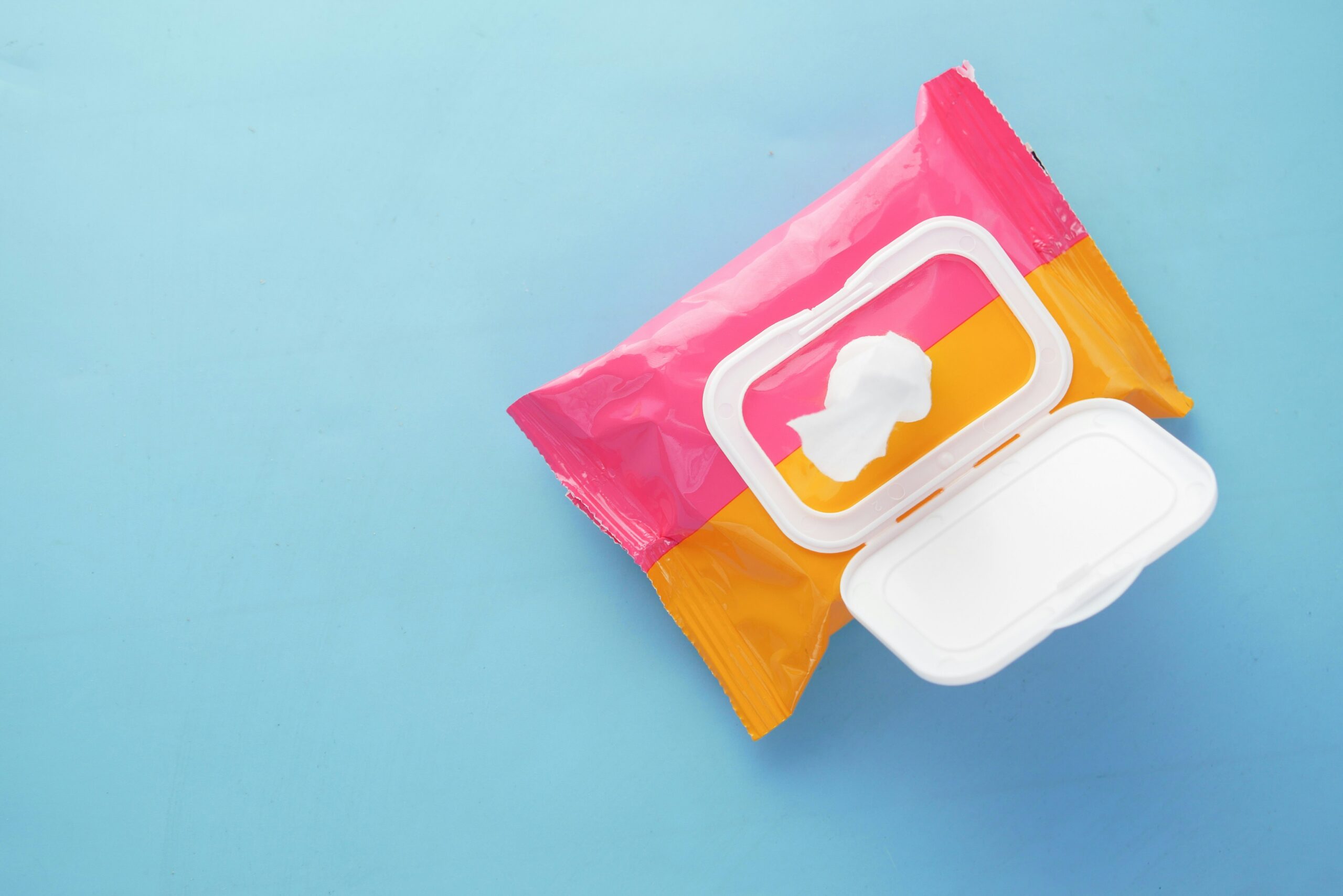
Photo by Towfiqu Barbhuiya
Scotland will become the last of the four UK nations to ban the sale and supply of wet wipes containing plastic, with new regulations published by the Scottish Government setting an enforcement date of 11 August 2027. The move follows a UK-wide consultation in 2023, in which over 93% of respondents supported the proposals.
Climate Action Secretary Gillian Martin said: “Wet wipes containing plastic are an unnecessary single-use item, for which more environmentally friendly alternatives already exist. As with all single-use items, it is vital they are disposed of correctly, otherwise they become a problematic source of marine litter and a threat to the health of our environment and wildlife.”
The ban will apply to all wet wipes containing plastic, regardless of whether they are marketed as flushable or disposable, covering products used for personal care, household cleaning, and industrial purposes. Exemptions are included for medical and industrial uses, and members of the public who require plastic-containing wet wipes for healthcare reasons will still be able to obtain them via pharmacies.
Scottish Water, which has long campaigned for the ban through its Nature Calls initiative, welcomed the announcement. Chief Executive Alex Plant said: “This ban will help us tackle one of the biggest challenges we face – responding to and clearing around 35,000 blockages every year in our sewers, at a cost of about £10 million, largely due to wet wipes wrongly flushed down toilets.” Plant added that Scottish Water is also calling on the UK Government for mandatory “do not flush” labelling on all bathroom products that risk being incorrectly disposed of, and an end to misleading environmental claims on packaging.
Catherine Gemmell, Policy and Advocacy Manager at the Marine Conservation Society, said: “Regulations banning plastic in single-use wet wipes in Scotland are a vital step towards reducing sewage-related rubbish on our beaches. Our volunteers have consistently found huge numbers of wet wipes along Scotland’s coastline, with some beaches recording thousands.”
The scale of the problem is significant. Defra beach litter monitoring data found an average of 20 wet wipes per 100 metres of beach surveyed across the UK between 2015 and 2020. When plastic-containing wet wipes enter marine environments, they break down into microplastics that can persist for decades and enter the food chain.
Scotland’s ban is part of a coordinated UK-wide approach, with Wales banning plastic wet wipes from 18 December 2026, and England and Northern Ireland following in May 2027. As STV News reported, the different enforcement dates reflect each nation’s separate parliamentary timetable, though all four bans share the same scope, definitions, and transition period. The 18-month lead time is designed to allow manufacturers and retailers to transition to plastic-free alternatives, with Smart Water Magazine noting that many major brands are already developing or marketing biodegradable options.