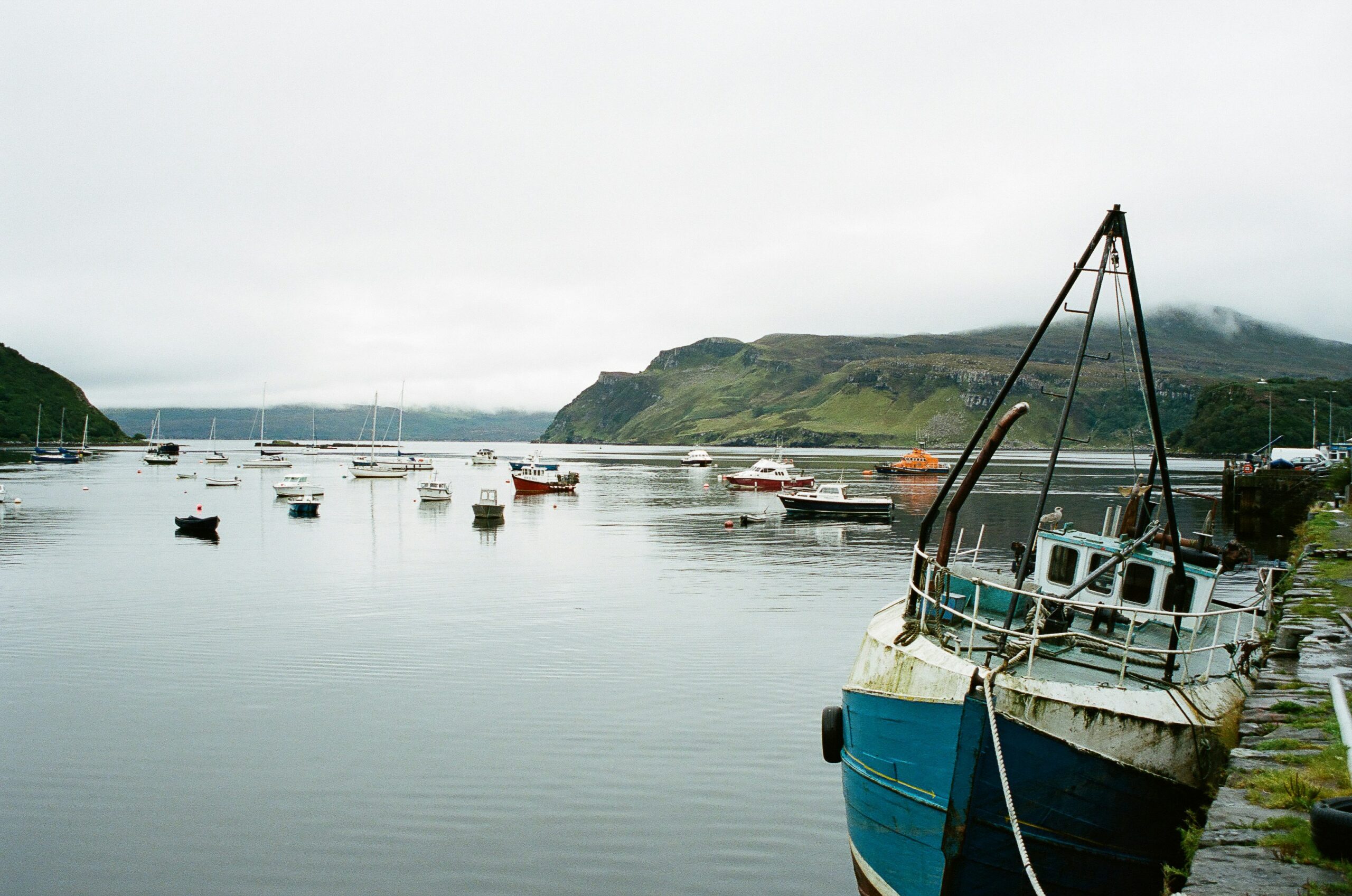
Photo by AJ Wallace
The Scottish Government has opened a public consultation on proposed fisheries management measures covering more than 160 marine protected areas (MPAs) and priority marine feature (PMF) sites across Scotland’s inshore waters, in what officials have described as one of the most extensive exercises of its kind. The consultation, launched on Monday 14 September, was developed following years of scientific evidence gathering and engagement with coastal communities, the fishing industry, local authorities and environmental groups.
What is being consulted on
The consultation paper covers two linked sets of proposals: fisheries management options for inshore MPAs that still require them, and new management areas for the 11 PMFs considered most sensitive to bottom-contacting mobile fishing gear. Those 11 habitats and species include flame shell beds, maerl beds, seagrass beds, native oysters, horse mussel beds and cold-water coral reefs, among others. Shetland accounts for 26 of the 166 sites covered by the consultation, Shetland News reports.
In his foreword to the consultation paper, Jim Fairlie, Minister for Agriculture, Marine and the Islands, said MPAs and PMFs “play an important role in helping us to achieve our shared ambitions for healthy, productive and resilient seas.” He added that “effective management of activities within these areas is essential to ensure that their conservation objectives can be achieved for current and future generations.” Fairlie was clear that the consultation is a starting point rather than a settled outcome, stating that “no decisions have been made at this stage.”
A decade of delay
The measures being consulted on were originally due to be implemented in 2016. Scottish Environment LINK, a coalition of leading environment charities, noted on the day of launch that the Scottish government’s own environmental watchdog, Environmental Standards Scotland, reported in June that ministers are failing to meet their legal duties to protect the seabed. Esther Brooker, LINK’s senior marine policy officer, said: “The life in our seas is in serious decline. Marine protected areas are supposed to protect and restore some of our most precious marine wildlife, but without protections in place, they’re little more than lines on a map. While bottom trawling and dredging are allowed to operate on sensitive seabed habitats, ocean ecosystems suffer, and the small-scale, low-impact fishing fleet that depends on these habitats also struggles. It’s time for the Scottish government to finally get effective, science-led protections in place.”
Harry Huyton, CEO of the Scottish Seabird Centre, welcomed the launch as “an important step forward,” noting Scotland’s coasts and islands are home to over five million breeding seabirds, most species of which are in long-term decline, and said he looked forward to working with government “so that this process delivers the urgent protections that seabirds and our seas so desperately need.”
Industry response: caution from some, a guarded welcome from others
The fishing industry’s reaction is not uniform. Daniel Lawson, executive officer of the Shetland Fishermen’s Association, said fishermen believed it was “essential” that the Scottish government found a “sensible” balance between conservation and sustainable fishing, adding: “The recent offshore MPA process provides a precedent, demonstrating that conservation objectives can be achieved without unnecessarily preventing legitimate fishing activity across entire sites.” The SFA says it will need time to examine the detail before committing further.
The Scottish Fishermen’s Federation, the industry’s largest body, has gone further and given what it calls an “initial” green light, calling the consultation “an important starting point.” Chief executive Elspeth Macdonald, who has been involved in the MPA process since it began over a decade ago, said: “We welcome indications that the expert assessments commissioned by Scottish government seem to favour a zoned approach rather than simply applying blanket restrictions across whole areas which the assessments show would be disproportionate. However, the detail will be crucial. Scotland’s inshore waters support a diverse fishing industry, and the consequences of individual proposals will vary considerably between different areas, fisheries and communities.”
That note of guarded support is echoed from a different corner of the industry. Bally Philp, coordinator of the Scottish Creel Fishermen’s Federation, backed the principle behind the consultation while setting conditions for it to succeed: “As a fisherman whose livelihood depends on the sea, I do not see protecting the marine environment and protecting fishing livelihoods as competing aims.” He added that success “cannot be measured by lines on maps alone: the measures must be evidence-led, manage displaced fishing effort, sit alongside better management of wider inshore fisheries and provide a fair transition for those affected. Done properly, marine protection can help secure the future of fishing rather than diminish it.”
How to take part
The Scottish Government has extended the consultation beyond the standard 12-week period to account for the festive season, and is running 26 in-person drop-in events around Scotland alongside online sessions, including one aimed specifically at young people. Documents, including an Island Communities Impact Assessment, are published in English and Gaelic on the Citizen Space consultation platform.