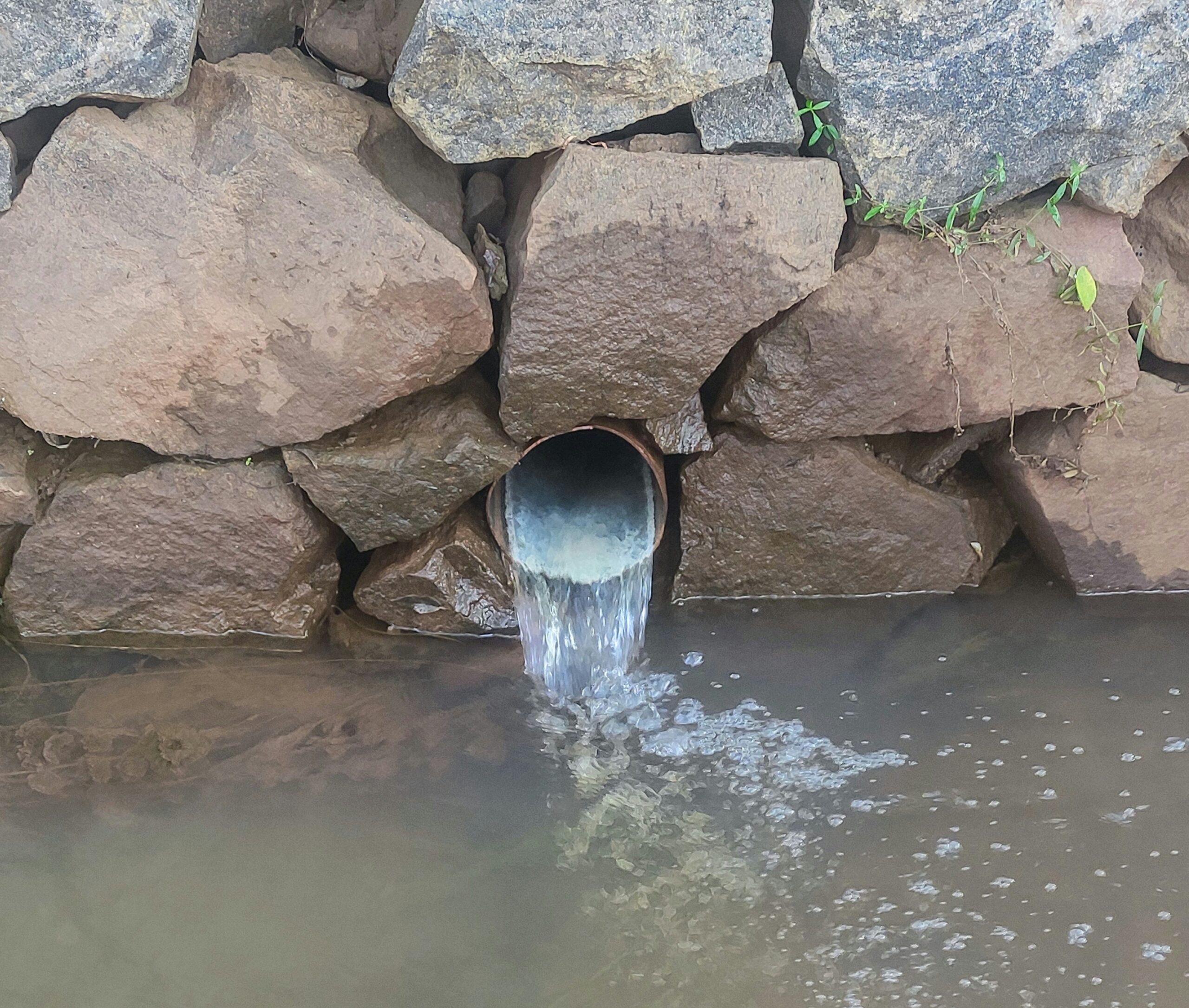
Image description: A brown sewage outflow pipe is embedded in rocks, with water gushing into a body of water. Image by Jacob Antony on Unsplash
Research shared exclusively with the New Statesman reveals Thames Water illegally polluted waterways with raw sewage at least 8,499 times between 2021 and 2025, showing five years of new regulations have failed to address the company’s environmental degradation, according to the biggest study ever conducted of Thames Water’s own data.
The analysis, conducted by Professor Peter Hammond and published by the New Statesman, examined data from more than 200 sewage treatment works and found 39,404 total sewage spills during the period – with at least 8,499 confirmed as illegal. The research reveals untreated human waste was dumped into 163 different watercourses across 66 Westminster constituencies, with almost 90% of the 224 sewage treatment works found to have spilled sewage illegally.
River Pang worst affected
The River Pang, home to water voles and the inspiration for Wind in the Willows, suffered most severely, being illegally polluted with raw sewage 383 times during the analysis period. Professor Hammond’s investigation also uncovered evidence that some sewage treatment works appear to be treating sewage at rates exceeding their maximum capacity, pushing effluent through too quickly for proper treatment, potentially meaning even higher levels of illegal pollution are going undetected.
The New Statesman reports these findings demonstrate that illegal spills have not declined since Boris Johnson’s government promised to “restore precious water bodies to their natural state by cracking down on harmful pollution from sewers” with the 2021 Environment Act.
Debt servicing costs drain improvement budgets
The New Statesman‘s investigation reveals the true financial dynamics behind Thames Water’s failures. According to the report, it is not executives or shareholders extracting value, Canada’s largest pension fund wrote its £990 million Thames Water investment to zero almost two years ago, but distressed-debt investors charging “payday loan rates” that drain resources meant for infrastructure improvements.
The £3 billion loan extended in February to prevent insolvency came with a 9.75% interest rate – more than twice the average mortgage rate – plus fees taking total borrowing costs above £800 million. One investor immediately booked a 17% profit from the “rescue,” the New Statesman reports.
Professor Ewan McGaughey, law professor at King’s College London, told the New Statesman it is indefensible that the UK’s biggest water company should be charged such rates: “The only way that this can continue is if the interest rate keeps on going up and up, and bills keep on going up and up. Essentially, what we’re doing is bailing out banks. The economic equation is: money goes from billpayers to Wall Street banks.”
Special administration would cost government nothing
The New Statesman reveals that contrary to water industry lobbying, a special administration regime (SAR) would likely be fiscally neutral or even profitable for government. Professor Dieter Helm, Oxford University’s professor of economic policy, told the publication: “The company is completely viable. It has a lot more coming in than its day-to-day operating costs going out.”
While running Thames Water would cost approximately £25 million weekly, about 3p on every £10 of current government spending, Helm explained the government has first claim on money raised from eventual sale: “All its costs, the cost of insurance, everything.” The final bill would be zero.
The New Statesman notes the 2021 Bulb energy special administration, the only previous utility SAR, ended with government making an estimated £1.5 billion profit. Treasury officials should not assume Thames Water’s SAR would be anything other than fiscally neutral, the investigation concludes.
The government has contracted FTI Consulting to advise on SAR processes. The New Statesman observes FTI is the world’s biggest restructuring consultancy and has previously worked both sides of water industry issues – counting both Water UK and its regulator Ofwat as clients simultaneously in 2021-22.
Helm warned that avoiding SAR creates dangerous moral hazard: “If you don’t have a failure regime, and you don’t have a way to deal with the likes of Thames, then all the industry will know that they’re never going to be put into administration. And then, however many supervisors you invent, you’re always going to have to cave in to the companies.”
Thames Water told the New Statesman that “the health of our rivers remains a key focus”, and it is “delivering the most significant upgrade to our wastewater network in 150 years” with “early signs of progress.”