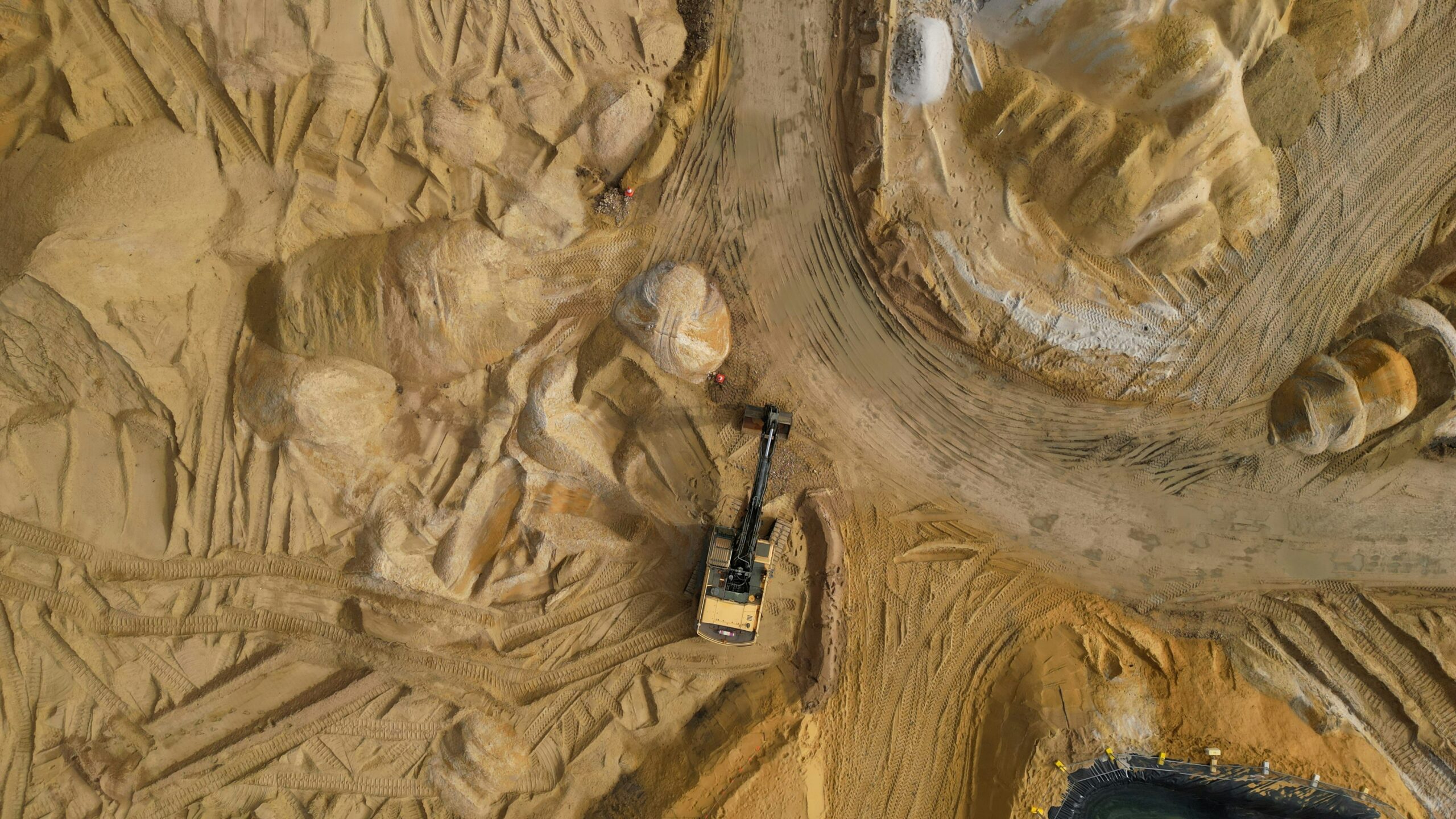
The UK and Ireland’s largest freshwater lake, Lough Neagh, is under threat from commercial sand dredging, according to new research published in the Journal of Environmental Management.
The study, led by Queen’s University Belfast in collaboration with Newcastle University, is reportedly the first-of-its-kind and researchers found that disturbance created by commercial dredging is “widespread” across the lough and “could be affecting the ecosystem”.
Sand is a vital resource for infrastructure
Sand dredging is the underwater excavation and removal of sand from seabed’s, rivers, or lakes using specialised vessels. Sand is a vital resource that underpins modern infrastructure, used in concrete, construction, and land reclamation.
Dredging around Lough Neagh was licensed in 2021 with the vast majority of what is removed being used by the construction industry for building materials. A handful of companies which were granted licenses in 2021 pay a fee to the owner of the lough bed, the Earl of Shaftesbury, for every tonne they extract.
Lough Neagh reflects a wider global challenge
The researchers examined the lakebed in part of the dredging zone with results revealing extensive physical alteration. Dredging had carved deep depressions into the sediment, lowering the lakebed by up to 17 metres. Satellite imagery analysis revealed widespread sedimentation clearly visible from space, with plumes of silt spilling from dredging vessels, kicked up by vessel propulsion during transit, as well as runoff from landing sites. The study’s lead author warned that sedimentation is known to have “profound negative ecological consequences” and is a key factor in the decline of freshwater wildlife.
Dr Neil Reid, Reader in Conservation Biology at the Co-Centre for Climate, Biodiversity and Water in the School of Biological Sciences at Queen’s, and lead author of the study, said the work represents a step change in understanding: “This is the first attempt to quantify the range of potential impacts from sand extraction throughout Lough Neagh and to infer potential ecological consequences. Our findings suggest disturbance is not localised, but widespread across much of the lake ecosystem.”
Dr Reid suggested that “the situation at Lough Neagh reflects a wider global challenge. Demand for sand is increasing rapidly with extraction pressures growing in many aquatic environments, so understanding the full extent of the impacts is essential.”
Can the impact of dredging be limited?
Dr Reid suggests there are practical ways to reduce the environmental footprint of dredging. These include adjusting suction settings to reduce sediment disturbance while limiting hopper overflow could reduce sediment discharge; slower vessel speeds and fixed shipping lanes to confine disturbance; and avoiding high-thrust manoeuvres in shallow waters or protecting the lakebed to reduce resuspension. On land, Dr Reid suggests covering sand piles and using settlement ponds or vegetation buffers to intercept runoff.
Lough Neagh Sand Traders dispute findings
As per the BBC, a spokesperson for the Lough Neagh Sand Traders said the research was incorrect, adding that the effects had been the subject of an environmental impact assessment, which “concluded there would be no adverse effect on the integrity of the Lough”.