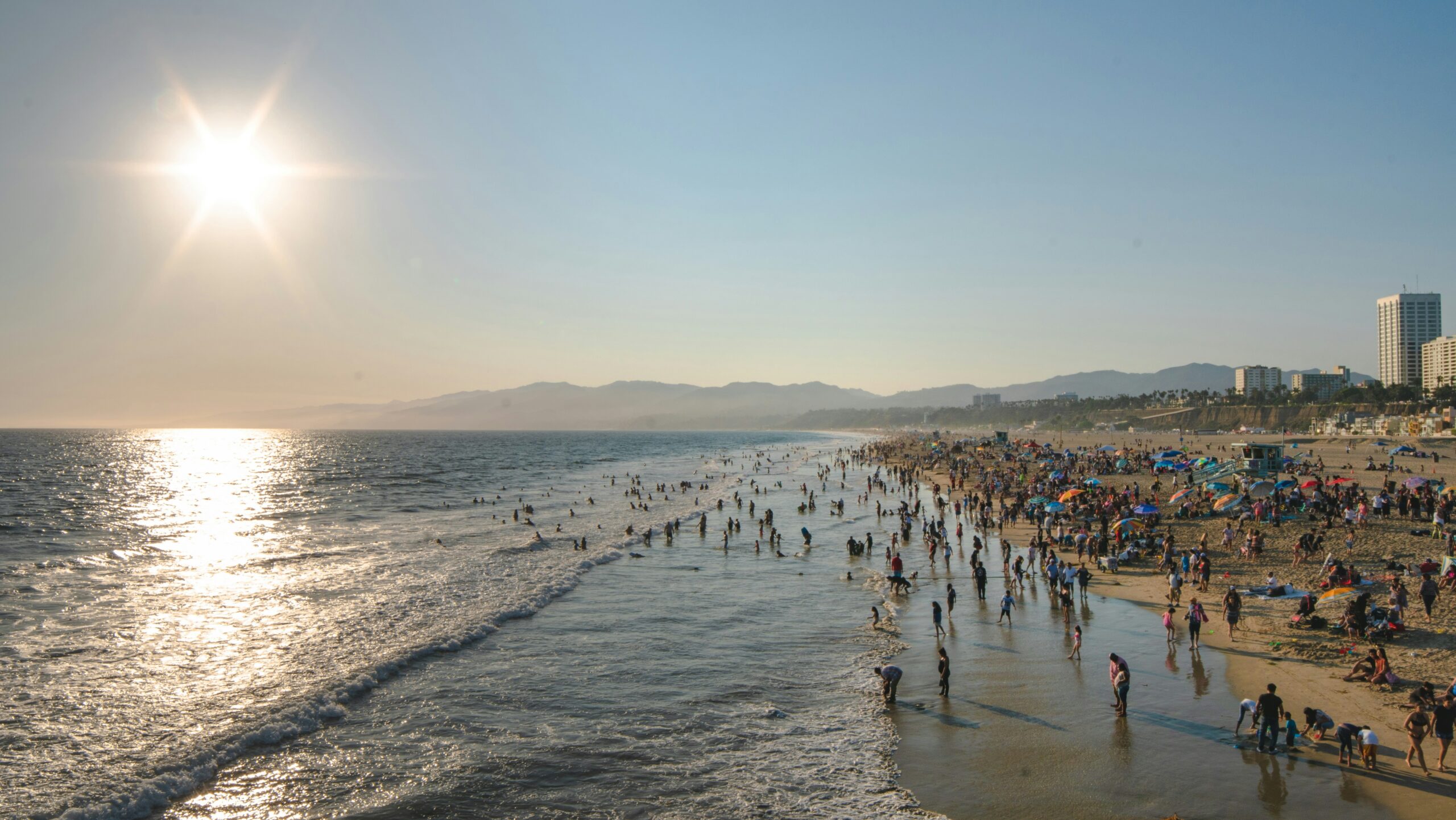
Photo by Brendan Stephens
A marine heatwave is gripping the waters off California, with sea surface temperatures climbing to levels that are rekindling fears among scientists of a repeat of “the Blob” — a catastrophic warm-water event that took hold a decade ago and left a trail of ecological destruction along the US west coast.
A high-pressure atmospheric system has settled over southern California, warming both air and sea above historic levels. Temperature records collected at Scripps Pier in La Jolla — where daily surface and bottom measurements have been taken since 1916 — place the current anomaly in sharp historical relief.
Echoes of the Blob
The original Blob formed in the autumn of 2013 when a similar ridge of high pressure dampened the normal winter winds across the eastern Pacific. Within a year it had spread from the Gulf of Alaska to Baja California, pushing sea surface temperatures as much as 7 degrees Fahrenheit above average. What followed was an ecological cascade: toxic algal blooms shut down West Coast Dungeness crab fisheries worth millions of dollars, seabird die-offs were recorded, whale entanglements surged, and starving sea lion pups began washing up on beaches. Research scientist Ric Brodeur, of NOAA’s Northwest Fisheries Science Center, recalled hauling nets during the summer of 2015 and finding almost nothing: “It was like night and day compared to previous years. We got almost nothing. You could have fit all the krill from the trip into a little plastic bag.”
Now, scientists are asking whether history is about to repeat itself. Andrew Leising, a NOAA oceanographer, warned that the coming months would be decisive: “The biggest concern is how the year plays out. We could be looking at much larger impacts next fall and winter, if it stays warm and then it’s followed by a strong El Niño.”
The upwelling question
Central to scientists’ concerns is the fate of upwelling — the seasonal process by which north-westerly winds push warm surface water offshore, drawing cold, nutrient-rich water up from depth. It is the engine that drives phytoplankton blooms and underpins the entire California Current food web. Leising noted some recent cooling, but cautioned: “The expectation right now is that likely the waters down to even southern California should start cooling a little bit into next month, but it’s not a guaranteed thing. The concern is the sequence of events and how they unfold.”
Melissa Carter, a researcher at the UC-San Diego Scripps Institution of Oceanography, raised the spectre of permanent damage if persistent high-pressure systems become the norm: “If these systems do become that strong and persistent, where they come every year, it can have the potential to shut down upwelling. Everything we think of related to the health of the ecosystems of the west coast could be forever altered.”
Tipping points
The Blob years produced changes that went far beyond the expected. The food web shifted from tiny, nutrition-rich shelled crustaceans to gelatinous organisms such as jellyfish and pyrosomes — tropical creatures never previously recorded off the Pacific Northwest. These organisms compete with native species for food while offering little nutritional return, hitting the marine food chain with what Brodeur and his colleagues called “an extraordinary and unprecedented perturbance.” Brodeur later questioned whether the system had reached a point of no return: “Is the ecosystem resilient enough to bounce back if environmental conditions return to something close to normal? That’s what we don’t know.”
Carter put it bluntly: “Our ocean should not be a swimming pool. Nothing can live in a swimming pool. That’s not what we want.”
Marine heatwaves are becoming more frequent and longer-lasting, driven by the slow warming of the oceans from the climate crisis alongside atmospheric changes that scientists are still working to understand.