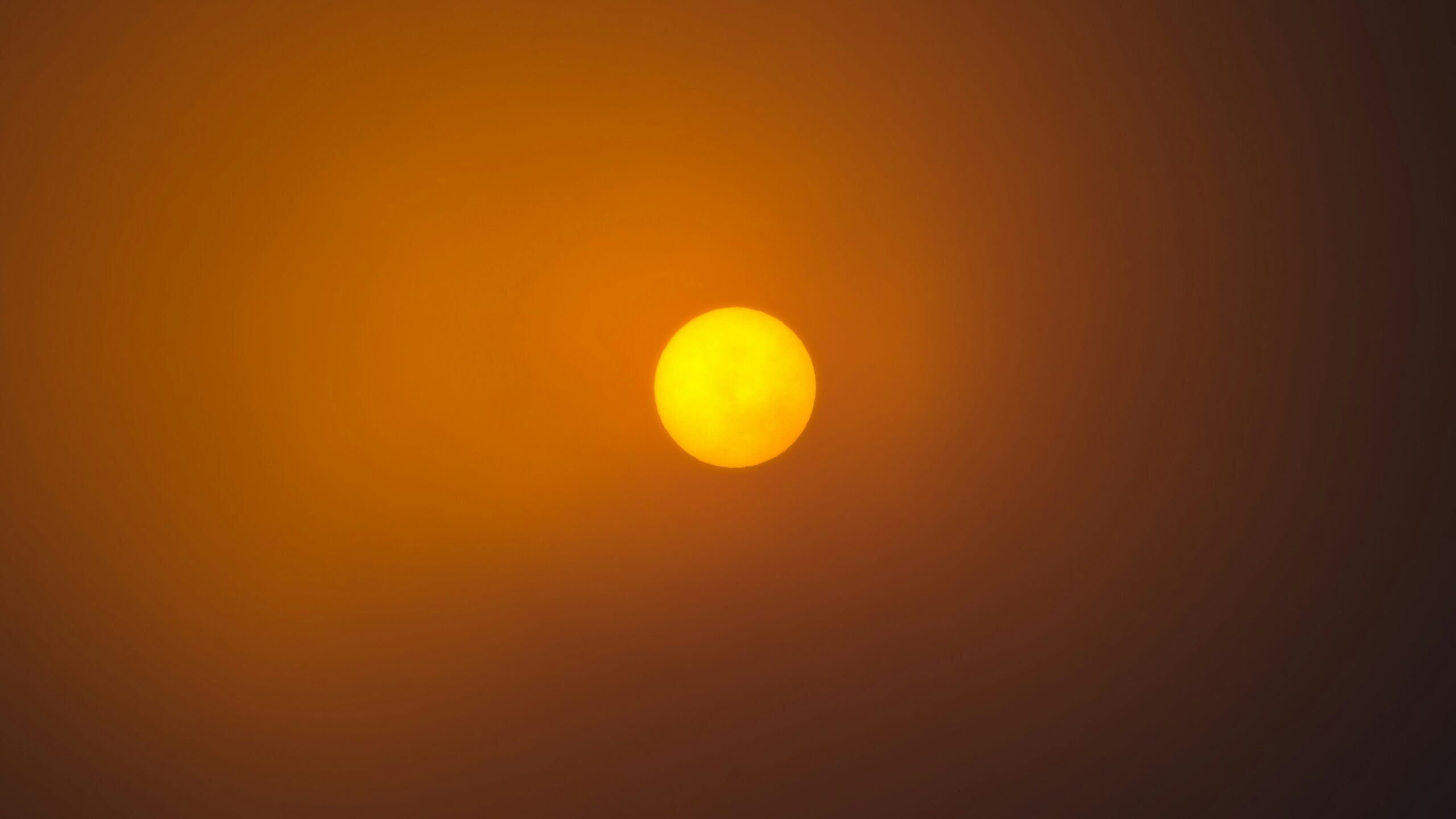
 Image Description: The sun amid a fiery orange sky. Photo by Marek Piwnicki on Unsplash
The UK is in the grip of an exceptional June heatwave, with the Met Office issuing a Red Extreme Heat Warning, only the second it has ever declared. The warning came into force on Wednesday 24 June and runs through Thursday, covering parts of central and southern England and Wales, where June’s all-time temperature record has been broken. Temperatures are forecast to potentially reach 38°C, with the existing June record of 35.6°C, set in 1976, exceeded.
Pressure on water supplies
The Met Office warned that the impacts would extend beyond public health to transport, energy and water supplies. Chief scientist Professor Stephen Belcher said the event brings home the implications of climate change, noting significant impacts across sectors including water supply.
Water demand spikes sharply during heatwaves. The National Drought Group heard that a late-May hot spell drove significant peaks in demand, including some public supply outages. With another, more intense heatwave now in force, companies face renewed pressure on their networks.
Drought risk building
The heat lands on ground already vulnerable after a dry start to the year. England recorded its third-warmest spring on record in 2026, and the Environment Agency’s outlook placed the South East and East Anglia at high risk of drought for the summer. Reservoir storage stood at around 88% in mid-June, but parts of East Anglia were set to move into prolonged dry weather, and several rivers were running notably low.
Southern Water already has a Temporary Use Ban covering Hampshire and the Isle of Wight, and other companies in the South East have urged voluntary restraint as reservoir levels sit below seasonal norms. National Drought Group chair Helen Wakeham urged the public to use water carefully, noting that heatwaves drive demand spikes and that every drop saved leaves more for farmers, rivers and wildlife.
The 1976 parallel
The event has drawn comparisons with the summer of 1976, whose prolonged heat and drought brought standpipes to the streets and lasting pressure on water resources. Scientists marking the anniversary warned that in a warmer climate, those impacts are likely to become more severe. The Met Office noted that human-induced climate change has made events like this more likely and more intense, with hot spells projected to become more frequent over the south-east in particular.