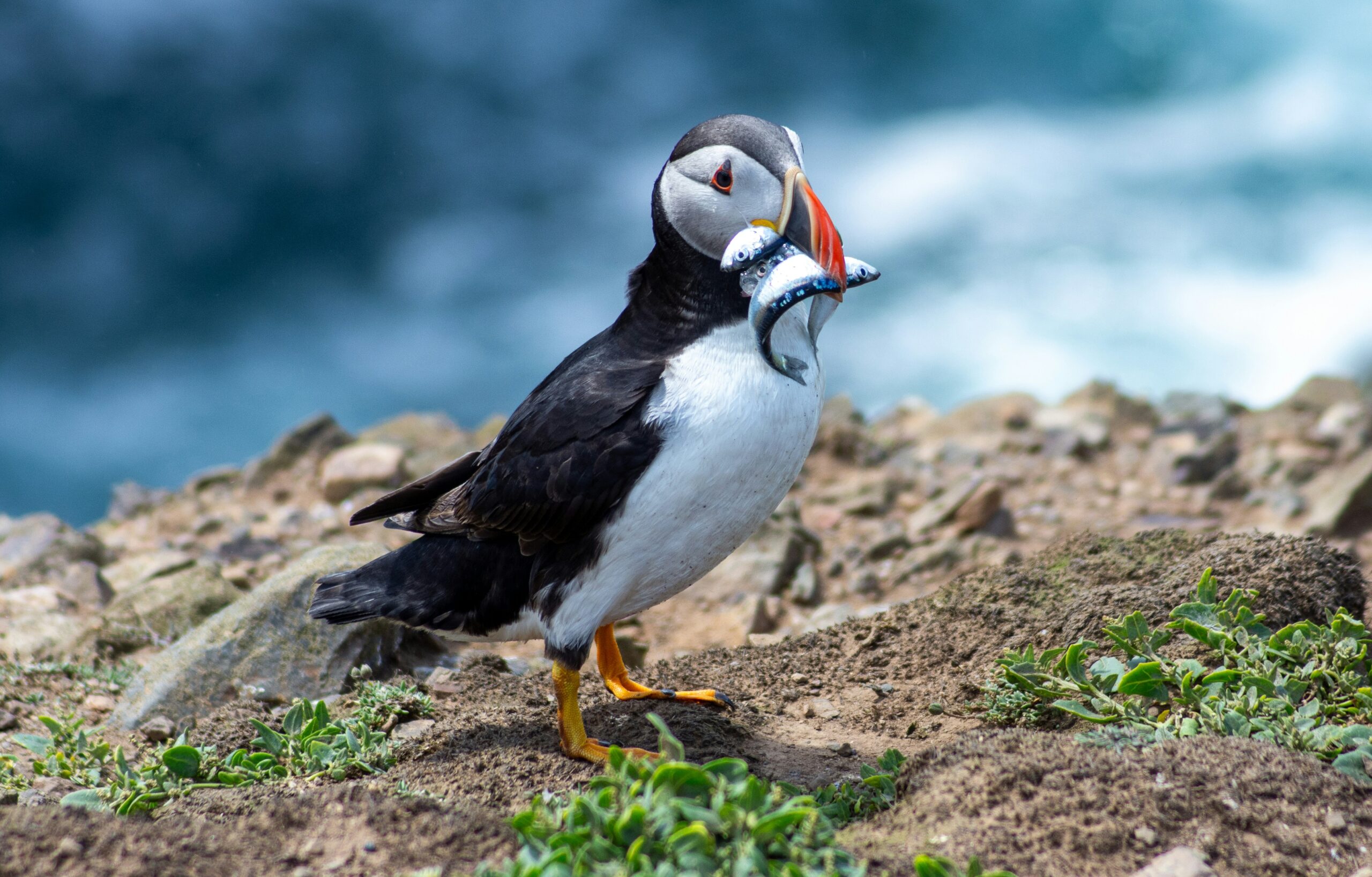
Photo by Tim Morgan
Puffin numbers at one of the UK’s largest colonies have fallen by around 30% in two years, according to a new burrow count carried out by NatureScot and the UK Centre for Ecology & Hydrology (UKCEH) on the Isle of May National Nature Reserve in the Firth of Forth.
A sharp decline
Based on an all-island survey carried out this summer, scientists estimate there were 36,500 occupied puffin burrows on the island, down from 52,000 in the last survey in 2024 and 39,000 in 2017. NatureScot Isle of May reserve manager David Steel said the decline was “disappointing and concerning”, noting that puffin numbers on the island fell sharply in the 2000s and recovered through the 2010s, only to drop again now. He linked the fall to a combination of ongoing pressures on seabird food supplies, poor winter survival and increasingly extreme weather conditions, adding that this mirrors challenges affecting seabirds more widely, and underlines the importance of continued monitoring at sites such as the Isle of May.
Puffins can spend up to eight months of the year out at sea, only returning to land to breed in early spring. They generally mate for life, with pairs often returning to the same nesting spot each year, where the female lays a single egg.
Climate pressures on food and survival
UKCEH has monitored seabird colonies on the Isle of May for 50 years, and its long-term research has tracked how the birds have struggled with the impacts of climate change. Rising ocean temperatures can reduce the availability of sandeels, puffins’ key food source, affecting survival rates and breeding success, while recent storms have killed large numbers of birds outright. Mark Newell, UKCEH’s field manager on the Isle of May, told STV News that the population had suffered from a run of extreme climate events, including marine heat waves and intense storms affecting survival in three of the last five winters, warning that climate scientists expect such extreme events to become more frequent and severe.
Fieldworkers carried out this year’s count by sweeping the whole island for six days, recording every burrow and assessing whether it had been excavated by a puffin or a rabbit, before applying an occupancy correction factor based on sample plots. Although the total number of burrows was similar to 2024, this year’s occupancy rate was significantly lower.
Part of a wider seabird crisis
The Isle of May findings land against a bleak backdrop for Scotland’s seabirds more broadly. As Irish News and other outlets covering the story have noted, a separate NatureScot report published the previous week found that Scotland’s seabird populations are in serious decline overall, with average numbers roughly halved since the 1980s. The BBC and Herald Scotland were among the outlets to pick up the Isle of May figures, underlining how closely watched the colony has become as a bellwether for the wider pressures facing the country’s seabirds.
This year also marks 70 years since the Isle of May was designated a National Nature Reserve. NatureScot manages 29 such reserves across Scotland, and says supporting species recovery at sites like this one is central to its four-year plan for nature recovery and to the Scottish Biodiversity Strategy’s target of halting biodiversity loss and restoring nature by 2045.