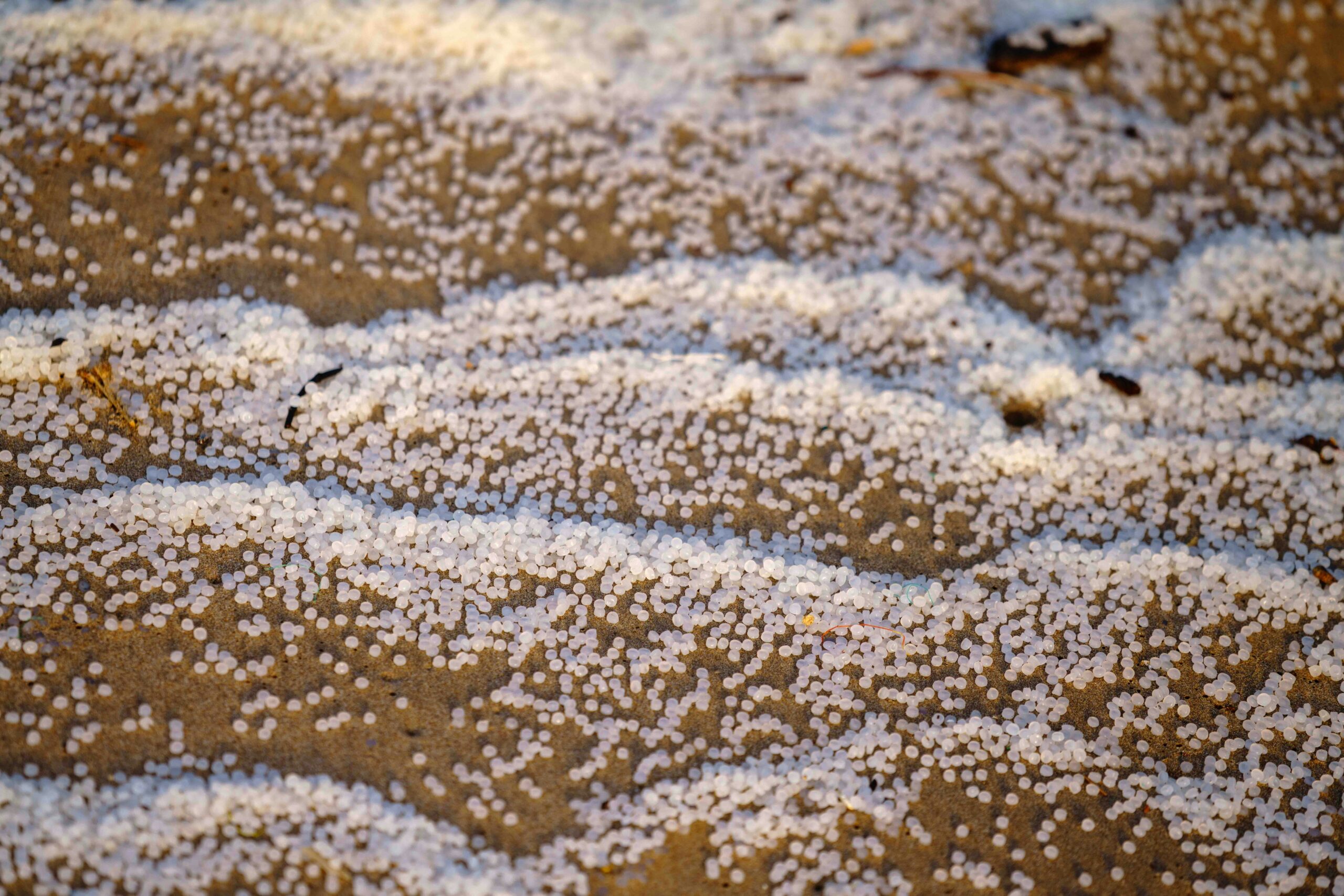
Photo by Soren Funk
An estimated one billion plastic pellets, known as nurdles, entered the River Tyne and North Sea after a collision between two vessels at the Port of Tyne on 19 July, and have since washed up on beaches across north-east England. Six weeks on, the port’s chief executive has joined calls for tougher international safety rules governing how the pellets are transported, the BBC reported.
The spill occurred when the Wind Orca, a wind turbine installation vessel, struck the berthed container ship BG Orange as it left dock. A gantry crane on the quayside sustained significant damage, and up to 25 tonnes of nurdles, pre-production plastic pellets about the size of a lentil used as the raw material for nearly all everyday plastic goods, spilled into the water, the Guardian reported at the time. Pellets soon reached Littlehaven beach in South Shields, less than three miles from Marsden Bay, one of England’s most important seabird colonies, then in the tail end of its breeding season, and South Tyneside Council warned residents to avoid handling the pellets and keep dogs on leads.
A gap in the rules
Port of Tyne chief executive Matt Beeton said the company, along with other local organisations, was now asking the International Maritime Organisation (IMO) to consider enforcing safer transportation methods for nurdles, something environmental groups have long called for. He pointed to their current classification as non-toxic as a central problem: it meant the port was not made aware that the BG Orange was even carrying nurdles, nor that they had been spilled, until the day after the crash, despite the pellets posing a known threat to birds and having been described elsewhere as an “environmental disaster.” Beeton also suggested nurdles could be transported in sturdier containers and stowed more securely on board ships.
The IMO said it was developing a mandatory code for nurdle transportation and had already made recommendations covering packaging, declaration and stowage, along with guidance to support “effective responses” when spills occur. Heather McFarlane, senior project manager at environmental charity Fidra, said most pellet pollution could be prevented through simple measures such as better packaging and safer stowage, and called for stronger UK regulation alongside mandatory measures at sea.
Not the first, and unlikely to be the last
This is the second major nurdle spill to hit England’s coast in under two years. In March 2025, the Portuguese-flagged Solong collided with the US-flagged tanker Stena Immaculate off the East Yorkshire coast, scattering burnt and unburnt pellets across Norfolk and Lincolnshire and around the Wash. Fidra’s one-year review of that incident, published this March, questioned whether the lessons had been learned and whether the UK’s prevention, response and clean-up arrangements were fit for purpose. Nurdles are not currently classified as a hazardous substance under international maritime rules, which limits the obligations placed on shipping companies and ports when spills occur. Fidra’s most recent UK-wide survey found nurdles present at 84% of the Sites of Special Scientific Interest it sampled, meaning the Tyne spill enters an environment already carrying a substantial baseline of pellet pollution.
Clean-up still ongoing
Beeton also responded to criticism, including from North Tyneside mayor Karen Clark, that the port had been too slow to respond to the spill. He said the site had been treated as a crime scene for the first day, and that it would not have been safe to deploy a containment boom until the collapsed crane was salvaged; the boom was not put in place until three days after the collision. He added that the full scale of the clean-up remained unclear, since the nurdles have to be separated from other waste before they can be weighed.
Nurdles have continued to spread well beyond the original spill site. As of early September they had reached Saltburn on the Teesside coast, more than 30 miles south of the crash, where a local environmental group has appealed to residents for help clearing pellets from the beach, ITV News reported; the Port of Tyne says it is working with environmental specialists on the wider response. Sunderland City Council said it had seen a reduction in nurdles on its shores since the initial spill, though clean-up efforts are continuing there and in Redcar and Cleveland and County Durham, where pellets have also been found.