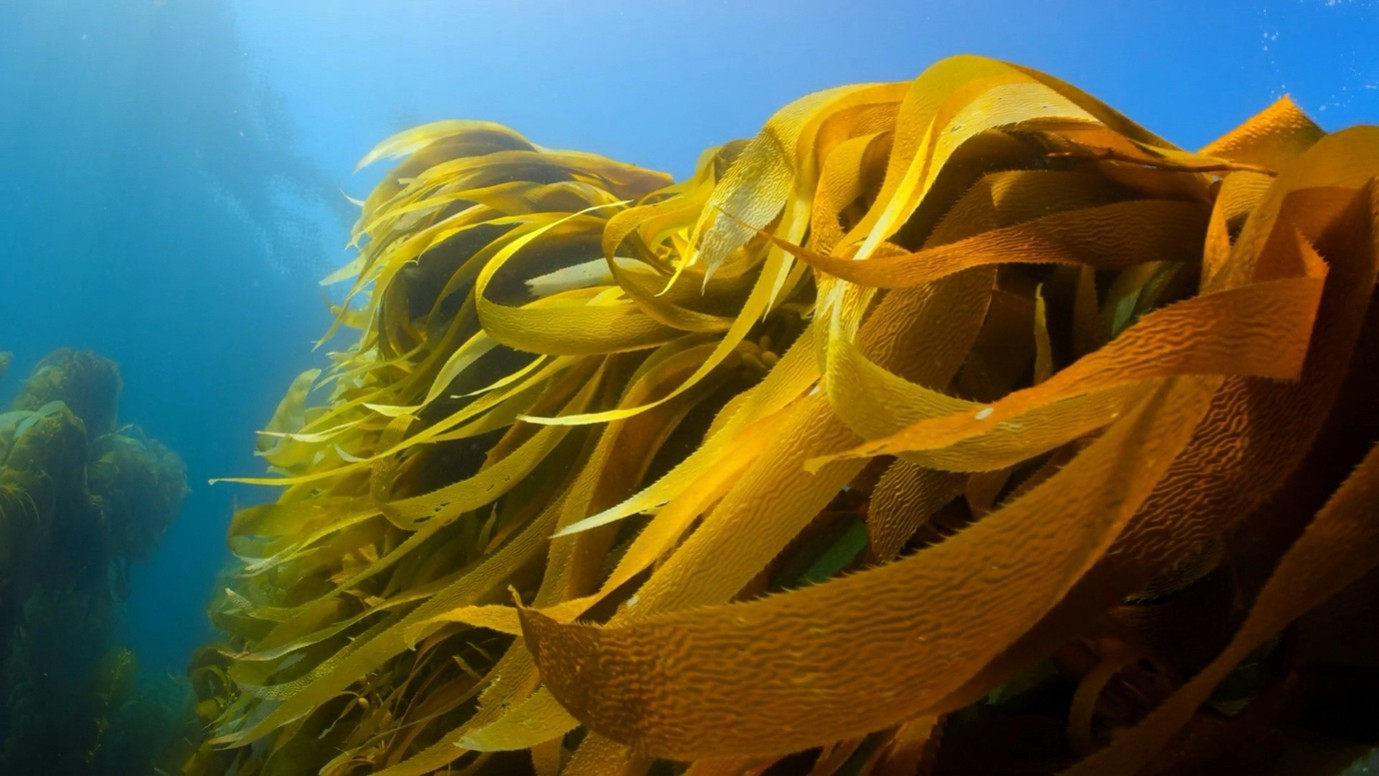
Photo by Oleksandr Sushko
Plans for Sussex’s first commercial seaweed farm have been submitted to Chichester District Council and the Marine Management Organisation (MMO), with the entrepreneur behind the scheme hoping it will be the first of many along the county’s coast.
From Countryfile to Bracklesham Bay
Andrew Payne-Cook, 48, plans to site the farm five kilometres offshore, between Sussex and the Isle of Wight, eventually covering 25 hectares, an area equivalent to around 30 football pitches. He told the BBC that the idea came to him almost by chance: “I was watching Countryfile one night, I saw an article on seaweed farms. I live by the sea, [I thought] how hard can it be?” Payne-Cook, whose background was in the fuel industry, added: “I wanted to do something more sustainable and something to leave a legacy. Kelp farming has a massive future, it’s a future billion dollar blue industry.”
Rather than going straight to the full 25 hectares, Payne-Cook intends to start with a smaller 7.5-hectare trial farm, planted as early as October if the licence is approved, before scaling up if that proves successful. Once fully planted, he said, the farm would also incorporate mussels and oysters alongside the sugar kelp.
How the farm will work
According to a report submitted alongside the planning application, the full-scale farm will be made up of eight separate patches, each containing five longlines, with lines spaced carefully to allow water movement, marine life passage and safe navigation, the Sussex Express reports. Each longline will be securely anchored at both ends using heavy reef cubes, with surface buoys suspending the seaweed at optimal depth for growth while keeping the farm visible to other sea users. The sugar kelp itself will grow on lines between two and four metres below the surface.
Filtering the water, capturing carbon
Payne-Cook set out the environmental case for the project to the BBC: the mussels and oysters “will help by filtering the water, and the sugar kelp will capture nitrates, phosphates and carbon.” Sugar kelp is widely recognised as an effective biological filter, drawing down excess nutrients that can otherwise fuel harmful algal blooms, while also absorbing dissolved carbon dioxide from the water column. He told the Sussex Express in similar terms: “It will help clear the seas of the problems that we have – it will capture nitrates, it will carbon capture.”
On end uses, Payne-Cook told the BBC the harvest “will go for fertiliser and can be food grade, as well as being used for pharmaceuticals. It all needs to be tested first.” He also pointed to the project’s potential to bring jobs back to the area: “It’s something positive for people to get involved with eventually, so they can actually work on the waters again. It all seems to have died away so I’m trying to get [people] working on the sea again,” he said. Payne-Cook hopes to operate the business out of Portsmouth.
Regulatory position
The application, filed with the MMO under case reference MLA/2025/00455, remains under consideration. An MMO spokesperson told the BBC: “The MMO is continuing to work with the applicant regarding this marine licence application. Initial consultation with relevant organisations has been completed and the public consultation period has now closed. The application remains under consideration as part of the normal licensing process.” The Crown Estate, which owns the seabed out to 12 nautical miles, confirmed to the BBC that it is in early talks with Southcoast Seaweed.
If approved, the Bracklesham Bay scheme would join a small but growing number of English seaweed farms, with existing operations already established off the coasts of North Devon, North Yorkshire and Scotland.