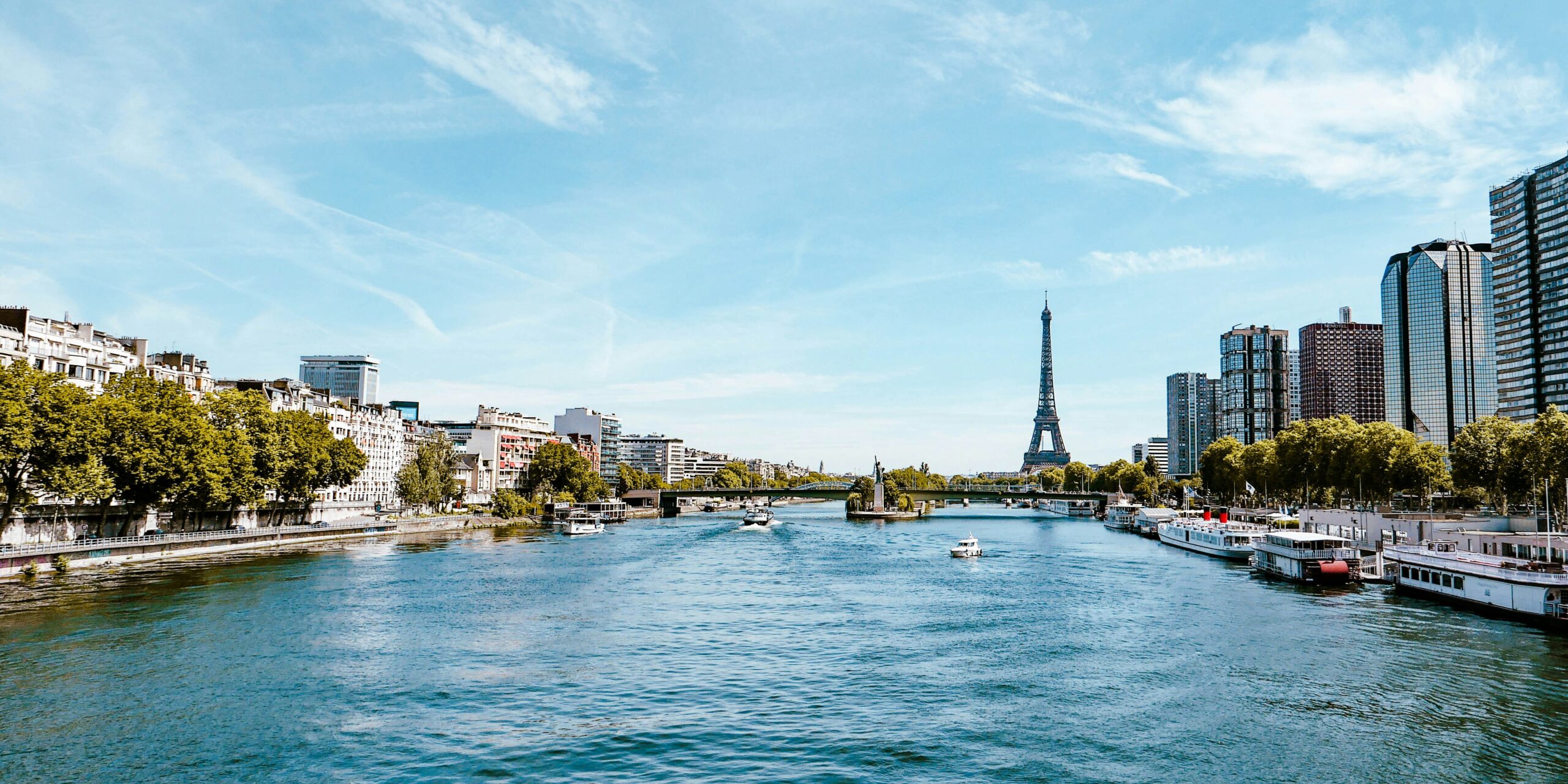
Image description: The Eiffel tower can be seen in the background of the River Seine. Photo by Grant Van Cleemput on Unsplash
How the system works
Paris operates one of the world’s largest district cooling networks, comprising 120km of underground pipes that distribute chilled water drawn from the Seine to over 600 buildings, including hospitals, schools, museums, and commercial offices. A heat exchanger transfers warmth from building return water into the river water without the two fluids making contact, before the slightly warmer Seine water is returned to the river within regulated environmental limits. The network is operated by Fraîcheur de Paris under a 20-year concession contract with the city, with plans to triple capacity and connect over 3,000 buildings across all arrondissements by 2042.
Energy and environmental performance
Independent experts confirm the system delivers significantly lower energy consumption than equivalent individual air conditioning units, while also reducing the urban heat island effect by avoiding the direct exhaust of heat into city streets. River temperature impacts have been monitored and remain within acceptable environmental thresholds.
Applicability to UK cities
Experts are reportedly cautious about direct replication. The Thames presents challenges in terms of water flow and temperature profile, and London’s underground infrastructure, occupied by utilities and the underground rail network, constrains pipe routing. Critically, economic viability requires a sufficiently high density of cooling demand to justify the capital investment, which for Paris’s network amounts to €2.4bn over 20 years. For UK water and infrastructure professionals, the Paris model nonetheless represents a pertinent reference point as urban heat adaptation moves up the policy agenda.
You can find full details in the Guardian’s coverage.