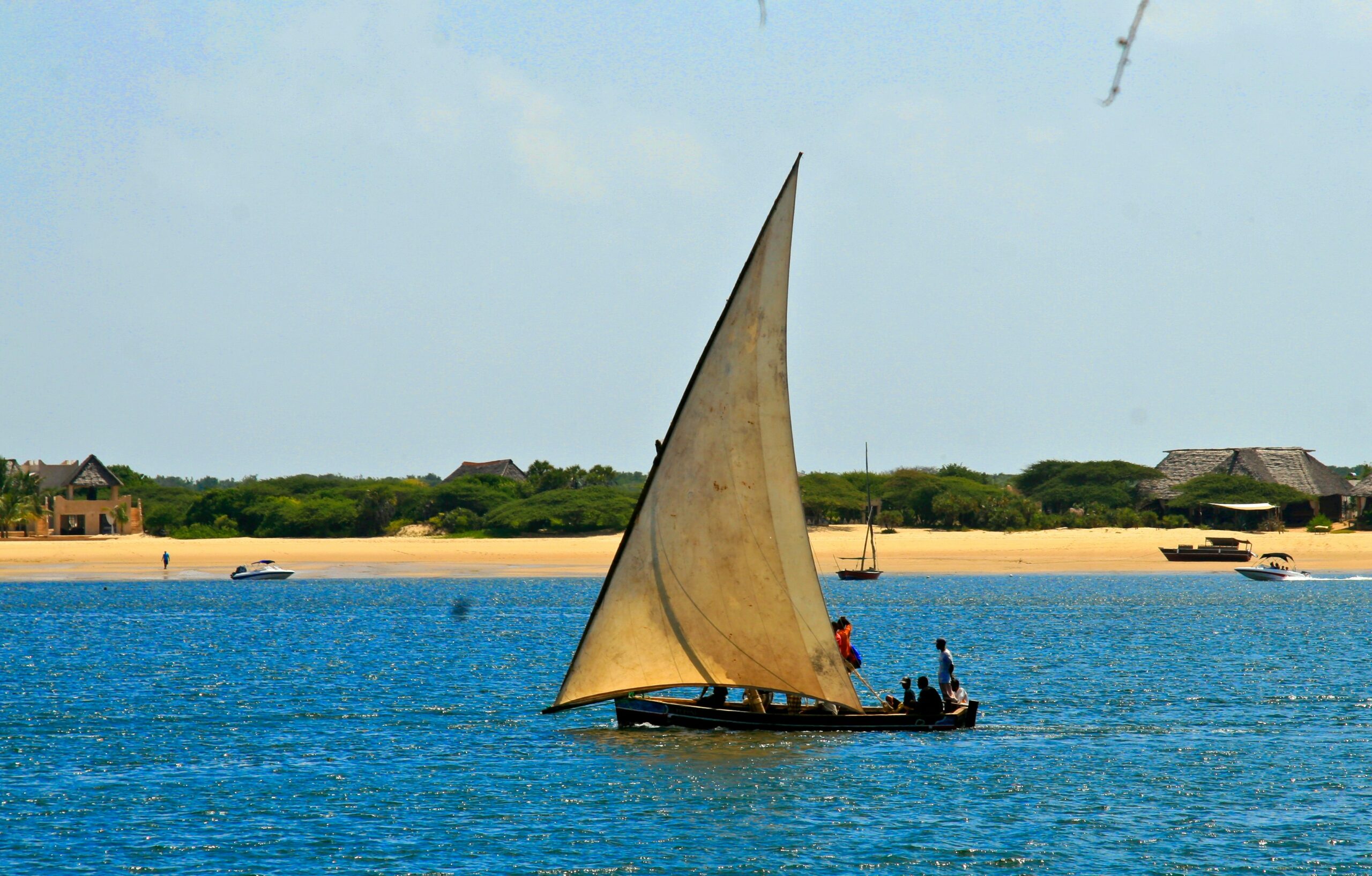
Photo by Stanislav Lvovsky
The 11th Our Ocean Conference closed in Mombasa, Kenya on 18 June with 320 new commitments valued at $6.4 billion, announced by more than 100 governments, businesses and civil society organisations across what Mongabay reported was a gathering of 6,000 delegates. It was the first time in the conference’s 11 editions that it had been held on African soil. John Kerry, the former US secretary of state who founded the conference in 2014, told the opening ceremony: “When we launched this conference in 2014, we wanted more than speeches, we wanted people to come to the table with an announcement of specifically what they will do and when and how much it will cost.” Kenya’s President William Ruto struck a similar note at the close: “We did not come to Mombasa to add our names to a longer list of promises. We came to turn the tide. Let the measure of this conference not be what we pledged on the shore, but what we deliver in the waters.”
A wave of new MPA pledges
With under five years left to meet the global 30×30 target, several governments used Mombasa to announce new marine protected areas (MPAs). Senegal said it would double its MPA network by 2030; Indonesia pledged 7,000km² of new MPAs this year; Tanzania committed to a 2,500km² MPA in Kilwa district by 2028; and Kenya and Tanzania jointly announced the Kwale–Tanga Transboundary Marine Conservation Area, also due by 2028. The Gambia and Guinea-Bissau agreed to advance at least two transboundary MPAs of their own. In Europe, Portugal announced the 173,000km² D. Carlos Marine Reserve, raising the share of its protected waters from 19% to 25%, while Brazil pledged to grow its MPA estate by 240,000km² over five years and said it would seek a high seas MPA in the South Atlantic under the High Seas Treaty (BBNJ). Elsewhere, French Polynesia strengthened protections within Tainui Atea, one of the world’s largest MPAs, and Chile’s Juan Fernández region and the Azores both saw major new designations. Separately, the US-based Marine Conservation Institute recognised six MPAs as durable “Blue Parks” on the conference sidelines, four of them in Africa.
A question of quality, not just quantity
Behind the new designations sat a persistent concern about whether existing MPAs are actually protected. A report from the Smithsonian Tropical Research Institute, released at the summit, warned that “the ambition of an expanded marine conservation system, exemplified by the 30×30 target, has outpaced the personnel, skillsets, and infrastructure required to make it real,” with roughly half of existing MPAs lacking effective protection. Arthur Tuda, executive secretary of the Western Indian Ocean Marine Science Association, put it plainly to Mongabay: “We continue to create more marine protected areas. That’s a good thing, but I think we are now also more strongly focused on quality.” Dr Ana Spalding of the Smithsonian institute told Carbon Brief that effective MPAs need to balance biodiversity outcomes against the needs of communities who depend on those waters: “There’s going to be a sweet spot between the two.”
A widening pause on deep-sea mining
Malawi became the first African country to back a “precautionary pause” on deep-sea mining in international waters, with its foreign affairs minister telling delegates: “To my fellow landlocked states: geography does not diminish our stake in the ocean.” Kenya and Madagascar followed during the week, Divernet reported, bringing the total number of countries backing such a pause to 43. Sofia Tsenikli of the Deep Sea Conservation Coalition said this “reflects an increasing recognition that the deep sea is too important to gamble with,” with attention now turning to the International Seabed Authority, which meets in July.
Climate-resilient coral reefs, with a UK signature
Five countries, including the UK, Kenya, Comoros, the Dominican Republic and Mexico, signed the High-Level Climate-Resilient Coral Reef Commitment in Mombasa, bringing the total number of signatory governments to 20. Dr Susan Lieberman of the Wildlife Conservation Society, one of the initiative’s lead organisations, said the milestone showed “governments are embracing science-based action and making a statement that there is renewed hope for coral reefs.” Kenya’s environment and climate change principal secretary, Dr Eng Festus Ng’eno, was blunter: “This is the turning point – the moment we stop mourning what we’ve lost, and start funding what we can still save.” Scientists also unveiled new research, led by the Wildlife Conservation Society and Macquarie University, mapping heat-resilient coral species across 71 countries and territories.
Fisheries transparency, and a voice from the water
One of the conference’s headline outcomes was the Mombasa Declaration on fisheries transparency, aimed at tackling illegal, unreported and unregulated (IUU) fishing. It was signed by 16 countries, almost half of them African: Belgium, Cameroon, Chile, the Dominican Republic, France, the Gambia, Ghana, Guinea, Liberia, Panama, Papua New Guinea, Peru, the Republic of the Congo, Somalia and South Korea. Notably, Kenya itself did not sign the declaration, though the host nation separately announced it would install electronic monitoring on all industrial and semi-industrial fishing vessels in its waters and introduce satellite tracking for small-scale fishers. Ghanaian fisheries minister Emelia Arthur, who did sign, called the declaration “a global testament of our collective commitment to transparent fisheries,” adding: “Fisheries is nutrition. Fisheries is food security. Fisheries is livelihoods. Fisheries is national security.” A Kenyan fisherman attending the conference, 64-year-old Twaha Mohammed Yussuf, gave Mongabay a starker view from the water itself: “The Indian Ocean is our only resource. Our entire livelihoods are pegged on the existence of these waters, but opaque commercial fishing activities are ruining this beautiful heritage. The big ships have swallowed all our fish.” Separately, Zanzibar and Madagascar announced new protections for dozens of shark and ray species.
EU funding and the High Seas Treaty
The EU committed €338.35 million to ocean conservation, sustainable fisheries and maritime security, Costas Kadis, the bloc’s Commissioner for Fisheries and Oceans, announced, including money to combat IUU fishing and tackle piracy in the Horn of Africa and Red Sea, alongside a separate €46 million through Horizon Europe for fisheries research. The High Seas Treaty (BBNJ), which entered into force in January 2026, ran through much of the conference’s agenda. Fatou Ndoye, executive secretary of the Abidjan Convention at the UN Environment Programme, told Mongabay: “For me, the BBNJ was really going to be at the centre of this conference, and I believe it has been, since this is the first Our Ocean Conference after the High Seas Treaty came into force.” Rebecca Hubbard of the High Seas Alliance told Carbon Brief that reaching “well over 100” ratifications before the treaty’s first Conference of the Parties, due in New York in January 2027, was now “imperative.”
Notes of caution
The picture was not one of uniform momentum. According to Mongabay, none of the major coastal nations in West Africa made significant new commitments, and both China, the world’s largest seafood producer and operator of its biggest distant-water fishing fleet, and the United States entered no new promises at all. Ndoye, reflecting on her own region, told Mongabay: “I was hoping for a little bit more strength from African countries. When I look at my region, I was hoping they would be louder.” Pledged funding has also declined since 2023’s conference in Panama, which generated $21 billion against this year’s $6.4 billion, and a review of African commitments since 2014 found that while 78% are complete or in progress, only $5.8 billion of the $14.3 billion pledged to the continent has actually been delivered. Tuda, who co-authored that assessment, offered a more measured conclusion: “There’s actually considerable progress in actualizing some of these commitments. So, it’s encouraging, because these conferences are not just about commitment. We’ve seen people actually go back and take action.”