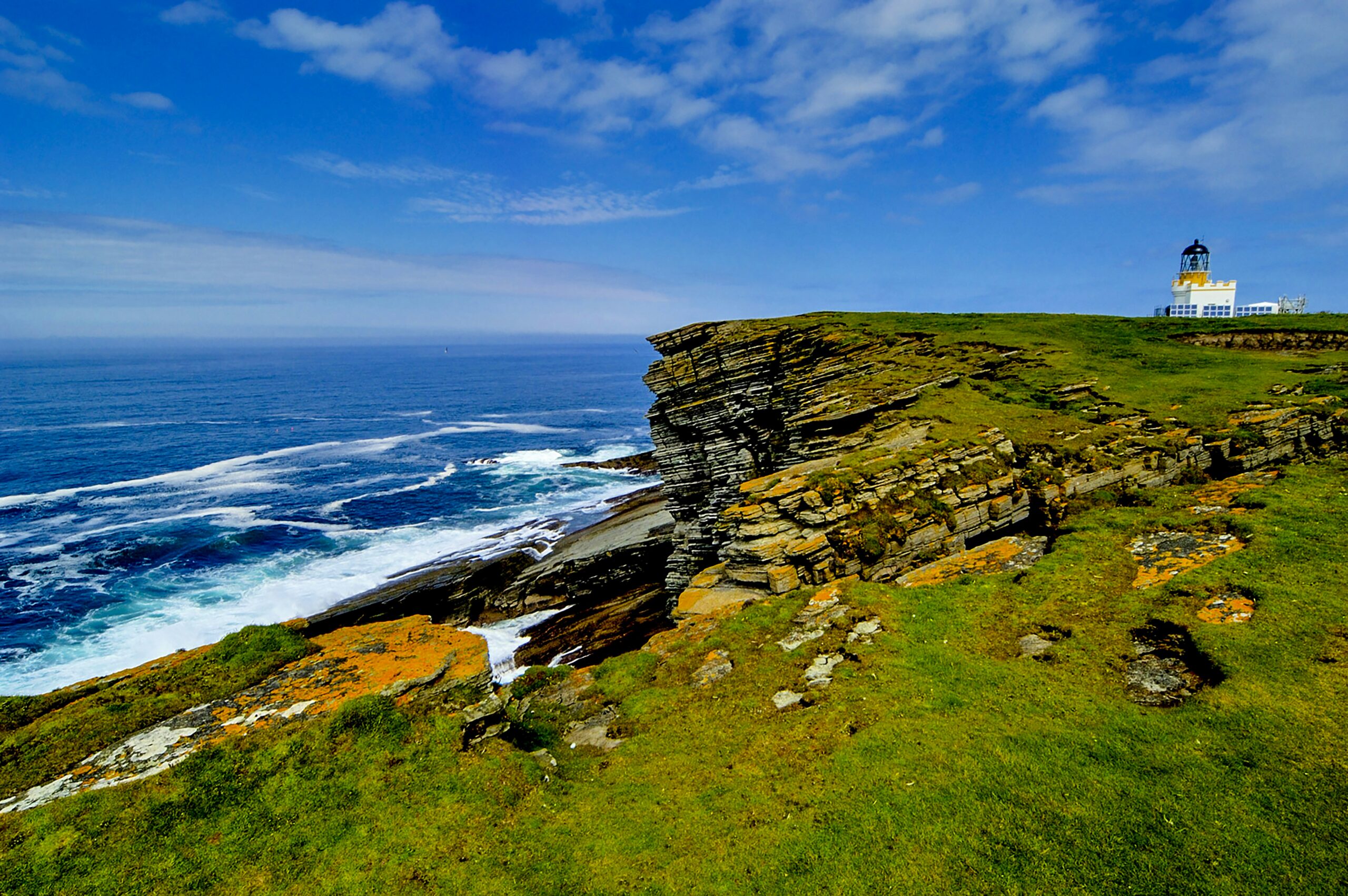
Photo by Maxwell Andrews
The Orkney Islands Regional Marine Plan has been formally adopted by Scottish Ministers, establishing a statutory framework for managing marine activities out to 12 nautical miles from the coast. The plan, the second of its kind for the Orkney Islands Scottish Marine Region, sets binding policy for a wide range of sectors including fish farming, offshore renewable energy, commercial fishing, shipping and tourism, with the stated aim of balancing economic development against environmental protection.
The plan was prepared by Orkney Islands Council on behalf of Scottish Ministers under a delegation of functions, with extensive input from the Orkney Marine Planning Advisory Group, a multi-stakeholder body drawing on expertise from the community, environment and industry sectors. Its vision extends to 2045 and includes 14 general policies alongside seven sector-specific policies covering everything from offshore wind to zero fossil carbon fuels.
Climate Action Secretary Gillian Martin described the plan as “another significant step forward for the protection of our marine waters whilst supporting sustainable economic development in the Orkney Islands marine region.” She added that it represents “a major milestone towards ensuring action is taken to combat the twin crises of climate change and biodiversity loss, whilst supporting fair, prosperous, nature-positive marine sectors and communities.”
Councillor Kristopher Leask, Chair of the Enterprise and Infrastructure Committee at Orkney Islands Council, welcomed its adoption, saying: “The adoption of the Orkney Islands Regional Marine Plan marks a major milestone in the sustainable management of Orkney’s marine environment and economy. I’m delighted that we now have a plan in place to address local issues and priorities, helping decision makers deliver our objectives for Orkney’s seas.” He continued: “A thriving marine economy will help us secure a prosperous future for Orkney whilst taking care of our marine environment.”
The plan provides specific guidance on mitigating the effects of climate change, conserving marine wildlife and ecosystems, protecting the water environment, reducing marine litter and waste, and ensuring that aquaculture and renewable energy projects deliver tangible community benefits. Notably, the Orkney plan is a case study within the UK-wide Marine Spatial Planning Addressing Climate Effects (MSPACE) programme, which is designed to drive forward climate-smart marine spatial planning and is due to deliver recommendations to inform future Orkney planning.
Salmon farming has been established in Orkney for many years, and the plan explicitly recognises the sector’s role in supporting remote island communities. It anticipates that technical innovation will enable finfish farm development further offshore, potentially reducing pressure on sensitive near-shore locations. Fish Farmer Magazine reported the plan as being set to drive progress and innovation across the sector.
Alistair Buchan, Chief Executive of the Orkney Fisheries Association, welcomed what he described as the “very strong recognition in the plan of the vital contribution that fishing makes to the economy and culture of Orkney.” The plan acknowledges that inshore commercial fishing in Orkney is predominantly carried out from small, locally owned vessels that provide direct income for economically fragile island communities, and it encourages early engagement between developers and fishing interests during the site selection and design process.
Professor Sandy Kerr, Director of the International Centre for Island Technology, said: “Completing the Orkney Islands Regional Marine Plan is a significant achievement, and is the result of extensive research, dialogue, and consultation. The plan will help guide decisions to manage our seas more efficiently and equitably, whilst taking local priorities into consideration.”
The plan is aligned with the Scottish Government’s Blue Economy Vision and sits within the second tier of marine planning, sitting beneath the National Marine Plan 2015. It has been prepared in conformity with the UK Marine Policy Statement 2011 and in compatibility with the National Planning Framework 4. A Coastal Change Adaptation Plan for Orkney is also now being developed, recognising the particular vulnerability of the islands’ low-lying settlements to sea level rise and increased flood risk.